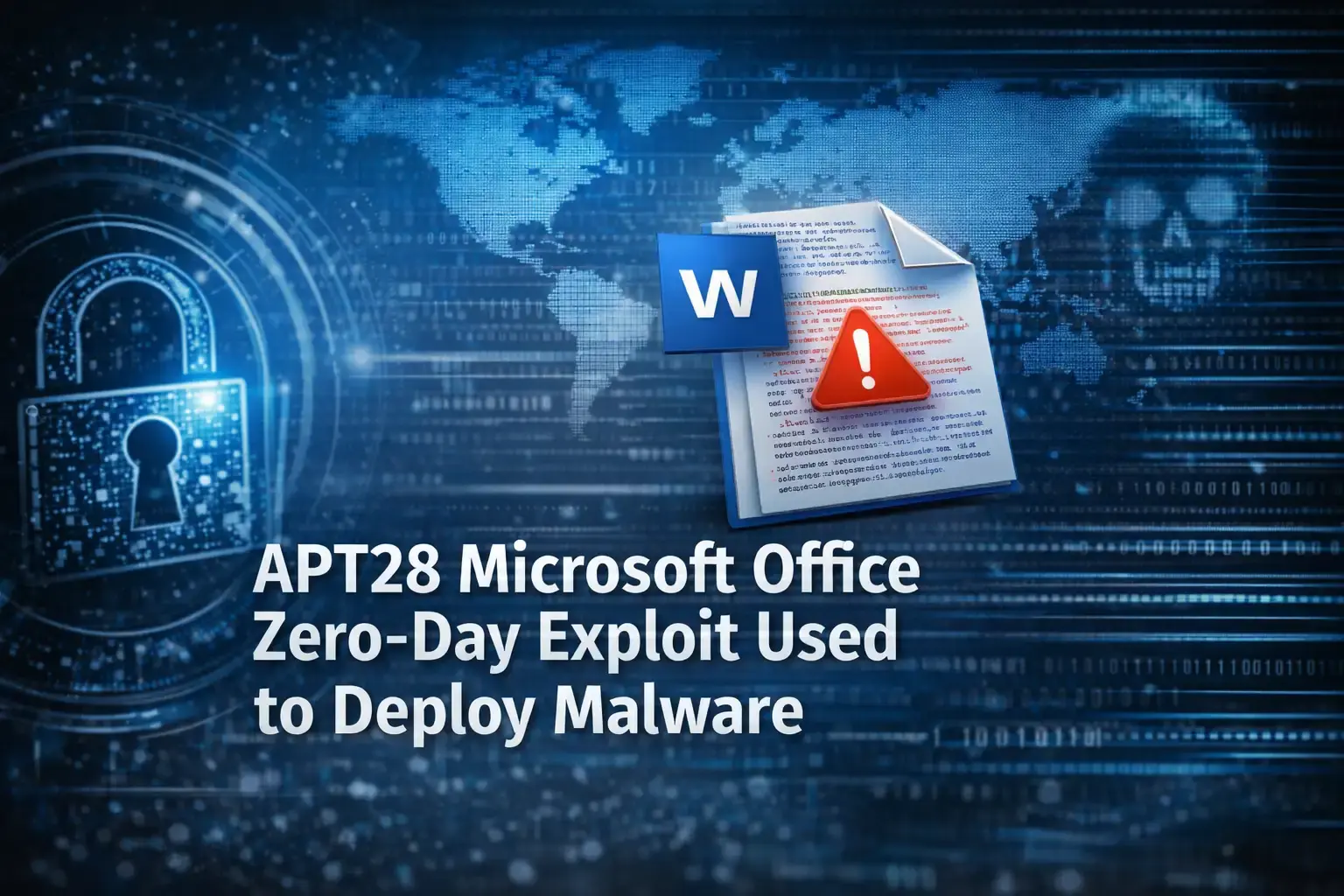
Is APT28 right now using a Microsoft Office zero-day to spread malware?
Yes. As of February 3, 2026, security researchers say that real-world attacks are using the APT28 Microsoft Office zero-day exploit. APT28, a threat group linked to the Russian government, is using an unpatched Microsoft Office flaw to send malware through documents without the user knowing. The campaign is aimed at government agencies, defense organizations, and diplomatic groups. It matters now because the exploit works without the user having to do anything in many cases and gets around common security measures.
Summary at a glance
Researchers say that APT28 is using a Microsoft Office flaw that was not known before to make weapons that let bad code run through specially made documents. Not just in labs, but also in real-world campaigns, the exploit is already being used. When a victim opens the document, malware is quietly installed, allowing spying and long-term access. Microsoft has admitted that there is a problem, but as of the time of reporting, a full patch rollout is still limited.
This activity shows a bigger trend. Sophisticated hackers are getting ahead of vendors and taking advantage of zero-day flaws before defenses can catch up. That reality makes organizations that still rely heavily on office-based workflows very worried.
What is happening with the APT28 Microsoft Office zero-day exploit?
The APT28 Microsoft Office zero-day exploit refers to an active attack technique where hackers abuse a previously unknown vulnerability in Microsoft Office to execute malicious payloads. A zero-day means the flaw was not publicly disclosed or patched at the time of exploitation. That gives attackers a significant advantage.
According to multiple threat intelligence firms, APT28 distributes malicious Word documents through targeted phishing emails. These files appear harmless and often reference diplomatic topics or internal reports. Once opened, the exploit triggers without requiring macros or obvious warnings. That detail makes this campaign especially dangerous.
What sets this incident apart is confirmation that the exploit is being used in the wild. Many zero-days remain theoretical or proof-of-concept. This one is different. Real victims, real systems, and real data exposure are already involved.
Why APT28 continues to rely on Microsoft Office attacks
APT28, also known as Fancy Bear, has a long history of exploiting Office documents. The reason is simple. Microsoft Office remains deeply embedded in enterprise and government environments. Even well-trained users are conditioned to open Word and Excel files daily.
The APT28 Microsoft Office zero-day exploit leverages that trust. Instead of relying on macros, which many organizations now block, attackers abuse deeper document handling logic. This approach allows malicious code to run during file parsing itself, often before security tools intervene.
There is also a strategic angle. Office zero-days provide high success rates with minimal infrastructure. A single document can compromise a system and open the door to credential theft, lateral movement, and persistent espionage. From an attacker’s perspective, the return on investment is hard to beat.
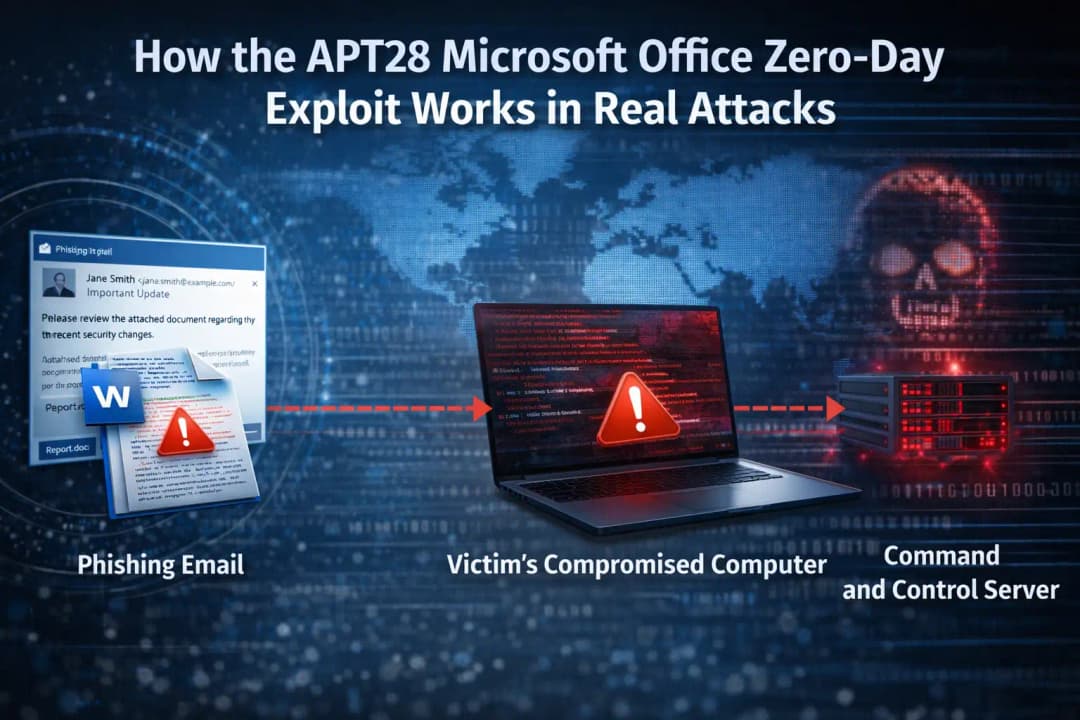
Technical analysis suggests the exploit abuses how Microsoft Office processes certain embedded objects and memory references. While no public CVE identifier has been finalized at the time of writing, researchers agree the flaw allows remote code execution under specific conditions.
Attackers send spear-phishing emails that have weaponized documents in them. The content is carefully tailored to the target, and it's often written in fluent language that fits their job. When you open the document, malicious code runs in the background and drops a second-stage payload.
That payload usually makes a backdoor connection to servers that the attacker controls. From there, APT28 operators can add more tools, steal credentials, and keep an eye on what people are doing. At first, the infection doesn't leave much forensic evidence, which makes it harder to find.
An example of the exploit in the real world
One campaign that was watched targeted European diplomatic institutions. It looked like the emails were about updates on security in the area and ongoing policy talks. The documents that were attached looked real, with logos and proper formatting.
When recipients opened the files, the APT28 Microsoft Office zero-day exploit executed immediately. Malware was installed without prompts or warnings. In several cases, compromised systems remained undetected for weeks.
Later, researchers found command-and-control traffic that matched the infrastructure of APT28. Attribution in cybersecurity is never 100% certain, but many signs point to the fact that Fancy Bear has done similar things in the past. Still, analysts warn that some details are still not confirmed and need more investigation.
Why this attack is more important than other similar ones
This campaign shows a worrying change. Many organizations believe disabling macros solves Office-based threats. This incident proves that assumption is outdated. The exploit does not rely on macros at all.
The APT28 Microsoft Office zero-day exploit also highlights how quickly state-linked groups can operationalize new vulnerabilities. There is little gap between discovery and exploitation. Defenders often react instead of stopping things.
There is also a geopolitical impact, in addition to technical risk. APT28's targets are more about gathering intelligence than committing financial crimes. That makes people worry about national security, keeping diplomatic secrets, and getting a long-term strategic edge.
Effect on businesses and regular people
Government agencies and defense contractors are at the most risk, but they are not the only ones. If targeted, any business that uses Microsoft Office could be affected.
Once malware is installed, hackers can read emails, documents, passwords, and internal messages. In cases of espionage, data exfiltration can go on quietly for months. That slow leak of information can be worse than a loud breach.
For regular people, the immediate risk is lower but not zero. Sometimes, targeted phishing campaigns go beyond their original goals. As tools become more common, criminal groups may use similar methods to launch bigger attacks.
A timeline of the activity that was seen
In January 2026, security researchers discover that malware is acting strangely and is linked to Office documents.In the middle of January 2026, a number of groups say they have had the same problems with infections that spread through documents.
Late January 2026: APT28 is more likely to be the one behind it because of overlaps in infrastructure.
February 3, 2026: Reports from the public show that the problem is still happening in the wild.
This timeline shows how quickly cyber threats change in the world today. By the time the information is made public, attackers may have already found new ways to attack.
What Microsoft and security firms are saying
Microsoft has acknowledged reports of active exploitation and stated that investigations are ongoing. Limited mitigations have been issued, including detection signatures for Defender products.
A spokesperson from a leading threat research firm noted, “This campaign demonstrates the continued effectiveness of document-based exploits when paired with high-quality social engineering.”
However, no official confirmation has been made regarding the full technical root cause. Until a patch is widely deployed, uncertainty remains around complete remediation.
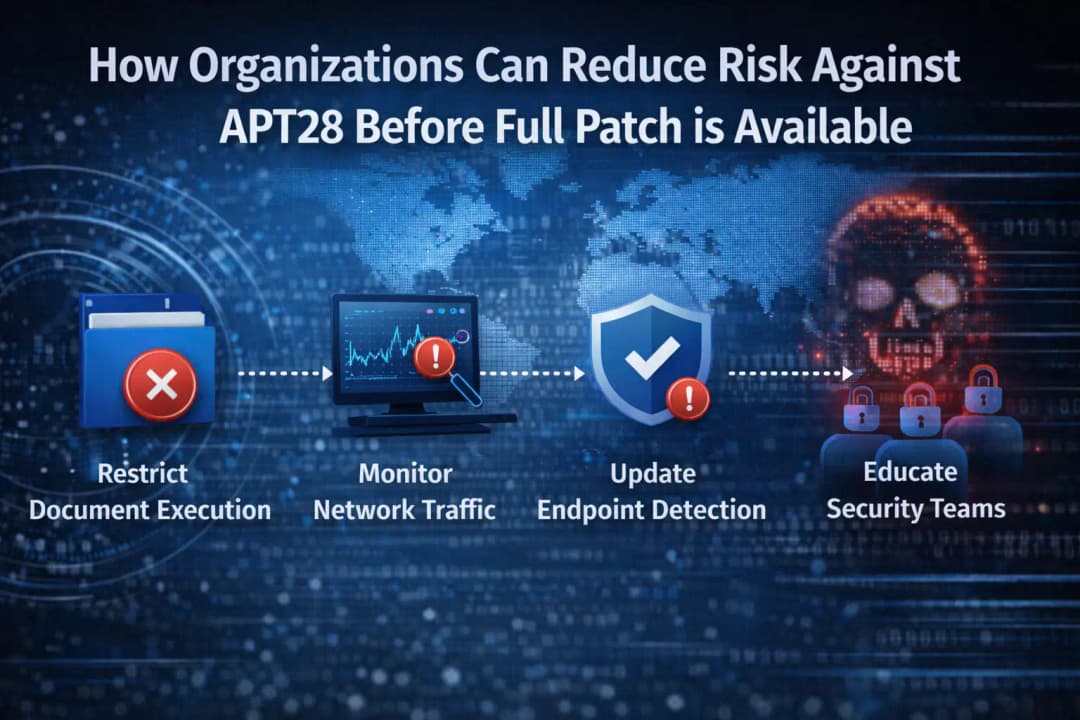
How organizations can reduce risk right now
While waiting for a full patch, organizations can take practical steps. Limiting the execution of Office documents from untrusted sources is a good place to start. It's also important to keep an eye on outbound network traffic for strange patterns.
You should update your endpoint detection tools often. Keeping track of and alerting people about how documents are handled can also help find problems early.
Most importantly, security teams should not assume users are the weakest link. This exploit bypasses many traditional user-focused controls. Defense must focus on behavior and context, not just clicks.
What the future may look like for office-based exploits
The APT28 Microsoft Office zero-day exploit is likely not the last of its kind. When security gets better in one area, attackers move to another.
We can expect more people to misuse file formats, preview features, and background parsing functions. These areas don't get as much attention, but they have powerful ways to carry out tasks.
The lesson is clear but not easy for defenders. Trust boundaries must be reevaluated. Office documents should no longer be treated as inherently safe, even from known contacts.
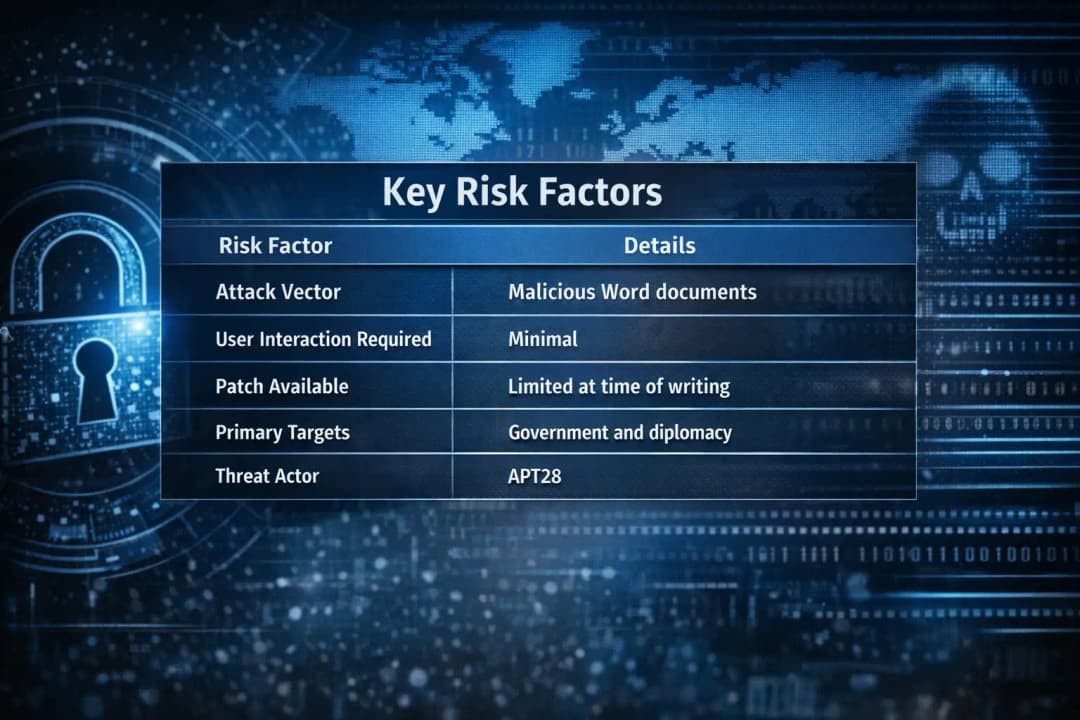
Simple table showing risk factors
Frequently asked questions
Is this Microsoft Office zero-day patched yet?
As of February 3, 2026, Microsoft has issued partial mitigations, but a full patch rollout has not been publicly confirmed.
Does this exploit require macros?
No. This is one of the most concerning aspects. The exploit works without macros.
Who is most at risk?
Government agencies, defense organizations, and diplomatic entities appear to be the primary targets.
Can antivirus software stop it?
Traditional antivirus may miss early stages. Behavioral detection and updated threat intelligence offer better protection.
Final thoughts
The APT28 Microsoft Office zero-day exploit is a reminder that convenience and familiarity often become attack surfaces. Office documents are part of daily work life. That makes them powerful weapons in the wrong hands.
Security is no longer about one setting or one patch. It is about mindset. Questioning assumptions. Watching patterns. Accepting that even routine tools deserve scrutiny.
Staying informed, skeptical, and prepared is not paranoia. In today’s threat landscape, it is survival.
“This campaign shows how document-based attacks continue to evolve beyond macros and user awareness training,” said a senior analyst at a global threat research firm.
Hoplon Insight Box
Practical recommendations
Limit Office document execution from external sources.
Increase monitoring of document parsing behavior.
Educate teams that macroblocking alone is not enough.
Prepare incident response plans specifically for zero-day scenarios.