1.2 million French citizens are worried about their finances because of a data breach at the French government bank. Imagine waking up to find out that your private banking information is no longer just between you and your bank.
This nightmare came true for more than a million people in France. A huge security breach at the French social assistance agency, CAF, made data from about 1.2 million accounts public.
This French Government Bank Account Data Breach isn't just a problem in France; it's a warning to the whole world about how easy it is for state-run digital infrastructure to break. When a government agency doesn't protect its citizens' private information, trust in the government starts to break down.
This wasn't just an "oops" moment. It was a planned attack that puts the financial security of regular people at risk. In this in-depth look, we'll talk about how the breach happened, who is in charge, and what this means for the future of online privacy.
What really happened? The Breach's Anatomy
The trouble started when a group of hackers said they had been able to get past the CAF portal's security. Not only did they break in, but they also said they had access to 1.2 million accounts.
Early forensic investigations show that the attackers used a method called "credential stuffing." Instead of trying to break into a server by brute force, they used lists of usernames and passwords that were leaked from other breaches in the past to see which ones worked on the French government site.
The information that is at risk includes full names, home addresses, birth dates, and most importantly, IBANs (International Bank Account Numbers). With this information, cybercriminals can run very advanced phishing campaigns or even try to steal someone's identity.
Reports say that some of this information has already shown up on dark web forums, where people are trading it like digital money. From a technical point of view, the hackers used automated scripts that can try thousands of login combinations every minute.
The hackers found a "golden key" to a huge vault of information because many people use the same passwords on different platforms. The French government worked to fix the hole, but it stayed open long enough for a lot of data to be stolen.
Why This Happened
The French government was one of the first to make public services available online. Moving everything online makes things easier for people, but it also makes a big, centralized target for criminals.
There are two main reasons why the French Government Bank Account Data Breach happened: old security flaws in the system and the fact that multi-factor authentication (MFA) is not required. In the last few years, there have been a lot more cyberattacks on French government buildings.
Hackers want to get into these databases because they hold a lot of personal and financial information. CAF and other agencies like it handle billions of dollars in housing and family benefits.
This makes them a "high-yield" target for people who want to mess up national infrastructure or make money from stolen identities. France has seen similar attacks on its healthcare databases in the past.
Even though we've learned from past mistakes, the size of the CAF breach shows that security updates haven't kept up with the changing methods of modern criminals. It shows that a firewall is only as strong as the system's weakest password.
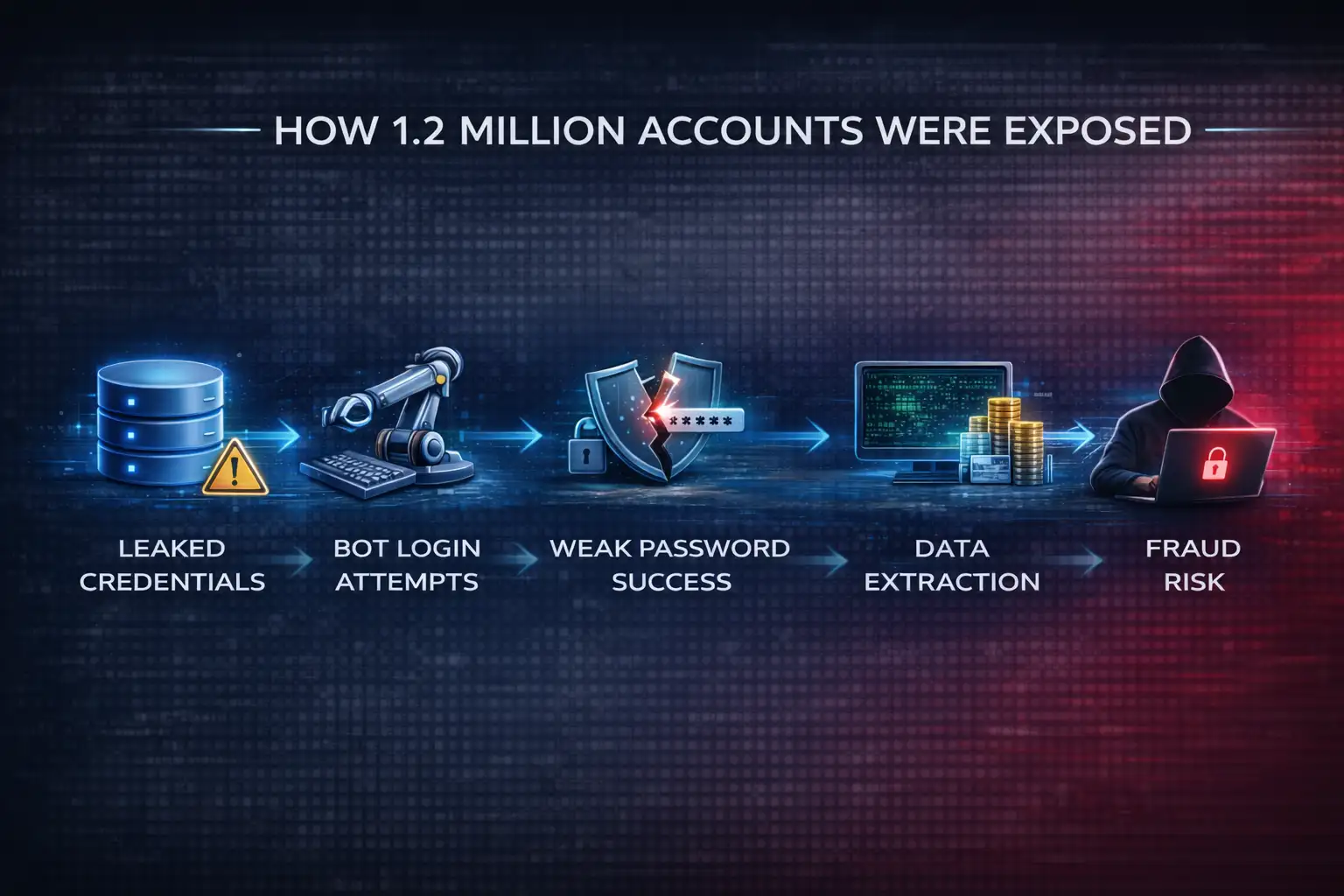
How the Breach Works: An Analysis in Steps
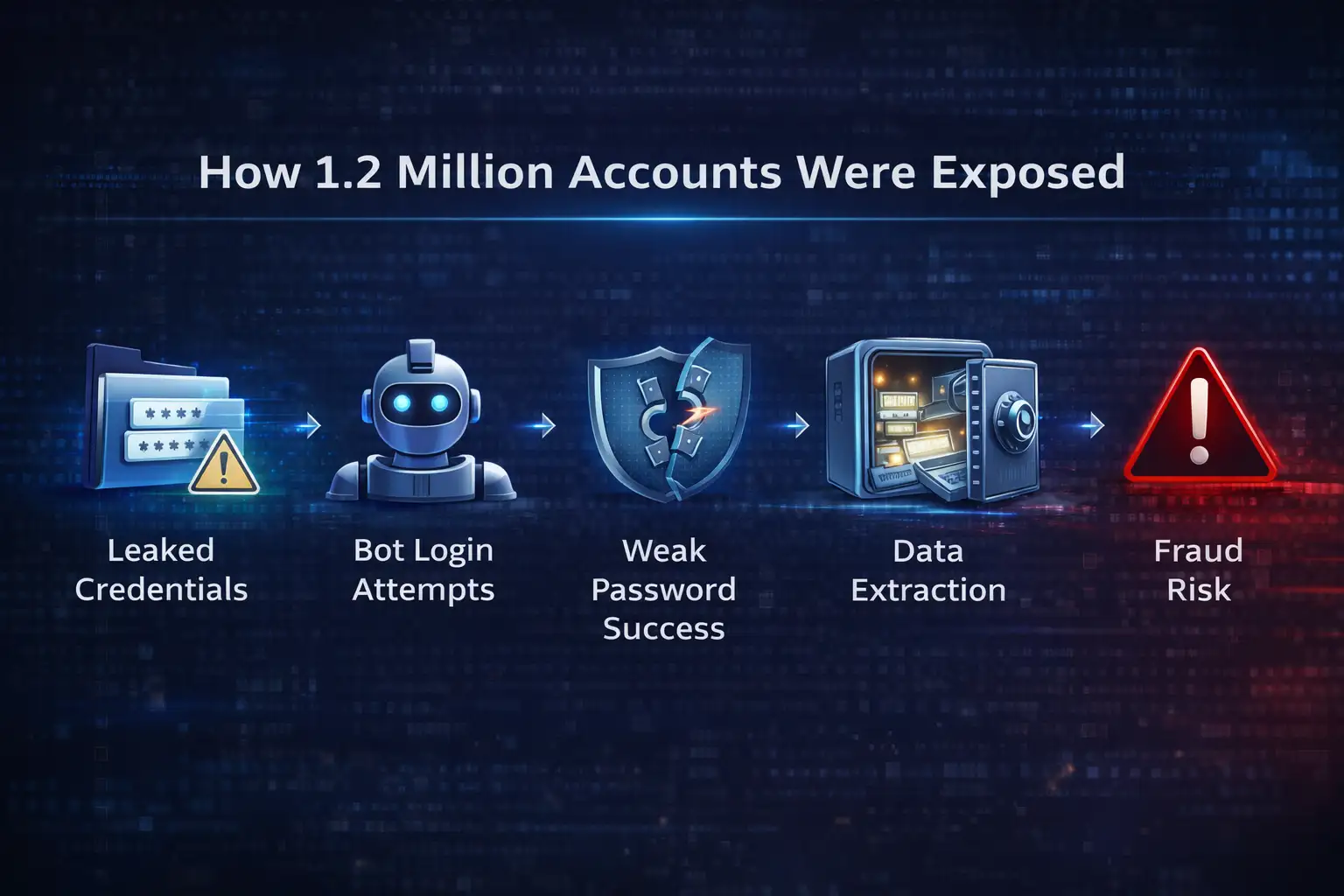
It wasn't an accident that 1.2 million accounts were exposed. It was a planned process that took advantage of people's habits and holes in the system.
• Phase 1: Data Acquisition: Hackers buy or download huge databases of leaked credentials from past high-profile breaches, such as the LinkedIn or Adobe leaks.
• Step 2: Automated Probing: The attackers use botnets to run these credentials against the CAF login page. They look for accounts that don't have extra layers of security.
• Phase 3: Deep Extraction: The bots don't just sit there once they're inside. They are set up to "scrape" certain fields, like bank account numbers and personal identifiers.
• Phase 4: Monetization: The stolen data is put together and sold to "initial access brokers" or fraudsters who are good at using social engineering to empty accounts.
This process goes very quickly. Most victims don't know that someone has accessed their account until they get a message from the government or, even worse, see a strange transaction on their bank statement.
How the Breach Changed Things in the Real World
To get a sense of how serious this is, let's look at "Jean," a typical person who gets housing help from CAF. The French Government Bank Account Data Breach has had a huge effect on his life.
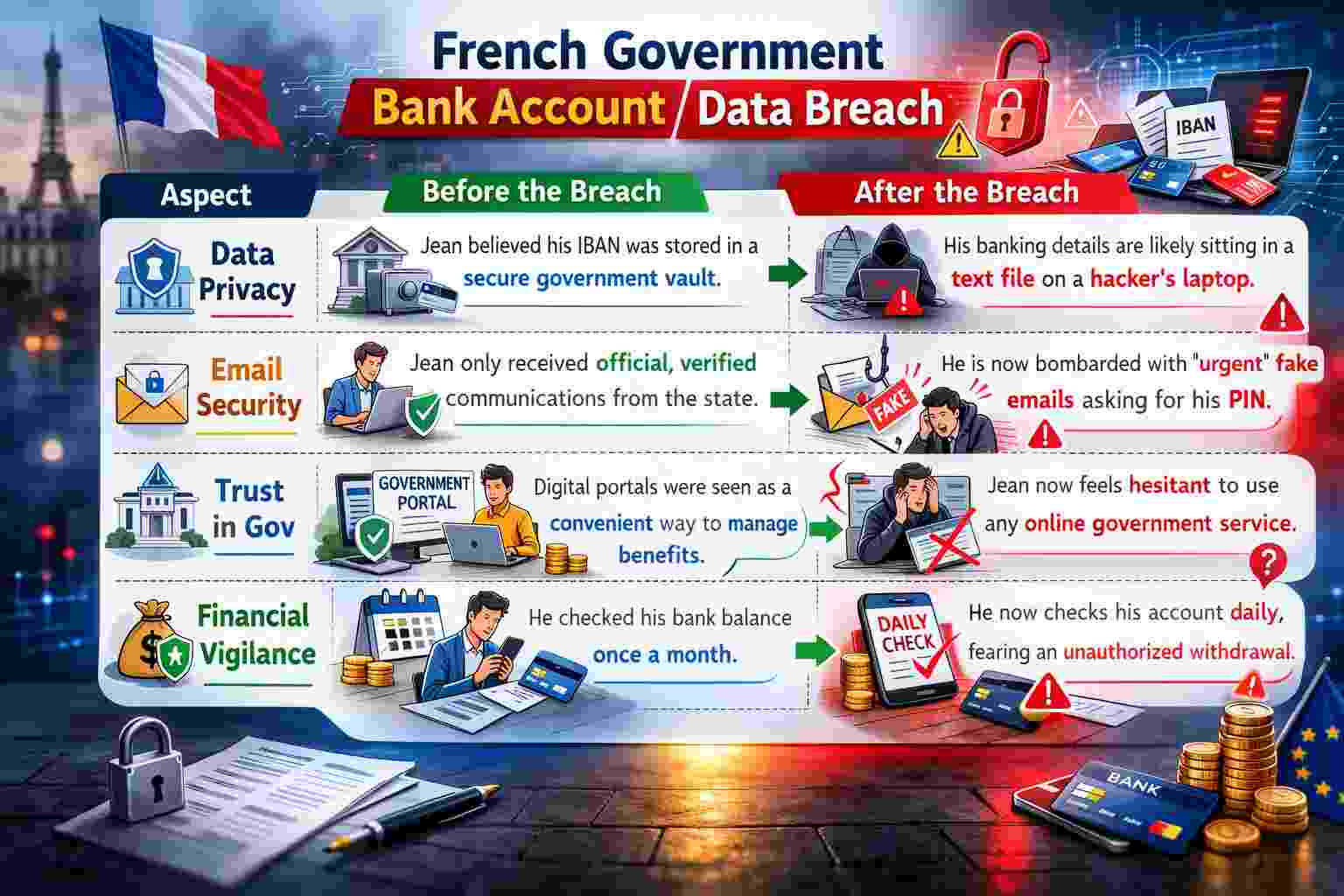
Millions of people can relate to Jean's story. Losing your peace of mind can be just as bad as losing money. This event shows that digital convenience can be very expensive if it isn't protected well.
Who is affected? The Ripple Effect
Not only does the breach hurt the people whose names were on the list, but it also hurts the whole trust ecosystem.
1. Families with Low Incomes: Since CAF mainly helps people who need money, the victims are often the ones who can least afford to lose money.
2. The French Administration: The government is now under a lot of pressure because its cybersecurity budget isn't working and it's not protecting the most vulnerable.
3. Financial Institutions: Banks all over Europe are on high alert for fake transfers that come from the exposed IBANs.
4. Cybersecurity Professionals: This event has made people rethink how to protect "public-facing" databases from bot-driven attacks.
Pros and cons of going digital
A society that puts digital first is very fast. You can apply for benefits from your couch at 2 AM. The French Government Bank Account Data Breach, on the other hand, shows the bad side of this centralization.
The main problem with these digital systems is that they have a single point of failure. In the days of paper files, a thief would have to break into an office to steal a few hundred records. A hacker on the other side of the world can steal a million records in just a few minutes.
Many government systems also use "legacy" code, which is older software that wasn't made to deal with the aggressive, automated threats of 2026.
What Users Should Do Now: Advice that you can act on
Don't wait for a letter in the mail if you think your data was part of this or any other breach. Do these things right away to keep your assets safe:
• Reset Your Credentials: Right away, change the password for the portal that was affected. Change your password in any other places where you used it.
• Turn on Multi-Factor Authentication (MFA): This is the best way to stop credential stuffing. They can't get past the code sent to your phone, even if they have your password.
• Keep an eye on your bank statements for "micro-transactions." Hackers often take out a penny from an account to see if it works before taking out more.
• Be careful with calls and texts: If someone calls and says they are from the government and wants to "verify" your bank account, hang up. Most of the time, governments won't ask for all of your banking information over the phone.
Using a good password manager can help you make and save different, complicated passwords for each site you visit. This lowers your risk of being a victim of credential stuffing.
Questions that are often asked
1. Have officials confirmed the French Government Bank Account Data Breach?
Yes, CAF officials have confirmed the breach, but they stressed that it was an exploit of user credentials and not a full system takeover.
2. Is it possible for hackers to steal money just by knowing my IBAN?
An IBAN by itself isn't enough to get cash, but it can be used for unauthorized direct debits or as a "social engineering" tool to get you to give up more information.
3. What is the government doing to make things better?
French officials have made it harder to log in and are working with cybersecurity agencies to keep an eye on the CAF network for any other strange activity.
4. How do I find out if my account was hacked?
According to the law (GDPR), most agencies have to let affected users know. Look in your registered email for any official security alerts.
5. Is it still safe to use government websites?
As long as you use a different password and turn on two-step verification, they are usually safe. It's not just the site itself that poses a risk; it's also how the user logs in.
Finding Your Way in the Future of Digital Identity
The French Government Bank Account Data Breach is a clear example of how our information is only as safe as our worst habit in the digital age. The exposure of 1.2 million accounts is a huge change in the way France and Europe as a whole protect their computers.
It's not just a technical problem; it's a social and economic issue that needs everyone to work together to solve. In the future, we can expect governments to move toward "passwordless" authentication and stronger ways to check someone's identity.
The time for simple passwords is coming to an end, and it's about time. Always be on the lookout, change your security settings, and don't think your data is completely safe.
For more latest updates like this, visit our homepage.

-20260925120840.webp&w=3840&q=75)