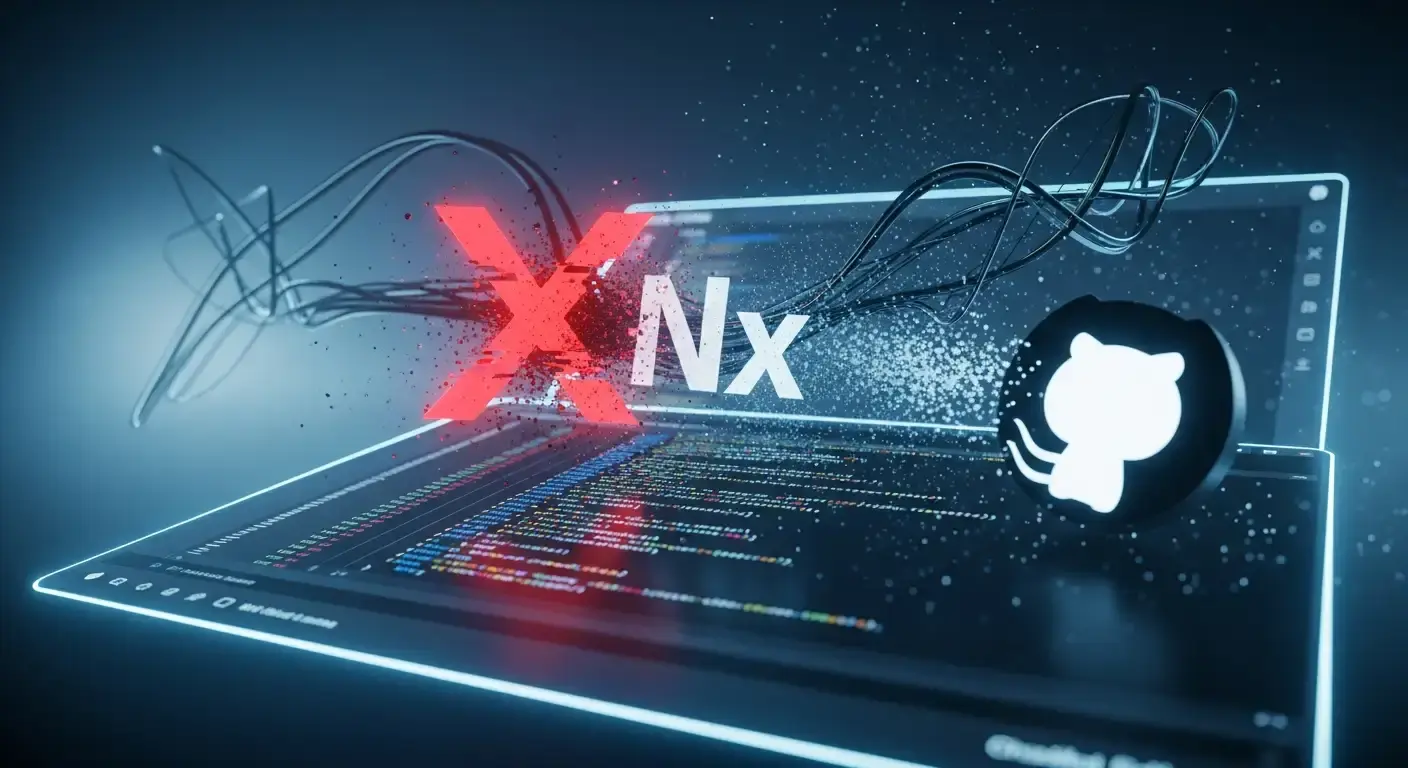
GitHub Nx Console VS Code Extension Attack Explained
ByMd Saiful Islam
Published21 May, 2026
Md Saiful Islam21 May, 2026
The GitHub Nx Console VS Code extension attack is a sharp reminder that trusted developer tools can become the first step in a breach. A poisoned extension on an employee device led GitHub to investigate unauthorised access to internal repositories, and the company said it rotated critical secrets while monitoring for follow-on activity.
This article is for students, junior developers, and security readers who want the real story without the noise. We will break down what happened, how the attack worked, why it matters, and what teams should do next.
What is the GitHub Nx Console VS Code extension attack?
The GitHub Nx Console VS Code extension attack is a supply chain-style incident in which a trusted Visual Studio Code extension became part of a compromised chain that exposed GitHub internal repositories. The reporting says GitHub detected and contained an employee device compromise linked to a poisoned VS Code extension and that the attacker claims about 3,800 repositories were directionally consistent with GitHub’s investigation.
A malicious VS Code extension on an employee device helped expose GitHub internal repositories, forcing GitHub to rotate secrets and investigate follow-on risk.
What happened in the GitHub Nx Console VS Code extension attack?
GitHub said it was investigating unauthorised access to internal repositories after TeamPCP listed GitHub source code and internal organisations for sale. In the same report, GitHub said it contained a compromise on an employee device involving a poisoned Microsoft Visual Studio Code extension. The company also said it saw no evidence, at that point, that customer information stored outside internal repositories had been affected.
A few points matter here:
The issue was tied to an employee device, not a public GitHub repo leak.
The attacker’s claims were about internal repositories, not customer repositories.
GitHub said it rotated critical secrets after the incident.
That is why this case is bigger than a simple malware story. It is a developer trust story. And trust is what makes the breach intriguing. Who suspects a code editor extension first?
Quick incident timeline
Item
Reported detail
Why it matters
Threat actor
TeamPCP
The group claimed responsibility for the data sale.
Attack surface
Employee device with poisoned VS Code extension
Developer tools are now a real entry point.
Impact
Internal repositories accessed
Source code and internal logic can become exposed.
GitHub response
Rotated critical secrets
Fast credential rotation limits spread.
Customer impact
No evidence confirmed at the time of reporting
The blast radius may have stayed internal.
What is Nx Console, and why did this matter?
Nx Console is a developer tool used with VS Code in Nx-based workspaces. The reason it matters is simple. Developers install tools to move faster. That same convenience can turn into a trust gap if an extension is altered or abused.
The broader lesson is not about one plugin alone. Nx’s own 2025 postmortem showed how a prior supply chain event involving malicious npm packages and a GitHub Actions injection issue could steal tokens and publish bad packages for a short window. That background helps explain why extension-driven attacks now get so much attention.
This is the pattern:
Trusted tool
Small privilege gap
Hidden token theft
Repo or pipeline access
Bigger compromise
That is the core shape of a VS Code supply chain attack. It looks small at first. Then it spreads fast.
GitHub repository
breach through a poisoned extension
How did the malicious VS Code extension work?
We do not have every forensic detail from the public reporting, so I will stay within what is verified and what is a reasonable security analysis. The report confirms the poisoned extension and the internal repository exposure, but it does not publish a full malware sample or a full technical teardown.
Initial infection vector
The first step was trust. A developer device had a that should have looked normal. That is what makes a malicious VS Code extension dangerous. It does not need flashy behaviour. It needs access and patience.
Malicious code injection
If the extension was altered after a normal install or update, the user would have had little reason to suspect it. That is the danger of an open source extension attack. The package appears familiar, but the code path changes underneath the user.
Credential harvesting
The most likely prise was not just code. It was credentials. In incidents like this, attackers often go after GitHub tokens, session data, cloud keys, and secrets cached on the workstation. GitHub’s own guidance stresses token review and revocation when exposure is suspected.
GitHub token theft
A GitHub credential theft event is often more valuable than the first infected device. One token can open the door to private repositories, automation, and internal tools. GitHub recommends short-lived or revoked tokens and strong 2FA to reduce that risk.
Repository access escalation
Once a token works, the attacker can move from a workstation into the organisation's code footprint. That is where a GitHub repository breach turns serious. Source code, internal docs, and automation logic all become part of the threat surface.
Persistence techniques
The public report did not publish persistence details, so I will not guess. Still, the defensive takeaway is clear. On a compromised developer device, persistence can hide in startup items, browser sessions, package caches, or scripts. The key is to assume the workstation may have been used as the launch point for more than one access attempt.
Data exfiltration process
GitHub’s public statement focused on internal repositories only and said it had no evidence, at that time, of customer information outside those repositories being impacted. That is a small win in a bad situation, but it still means sensitive internal material was exposed.
Data Insight: Technical details that matter
Technical item
Reported detail
Security meaning
Threat actor
TeamPCP
Motivated attackers are now packaging code theft as
resale.
Attack vector
Poisoned Microsoft VS Code extension
Developer tooling can be a direct entry point.
Target
GitHub employee device
Endpoint security matters as much as server security.
Impact
Internal repositories accessed
Internal code and operational logic can be exposed.
Response
Critical secrets rotated
Fast containment reduces follow on damage.
Broader context
Nx previously published a postmortem on a package
compromise
Supply chain abuse around developer tools is an active
trend.
Note: The public reporting I reviewed did not include a CVE assignment, so I have not added one here.
Why this matters
We see this kind of incident as a warning shot for any team that depends on GitHub, VS Code, or package-based workflows. The business risk is bigger than a single stolen repo.
For a regular user or student developer, the danger is losing local tokens, private code, or cloud credentials.
For a company, the risk grows fast:
source code exposure
internal automation exposure
CI/CD security risks
secret sprawl
customer trust damage
incident response costs
That is why a developer environment compromise is not just an IT issue. It is a business continuity issue. A single workstation can become a bridge into an entire organisation.
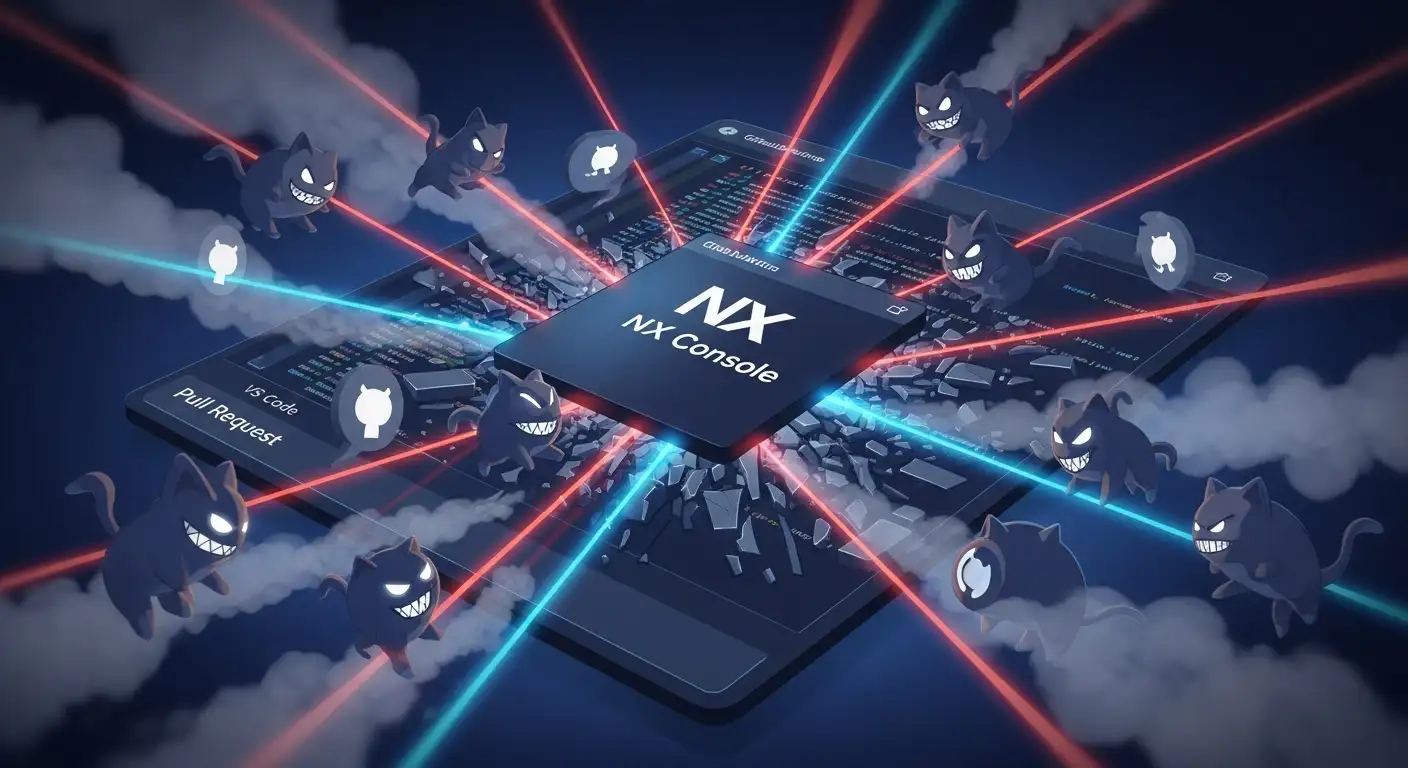
Malicious VS Code extension attack on a developer
laptop
How hackers target developers through IDE extensions
Attackers like developers because developers hold the keys to the castle.
A compromised IDE can touch the following:
source code
cloud credentials
API keys
CI/CD pipelines
production support tokens
internal documentation
That is why VS Code extension security has moved from a niche topic to a frontline defence topic. GitHub’s secret scanning and push protection features exist because secret leaks happen often enough to need automation.
The psychology is simple too:
the tool is familiar
The publisher looks trusted.
The install feels routine.
The user is focused on shipping code.
That is where developer workstation security fails. Not because the user is careless, but because the workflow is fast and trust is automatic.
Quick comparison table: safe behaviour vs risky behaviour
Topic
Safer choice
Riskier choice
Extensions
Install only from trusted publishers
Add tools without review
Tokens
Short lived, scoped, reviewed
Long lived and reused everywhere
2FA
Passkey or TOTP with backup
SMS only
Repo access
Least privilege
Broad org access
Monitoring
Secret scanning and alerting
Manual checking only
GitHub recommends stronger 2FA methods and token controls, and it documents secret scanning to help detect leaked credentials in repository history.
Field Notes
In our analysis of the reported attack chain, the most striking part is how ordinary the entry point feels. A code editor extension does not look like malware to most users. That is exactly why the tactic works. The risk is not loud behaviour. The risk is quiet access.
A second observation stands out. GitHub’s response focused quickly on rotating secrets and watching for follow-on activity, which is the right instinct when tokens may already be in play. GitHub’s own token revocation and 2FA guidance supports that approach.
Step-by-step: How to protect your system
1. Remove the suspicious extension
Delete any extension you do not fully trust. This matters because the extension is the likely entry point. If you are not sure about a publisher or recent update, remove it first and inspect later.
2. Revoke GitHub tokens
Use GitHub’s token revocation flow to kill active access. GitHub documents how to review and revoke personal access tokens in organisations and explains that exposed tokens can be revoked automatically in some cases.
3. Turn on strong 2FA
GitHub recommends TOTP apps or security keys rather than SMS. This matters because token theft often pairs with account abuse.
4. Scan for leaked secrets
Enable secret scanning and push protection where possible. GitHub says these tools help find hardcoded API keys, passwords, and tokens across Git history.
5. Rotate everything important
Rotate GitHub tokens, cloud keys, SSH keys, and any secrets that may have been present on the device. This is not overreaction. It is containment.
6. Review recent repo and workflow access
Look for unusual commits, workflow runs, package publishes, or token use. If a workstation was touched, assume nearby systems may also need review.
7. Enforce enterprise guardrails
For organisations, require 2FA, tighten token policies, and restrict what developers can install on managed machines. GitHub documents enterprise and org controls for 2FA and token policy enforcement.
Best practices to protect GitHub repositories from extension-based attacks
Use least-privilege access
Give each token and user only the permissions they need.
Restrict extension installation
Approvals matter. Not every productivity extension belongs on a production laptop.
Enable GitHub Advanced Security
GitHub says its security stack includes secret scanning, push protection, code scanning, dependency review, and other controls.
Monitor OAuth applications
Third-party app access can quietly expand the blast radius.
Enforce strong 2FA everywhere
GitHub recommends secure methods like passkeys, security keys, and authenticator apps.
Use endpoint detection for developers
A good EDR setup can catch abnormal extension behaviour, strange child processes, and odd network calls.
Verify extension publishers
Check update history, maintainer reputation, and any recent compromise notice.
Implement zero-trust development
Trust the user less, verify the device more, and inspect access often. That model fits this attack very well.
Common mistakes teams make
1. Trusting a familiar name
A well-known name does not guarantee safety. Attackers love borrowed trust.
2. Leaving tokens active too long
GitHub recommends token expiration and revocation. Long-lived credentials are a quiet risk.
3. Treating the IDE as harmless
The IDE is part of the attack surface. It is not just a text editor.
4. Ignoring secret scanning alerts
A missed secret can become a public breach later.
5. Skipping device review after a compromise
If one developer device is touched, the surrounding accounts and pipelines may need review too.
Expert tips that actually help
Keep developer machines separate from admin workstations.
Use scoped, short-lived credentials whenever possible.
Review extension updates before they roll into enterprise environments.
Keep GitHub secret scanning and 2FA turned on across the org.
Make token rotation part of the incident response playbook.
Add extension inventory to the endpoint audit checklist.
These steps sound simple. They are simple. That is why they work.
Checklist to protect GitHub from malicious extensions
Checklist: what to do right now
Review installed VS Code extensions
Remove anything suspicious or unneeded
Revoke and rotate GitHub tokens
Check for unusual repository activity
Enable or verify 2FA
Turn on secret scanning and push protection
Audit CI/CD credentials
Document the incident response path
GitHub’s own documentation supports all of those controls in some form, especially token revocation, 2FA, and secret scanning.
FAQ
What is the GitHub Nx Console VS Code extension attack?
It is a reported incident where a poisoned VS Code extension on an employee device helped expose GitHub internal repositories.
How did hackers breach GitHub repositories?
The public report says GitHub detected and contained an employee device compromise involving a poisoned VS Code extension and then investigated unauthorised access to internal repositories.
Can VS Code extensions steal GitHub credentials?
Yes, malicious or compromised extensions can be used to target credentials and tokens. GitHub’s own security guidance around token revocation and secret scanning exists for this exact reason.
How do I know if my VS Code extension is malicious?
Look for suspicious behaviour, sudden permission changes, unknown publishers, strange network activity, and unexpected token use. Then remove the extension and rotate secrets.
Are VS Code extensions safe for enterprises?
They can be, but only with controls. Enterprises should restrict installs, enforce 2FA, monitor secrets, and review token policies.
What should I do first after a suspected compromise?
Revoke tokens, remove the extension, and rotate secrets. GitHub documents token review and revocation, plus strong 2FA and secret scanning.
Why are developers targeted so often?
Because developer accounts often reach code, cloud, and production systems. One workstation can unlock many systems.
Is this only a GitHub problem?
No. The lesson applies to any company that uses IDE extensions, package registries, tokens, and cloud automation. Nx’s own 2025 postmortem shows how supply chain abuse can start from a package compromise and spread quickly.
Final thought
The GitHub Nx Console VS Code extension attack is not just another malware headline. It is a clear sign that developer tools now sit inside the attack path. The safest response is not panic. It is discipline. Verify extensions, shorten token lifetimes, enable strong 2FA, and treat every workstation as a possible doorway until proven clean.
If this story feels close to home, it should. That is exactly the point.
Organizations affected by the GitHub Nx Console VS Code extension attack should immediately review developer endpoints, GitHub tokens, and CI/CD access.Hoplon Infosec can help with GitHub security assessments, developer endpoint monitoring, supply chain security reviews, incident response, and DevSecOps protection to reduce the risk of future compromises.
Author bio: Written by the security research team at Hoplon Infosec, specializing in GitHub security, software supply chain threats, incident response, and developer environment protection.
Microsoft X account hacked in a Clippy crypto scam. Learn what happened, what Microsoft confirmed, the risks involved, and how users can stay protected.
acSync malware abuses public iCloud calendars to deliver macOS payloads. See how the attack works, what it steals, how it persists, and how to respond.
CLOSEDQUORUM malware uses four AI models to vote on attack actions. See how multi-LLM C2 works, what it steals, and how defenders can detect attacks early.

-20260521065905.webp)





-20260925120840.webp&w=3840&q=75)