Did Microsoft really give the FBI access to BitLocker encryption keys to unlock laptops in a fraud case in Guam? Should regular people and businesses be worried about their data privacy in 2026?
As of January 2026, there is no verified evidence that Microsoft directly bypassed BitLocker encryption, according to public reports. It looks like what happened was that someone legally got access to recovery keys that were already in escrow, probably through Microsoft account or enterprise key management systems. This difference is more important than most headlines say.
In short
Reports from the past few days say that Microsoft gave the FBI BitLocker recovery keys while they were looking into fraud in Guam. The story spread quickly, making people worry about Microsoft's access to BitLocker, privacy loss, and secret backdoors. A closer look reveals a more complicated truth. BitLocker did not fail in terms of encryption. It looks like the access is connected to how recovery keys are stored, handled, and legally asked for. This article talks about what is known, what is still unclear, and what organizations should realistically do next.
An Overview of the Claim and How to Check It
BitLocker FBI access claims and reports of unverified encryption access
The headline that started the argument was simple and scary. Microsoft is said to have given the FBI BitLocker keys to unlock encrypted laptops that were part of a fraud investigation in Guam. A lot of people thought this was proof that encryption could be easily broken.
But if you look beyond the headline and read the available news stories carefully, the picture changes. The CybersecurityNews article points to court papers and news stories that look into the matter. But it doesn't show any technical evidence that Microsoft itself broke BitLocker encryption. Instead, it implies that keys were acquired through legitimate means.
This difference is very important. Claims that BitLocker gives the FBI access are not the same as a proven technical backdoor. These reports are unverified encryption access reports because of the information that is currently available. Microsoft has not made a public statement confirming direct decryption help, and no cryptographic weakness has been made public.
For years, I've been writing about fights over encryption. At first, almost every big case sounds dramatic. After that, the details come out slowly. This one is the same as the others. Strong encryption usually works. Key management is where the real story usually is.
Why Guam is in the story
The Guam angle made it more emotional. Small area of law. Investigators from the federal government. Laptops with passwords. It felt like the worst storm ever. But the US federal government has power over Guam. That means the same legal ways to get to data work in this state as they do in California or New York.
There is no public proof that the FBI told Microsoft to make BitLocker less secure. It seems more likely that investigators were able to get to recovery keys that were already stored in Microsoft-controlled systems.
That might still make users worry. But it's not the same as a lock that won't open.
How to Use BitLocker Key Management
Microsoft BitLocker, FBI access, Microsoft encryption key access policy, encryption key escrow, enterprise key management
You need to know how BitLocker works in real life, not just in theory, to understand this problem.
BitLocker uses strong encryption algorithms that people still trust. The weak link is not the encryption itself. The key to getting back is.
When BitLocker is turned on on a Windows device, users are often asked to back up their recovery key. A lot of people who use Microsoft at home save it there without thinking about it. Companies can keep their keys in Active Directory, Azure AD, or other systems for managing enterprise keys.
Encryption key escrow is the name of this process. It is meant to help people get their data back when they forget their passwords. It also makes a legal way to get in.
According to Microsoft's publicly available Microsoft encryption key access policy, the company can respond to legal requests for data it controls. This could apply to a recovery key that is stored in Microsoft's cloud.
This isn't just a problem for Microsoft. Apple, Google, and other companies have to follow the same laws, but the details of how they do this differ.
BitLocker keys kept in the cloud
People don't always know that BitLocker keys stored in cloud accounts aren't just local secrets anymore. In a legal and administrative sense, they exist once they are uploaded.
That doesn't mean Microsoft can look through your files wheneverit wantst. It does mean that stored recovery keys can be accessed if the law says so.
This is where most of the worries about Microsoft BitLocker law enforcement access come from.
Access that is legal versus technical
Microsoft BitLocker transparency, lawful data access, and disk encryption for law enforcement access
Legal access and technical compromise are very different things. Sadly, headlines make things less clear.
Law enforcement follows court rules when they have legal access. When technical access fails, encryption doesn't work. There is no public record that shows BitLocker encryption failed in this case.
This difference is important for trust. For decades, law enforcement has been able to get into encrypted disks with search warrants, subpoenas, and court orders. Encryption doesn't take away legal power. It changes how data is collected.
Microsoft has a history of putting out transparency reports that list requests for government data. This makes Microsoft BitLocker more open, even though the details upset people who care about privacy.
Over the years, I have read many reports on transparency. They often show that requests are common, denials happen, and compliance isn't always automatic. That context often gets lost in viral stories.
Can Microsoft get into BitLocker drives?
People are always asking this question in search engines. The honest answer is not simple.
Without a key, Microsoft can't magically unlock BitLocker encryption. But if a recovery key is stored in systems that Microsoft controls, it is possible to legally access it.
That's not a way in. It is a result of how you store your keys.
Analyzing Business Risks
BitLocker encryption trust issues, encryption risk assessment, enterprise Risks of not following BitLocker
This story is worse for businesses than it is for people who work from home. Businesses have to follow rules, regulations, and contracts.
The real danger isn't that BitLocker isn't strong. The risk is making assumptions about trust that aren't managed.
A lot of businesses think that encryption means complete privacy. That's not how modern business systems work. Most of the time, people who don't trust BitLocker encryption don't understand how to keep keys safe.
A good encryption risk assessment makes you think about things that make you uncomfortable. Where do we keep our keys? Who is in charge of access? In what area of law?
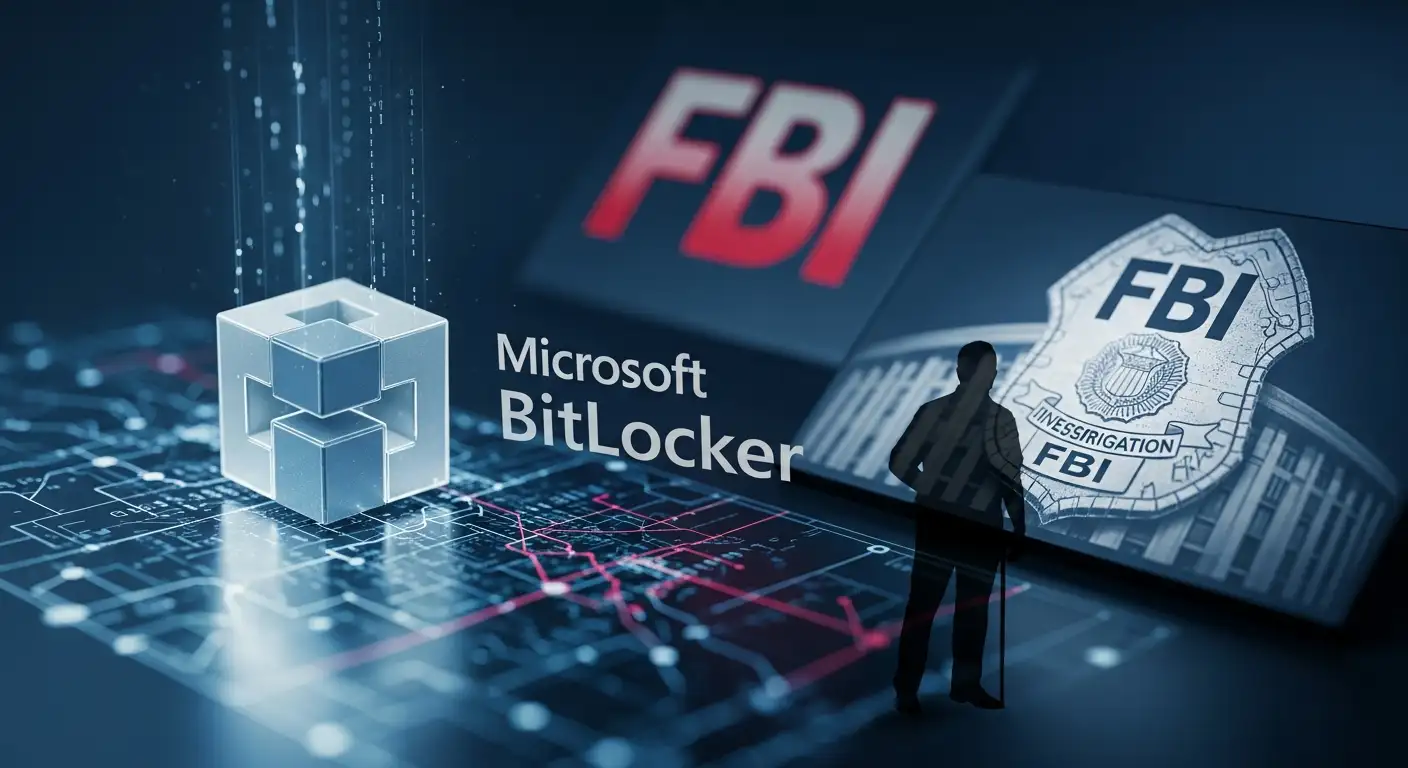
When key escrow policies are unclear or not written down, the risks of enterprise BitLocker compliance go up in regulated industries.
I have seen audits fail because no one could say who had the keys to the encryption. Not because the data was stolen. Because there was no governance.
Example from real-world enterprise audits
I looked over one financial services audit and saw that BitLocker was turned on for all endpoints. The management was sure of itself. But recovery keys were automatically synced to cloud directories without checking the policy.
No one could answer when auditors asked about legal access situations. That lack of certainty turned into a compliance finding.
Encryption without rules is only half a solution.
What Businesses Can Do
How to stop third-party access to BitLocker, endpoint security encryption, and zero trust encryption were some of the words used.
First, know where you keep your keys. Businesses can set up BitLocker to store recovery keys on their own computers or in tightly controlled internal systems. In many cases, cloud escrow is not required.
Second, check who has administrative access. Limit the number of people who can get keys. Keep track of every retrieval. Keys are like passwords.
Third, add endpoint security encryption to a larger plan for zero-trust encryption. Expect that people will ask for access. Create systems that limit exposure.
Fourth, teach users. A lot of keys are held in escrow because people didn't think about the default settings they accepted.
These steps do not stop legal access. They cut down on unnecessary exposure.
Dealing with the Guam Investigation Claims
Can the FBI unlock a laptop that is encrypted with BitLocker? Does Microsoft share BitLocker keys with the police?
So, what do we really know about the investigation into fraud in Guam?
According to reports, it looks like investigators were able to get into BitLocker-protected devices by using recovery keys they got through legal means. There is no public evidence that Microsoft offered help beyond responding to legal requests.
So, when people ask if the FBI can unlock a laptop that is encrypted with BitLocker, the right answer is "sometimes," depending on whether they have the right key.
When people ask if Microsoft shares BitLocker keys with the police, the honest answer is that it depends. Only when keys are on Microsoft-controlled systems and legal orders are in place.
Questions and Answers Section
Is it safe to use BitLocker on private data?
Yes, as long as it is set up correctly. The problem isn't how strong the encryption is. Key management is.
How does the BitLocker key escrow system work?
It keeps recovery keys so you don't lose data. The risk of access depends on where the escrow is.
Can businesses turn off key escrow?
Yes. Businesses can change BitLocker policies to control or limit how escrow works.
A comparison of FileVault and BitLocker for privacy
FileVault on macOS also lets you manage keys and set up escrow accounts. Neither platform guarantees that no one can legally access it. The difference is in the defaults and how clear they are, not how strong the encryption is.
VeraCrypt, on the other hand, doesn't use automatic escrow at all. That makes things more private, but it also makes them harder to use and recover.
Hoplon Infosec Suggestion
Companies that are worried about Microsoft BitLocker FBI access stories shouldn't panic. Instead:
• Offer a BitLocker security audit service
• Look over the encryption risk assessment for businesses
• Make sure that endpoint encryption consulting meets compliance needs
• Do an encryption review that focuses on compliance
Encryption is a tool. Governance builds trust.
The Electronic Frontier Foundation has said many times that encryption still works when users control the keys. Most of the time, key custody, not cryptographic failure, is what causes lawful access disputes. This is in line with what we talked about with BitLocker.
Public encryption advice from the EFF is a trusted source.
Last thought
This story isn't really about betrayal; it's more about not getting it right.
The FBI didn't just suddenly get access to Microsoft BitLocker. The mechanisms have been around for a long time. The only thing that changed was the public's attention.
BitLocker is still a good way to encrypt data. But encrypting data without carefully managing the keys gives a false sense of security.
If you want to keep things private, you need to keep your keys safe.
If you want to be able to get back your data, you have to accept trade-offs for legal access.
-20260925120840.webp&w=3840&q=75)