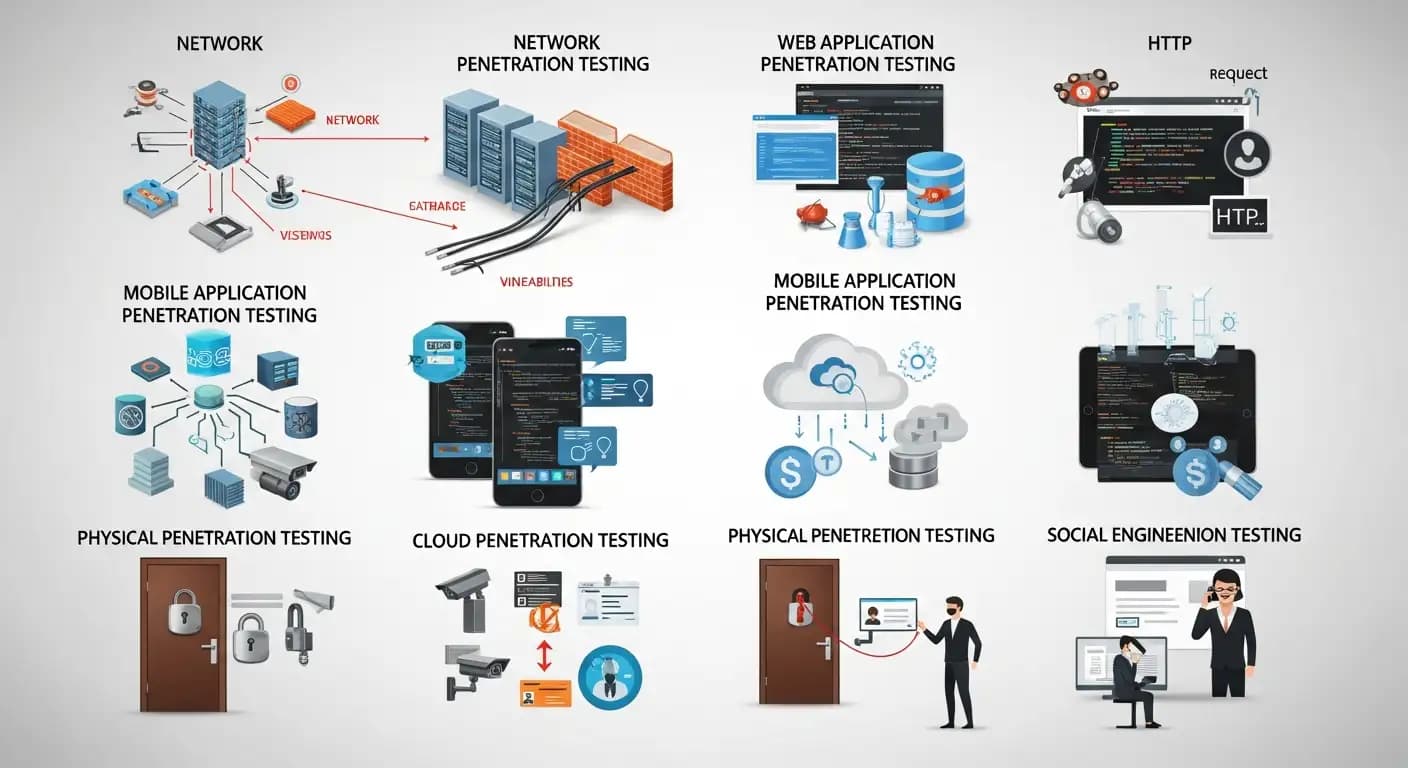
The NIST SP 800-115 Technical Guide to Information Security Testing says that penetration testing is a structured and controlled security test that simulates real-world attacks to see how vulnerable an organization really is. This advice has become one of the most trusted sources for businesses that want to learn about the different kinds of penetration testing and how each one fits into a modern cybersecurity plan.
When companies start to plan a security program, they often ask the same thing. What kinds of penetration testing are there, and which one is best for their situation? The question seems easy, but the answer depends a lot on the company's assets, business risks, compliance needs, and how much information they want to give the tester. That's why security experts group penetration tests into types, each with its own goals, methods, and expected results.
Before we get into the list, it helps to put the topic in context with one simple fact. Every kind of pen test tries to find out what is not known. Some tests look at networks, some look at applications, and some pretend to be real enemies. Each one tells a different part of the story of how strong or weak an organization really is.
The Core Categories of Penetration Testing
and Internal Penetration Tests
The external penetration test is one of the most popular types of penetration testing. This test looks at systems that anyone can access to find holes that an attacker could use to get in. This is a common first step for businesses because it gives them a quick idea of how visible their attack surface is. The tester usually looks at open ports, applications that are open to the internet, and common security holes. This helps find cloud resources that aren't set up correctly or services that are still running but have been forgotten. A lot of businesses don't see these risks because they don't seem dangerous until they are.
Internal penetration testing tells a different story. The tester starts inside the network instead of outside, assuming that the attacker has already gotten in somehow. This is usually what happens in real life when phishing, stolen credentials, or bad employees let people in from the inside. Internal testing shows how quickly an enemy could move between systems, gain higher privileges, or get to sensitive data. It includes databases, internal applications, Windows domains, and internal APIs. In a lot of cases, the internal test reveals bigger problems because internal environments don't get as much hardening as they should.
The Black Box, White Box, and Gray Box Methods
Another way to group penetration tests is by how much information the tester gets. Black box testing is like an attacker who doesn't know anything about the system. The tester can only see what is publicly available and must find out everything. This method takes longer, but it is very similar to real-world threats. It's helpful when a business wants to get an unbiased view of how safe its outside security is.
On the other end of the spectrum is white box penetration testing. The tester gets documentation, information about the architecture, the source code, and sometimes even internal credentials. White box testing helps businesses check that they are following safe development practices and find logic errors that black box testing can't find. A lot of development teams like this method better because it helps them understand better how their software acts when it is under attack.
Gray box testing is a mix of the two. The tester only gets some information, like a basic network diagram or user-level access. A lot of security teams choose this because it strikes a good balance between being realistic and being quick. It often finds important problems without the time commitment needed for full black box testing. These three methods help figure out how different types of pen testing fit with the goals of an organization.
Different Types of Penetration Testing for Today's Environments
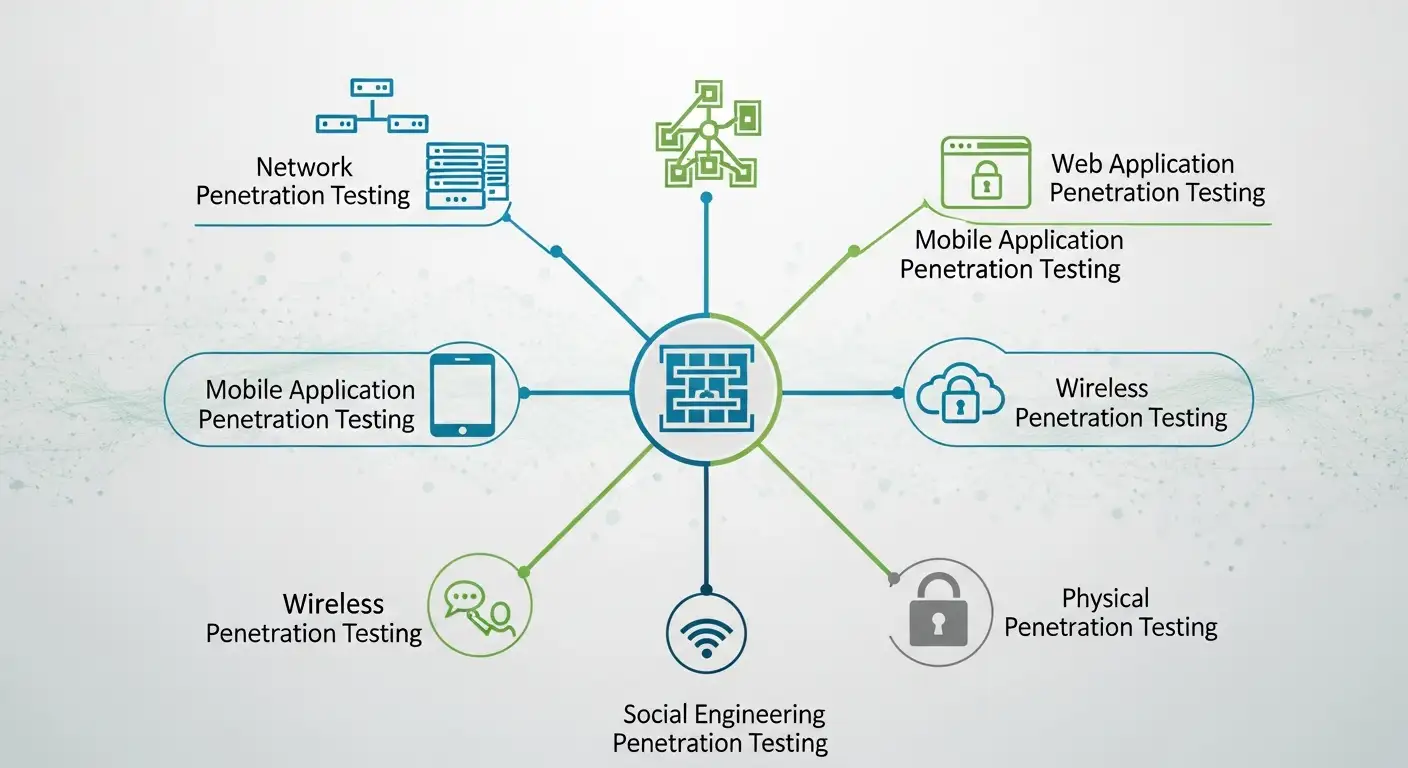
Penetration testing has grown a lot since it was first used to check networks. Tests that are specific to cloud platforms, applications, APIs, and even how employees act are needed by modern infrastructures. Here are the most common types of requests that businesses make:
• Network penetration testing to find weaknesses in routers, firewalls, servers, and the paths that network traffic takes; • Web application penetration testing to find problems like injection flaws, broken authentication, or insecure configuration;
• API penetration testing that looks for weak points in tokens, authorization flows, and logic
• Wireless penetration testing that checks Wi-Fi networks, encryption, and unauthorized access points
• Cloud penetration testing for platforms like AWS, Azure, and Google Cloud • Social engineering penetration testing, which tests employees against phishing and impersonation • Physical security penetration testing, which checks how easy it is for someone to get into restricted areas
Each of these groups has a different job to do. As businesses move workloads to the cloud, cloud penetration tests are becoming more common. Web application assessments are still important because most breaches happen because of flaws in applications. Social engineering tests remind businesses that people are still the easiest way for attackers to get in. These layers give a full picture of risk, which is why many security teams do more than one type of penetration test in the same year.
How These Groups Fit the Needs of Real Businesses
To really get what different types of penetration tests are, you need to look at the big picture. For example, companies that want to get SOC 2 need annual assessments that meet compliance standards. For SOC 2 compliance, penetration testing usually includes testing from the outside, the inside, and the application. Cloud environments need to be checked because SOC 2 controls say that companies should check their cloud security settings on a regular basis.
Startups often look for cheap web application penetration testing because they need to protect their products quickly and don't want to spend too much money. This makes them more likely to do targeted application tests instead of full red team engagements. A red team operation, on the other hand, might be better for bigger businesses. A red team assessment tries to act like a real enemy by using phishing, network attacks, physical break-ins, and other methods. This test is very different from traditional penetration testing, which looks for ways to exploit vulnerabilities. It's important to know the difference between red team and penetration testing because they have different goals.
Black box and white box penetration testing examples help make this clearer. A black box test could start by looking for services that are open to the public. A white box test might start by looking at the source code for secrets that are hardcoded. Each one shows something that the other might not see. That's why companies change styles every year.
A Simple Case Study
A startup in financial technology asked a security company for help because customers wanted proof that the company had strong security measures in place. The company used AWS to host its services and APIs a lot. The company suggested starting with cloud and API penetration testing, with help from reviews done by people inside the company. The tester found an open S3 bucket with application logs in it during the test. These logs had tokens that let people who weren't supposed to access the API. After the problem was fixed, the startup learned how important it was to know about the different kinds of penetration testing, especially for cloud apps. This example shows how even small mistakes can turn into big problems if you don't test regularly.
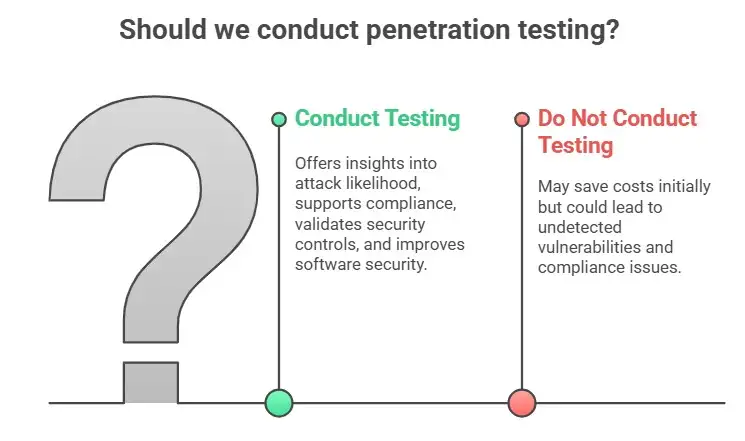
Important Information or Pros and Cons Pros
• Helps businesses understand how likely they are to be attacked
• Supports compliance efforts like SOC 2 and ISO 27001
• Validates security controls and cloud configurations
• Improves software security through web and API assessments
• Shows how people can be affected through social engineering tests
Disadvantages
• Costs may go up depending on the scope • Results may vary depending on the tester's skill • Not all environments can be fully exploited because of business constraints • Some problems need follow-up technical audits instead of regular pen tests.
Organizations can choose the right types of penetration testing for their needs if they know these things.
Frequently Asked Questions
What are the main kinds of penetration tests?
There are many different types of tests, including external, internal, black box, white box, gray box, network, web application, API, cloud, wireless, and social engineering tests.
How do I pick the best type of penetration testing for my business?
Make sure the test fits your most important assets. Cloud testing is needed for cloud environments, application security testing is needed for applications, and compliance may need a mix of both.
Is penetration testing not the same as a vulnerability assessment?
Yes. A vulnerability assessment looks for weaknesses, and penetration testing tries to take advantage of those weaknesses to find out how risky they really are.
Which industries need penetration testing the most?
Any business that deals with personal information, payments, or cloud services benefits a lot. The most common users are in finance, healthcare, SaaS, and e-commerce.
Wrap Up
Any business that wants to get a real picture of its security needs to know about the different kinds of penetration testing. Choosing the right test is very important, whether you want to follow the rules, keep customer data safe, or stop attacks in the real world.
If you want a custom security assessment or need help figuring out which method works best for your situation, you might want to talk to a qualified penetration testing company. They can walk you through each step and help you decide which areas need to be secured next.




-20260925120840.webp&w=3840&q=75)