
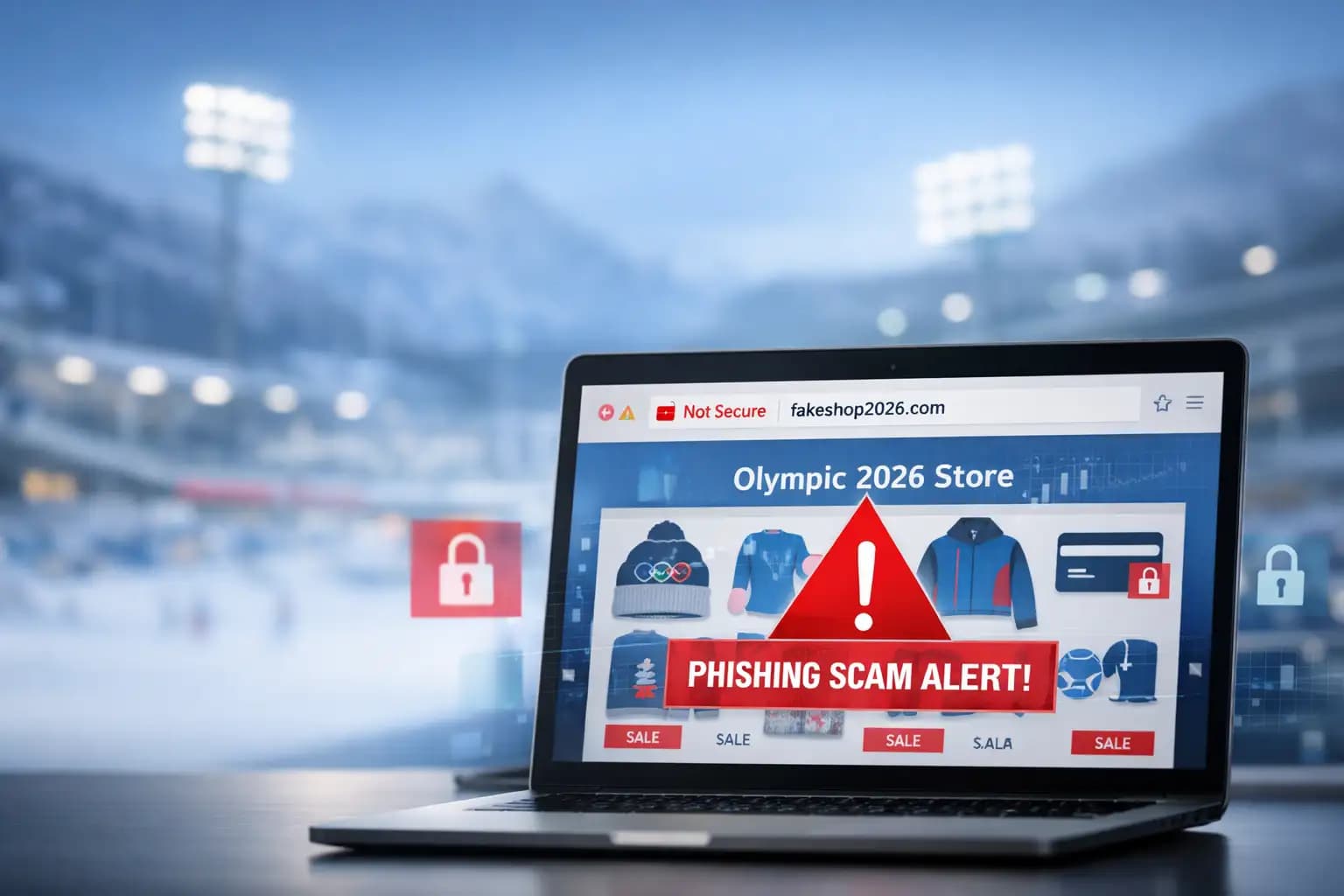
Are you going to the Milano Cortina 2026 Games, or are you just looking for that special jersey to wear while you watch from home? As the excitement for the 2026 Winter Olympics grows, so does the activity of skilled hackers who want to take advantage of your excitement. A lot of Fake Winter Olympics 2026 Shops have popped up on social media and search engines, trying to trick fans into buying tickets, clothes, and other items that seem too good to be true.
It's not just about losing $40 on a fake hoodie. These bad websites are made to steal your credit card information, home address, and even your identity. In this guide, we'll go into great detail about how these digital traps are made, why they work so well, and the specific technical signs you can look for to spot a fake storefront before you click the "buy" button.
What are the Fake Winter Olympics 2026 shops, and why do they exist?
Fake Winter Olympics 2026 Shops are basically high-quality phishing sites that look like the real Milano Cortina 2026 shopping sites. Threat actors use the huge worldwide demand for Olympic goods to get people to visit these sites. Scammers use limited-time offers to get around people's natural skepticism because the Olympics are a time-sensitive event. They know that if you think an item will sell out in a few minutes, you won't be as likely to look at the URL or the SSL certificate.
The main reasons these sites exist are to steal money directly and to collect personal information. Sometimes, you might get a fake item that isn't very good, which is a way to keep you from filing a chargeback with your bank. In worse cases, the shop is a ghost site that steals your money and then sells your credit card information on dark web forums right away. These stores are a classic case of brand impersonation and social engineering for IT professionals and security analysts.
The changes that have happened to these stores are very impressive. No more blurry logos and broken English. Today's hackers use automated kits that copy the CSS and JavaScript from the official Olympic website to make the fake site look just like the real one. They even put fake Verified by Visa or Mastercard ID Check logos on their sites to make people feel safer than they really are.
How a phishing attack works at a sporting event
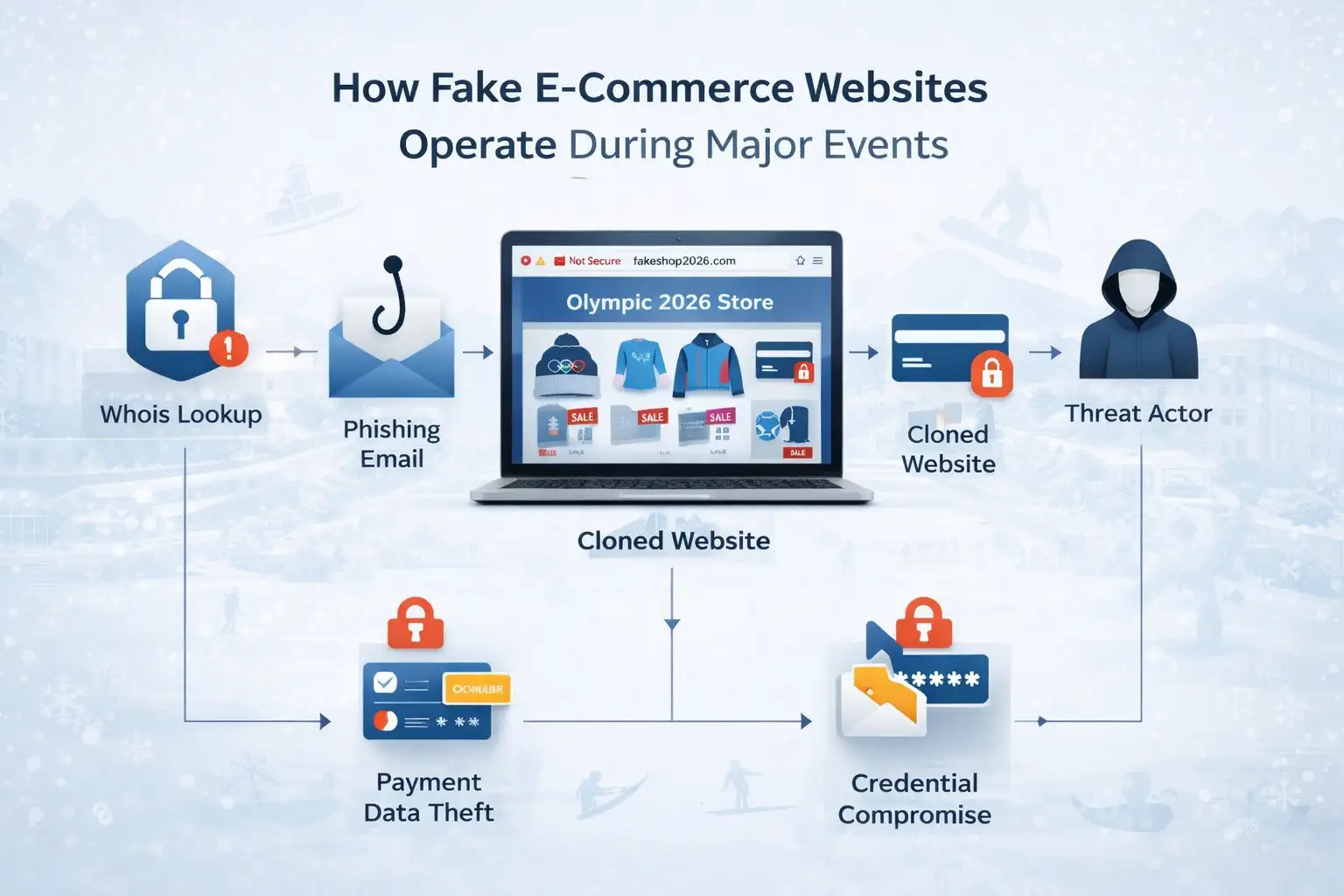
How do these fake Winter Olympics 2026 stores work behind the scenes? Usually, it starts with a complicated SEO poisoning campaign or malvertising. Scammers pay for keywords that are related to Winter Olympics gear or Milano Cortina 2026 tickets to make sure their fake links show up at the top of search results. When a user clicks, they are often sent through a series of redirects that are meant to hide the final destination from automated security scanners.
Technical Trickery and Architecture
The technical trickery starts as soon as you get to the site. A lot of these stores use typosquatting, which means that the domain name is only one letter off from the real site. For instance, they might use a misleading URL instead of the real domain name. They also often use Let's Encrypt to get a valid HTTPS padlock, which many casual users still think means that the site is completely legitimate. The checkout page is usually a custom-built script that grabs the POST request with your credit card information before it gets to a real payment processor.
Organized crime groups often run the backend of these businesses. They use bulletproof hosting services in places that don't follow international takedown requests. This lets the fake store stay online for weeks, even after cybersecurity companies have told people about it. Browsers like Chrome or Firefox won't let you see the site until it's finally flagged and blocked. By then, the actors have already moved their database to a new domain and started over.
Why This Threat is Important for Cybersecurity Around the World
Fake Winter Olympics 2026 Shops are a sign of a bigger problem in the world of digital threats: the economy based on services. Scammers don't need to be good at coding to start an attack anymore. On Telegram, they can buy phishing kits made just for the 2026 Olympics for a few hundred dollars. This makes it easier for people to get in, which means that more unique malicious domains are targeting the same event than ever before.
This is also a business risk for organizations. If employees use the same passwords on their work laptops and personal computers, they could accidentally give away company credentials while looking for Olympic tickets. Also, if an employee's personal credit card is stolen on a work device, it can cause a lot of legal and IT forensics problems for the company. The effects go beyond just the person; they hurt trust in the digital economy and the Olympic brand as a whole.
We also need to think about how long the data will last. You can cancel a credit card, but the fake Winter Olympics 2026 shops will keep your home address, phone number, and email address for years. People often use this information to make leads for future SMS or voice phishing campaigns. Someone who loves the Olympics and gets scammed today might get a call from someone pretending to be their bank six months from now because their information was stolen this winter.
Common Misunderstandings About Scams When Shopping Online
People who don't know better believe that only stupid people fall for these traps. In fact, modern Fake Winter Olympics 2026 Shops are so well designed that even people who know a lot about technology can be fooled if they aren't paying attention. A lot of people think that a site that is at the top of a Google search is safe. But threat actors often use ad platforms to put their bad links above real organic results.
Another common myth is that a secure padlock in the browser bar means the site is safe. As a security teacher, I can't stress this enough: the padlock only means that the connection between you and the site is safe. That doesn't mean the person on the other end of that line isn't a thief. Scammers love encryption because it hides their traffic from some common network security tools that would otherwise flag the bad data being sent.
Things to Look Out for in Technology
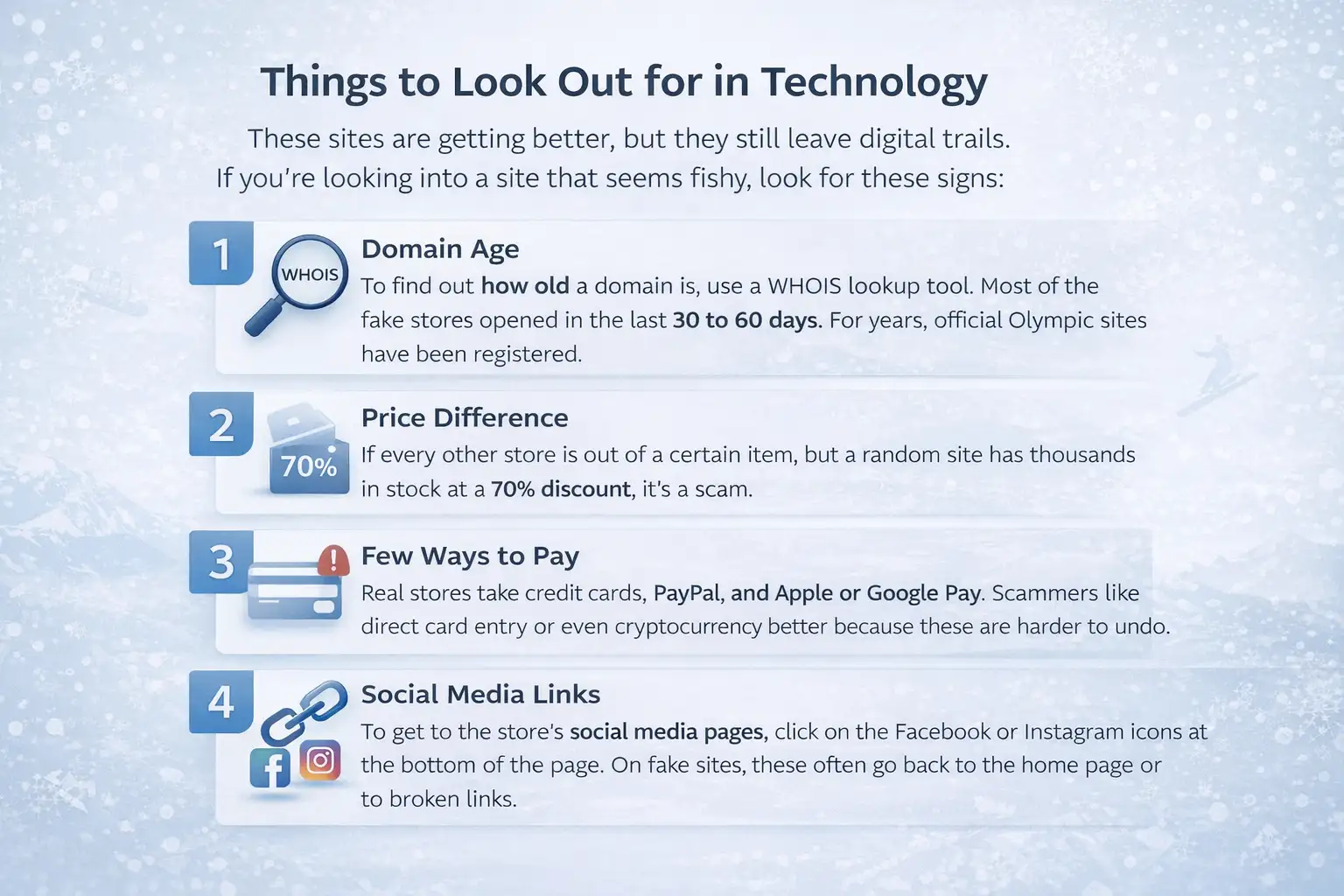
These sites are getting better, but they still leave digital trails. If you're looking into a site that seems fishy, look for these signs:
Domain Age: To find out how old a domain is, use a WHOIS lookup tool. Most of the fake stores opened in the last 30 to 60 days. For years, official Olympic sites have been registered.
Price Difference: If every other store is out of a certain item, but a random site has thousands in stock at a 70% discount, it's a scam.
Few Ways to Pay: Real stores take credit cards, PayPal, and Apple or Google Pay. Scammers like direct card entry or even cryptocurrency better because these are harder to undo.
Social Media Links: To get to the store's social media pages, click on the Facebook or Instagram icons at the bottom of the page. On fake sites, these often go back to the home page or to broken links because the scammers didn't bother to make social media pages.
Contact Information: For contact information, look for the address on the About Us page. A lot of the time, it's a house or a random warehouse that has nothing to do with the Olympics.
Think about it being January 2026. There are no more tickets available for the opening ceremony, which is just weeks away. A fan sees an Instagram ad with the official Milano Cortina 2026 logo that is meant for them. According to the ad, a small number of tickets are now available because a sponsor pulled out. The fan clicks the link and goes to a website that looks great and works well. The URL is something like tickets-milano2026.org.
The fan picks two seats, fills out their information, and pays $400. The site even sends you a PDF ticket and a professional-looking email to confirm your order. But the PDF has a QR code that doesn't go anywhere, or worse, it has a dangerous macro in it.
When the fan gets to the venue in Italy, they find out that their ticket is no good. In the meantime, the scammers have already used the fan's credit card to buy a lot of expensive things in another country. This isn't just a loss of money; it's a ruined once-in-a-lifetime experience.
Impact Analysis: Who is Hurt the Most?
Individual Consumers: They lose money, have their identities stolen, and have to deal with the mental stress of being scammed.
The International Olympic Committee has to deal with fans who show up with fake tickets. This hurts their brand and makes things very hard.
Banks: The costs of fraud investigations, reissuing cards, and helping customers have all gone up.
Cybersecurity Infrastructure: A lot of new malicious domains are coming in all the time, which puts a lot of strain on automated blocklists and DNS filtering services.
How to Keep Yourself and Your Company Safe
If you work in IT and make decisions, make sure your company's DNS filtering is turned on so that new domains can't get through. The best way for people to protect themselves from fake Winter Olympics 2026 shops is to only buy from the official site. Don't ever click on links that are paid for in search results. Instead, just type the address into your browser.
Another great way to stay safe when shopping online is to use a virtual credit card just for that. You can set a spending limit or use a one-time-use card number with services like Privacy.com or the virtual card features in many banking apps. The Fake Winter Olympics 2026 Shops may be able to get your card information, but it won't be useful for any future purchases. To keep scammers from getting full access to your digital life, always turn on two-factor authentication for your main email and bank accounts.
What Will Happen to Event-Based Cybercrime in the Future?
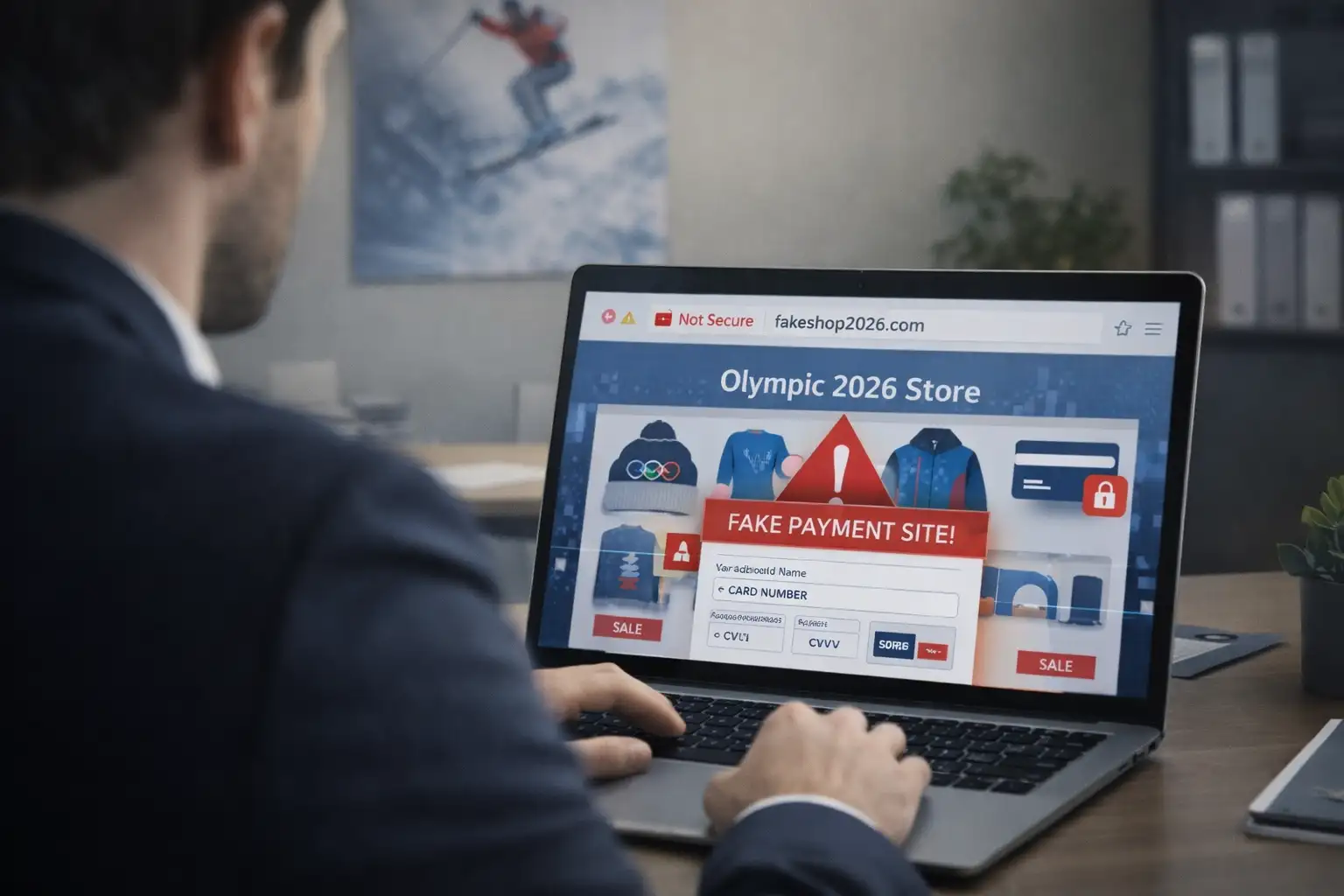
As the 2026 games get closer, we can expect hackers to start using AI in their plans. Deepfake videos of officials promoting certain stores or AI-generated chatbots that answer customer service questions on fake sites to gain trust are two things we might see. The fight against fake Winter Olympics 2026 shops is a preview of how all big events around the world will be attacked in the next few years.
The security community needs to be more proactive and use machine learning to find and shut down these sites within hours of their creation. The lesson for the average fan is simple: in the digital world, only official things are safe. When you go online this winter, being skeptical is the best way to stay safe.
Hoplon Insight Box: Advice from Experts
Check the URL: Before you enter any data, make sure to look for the official extensions.
Avoid Sponsored Links: Don't click on search ads; scammers often pay to be at the top. Scroll down to see the real, organic results.
Use Virtual Cards: To keep your money safe in the long run, use card numbers that can only be used once.
Check your statements: If you went to a site that seemed shady, set up transaction alerts on your banking app right away.
FAQ
Q: How can I tell if a shop is an official Olympic store? A: You can get to official shops directly from the official Olympic Committee website. They will usually have a clear privacy policy and standard business registration numbers.
Q: What should I do if I already bought something from a fake store? A: Call your bank right away and ask for a new card. Don't wait for a charge that looks suspicious to show up.
Q: Can a fake store put a virus on my phone? A: Yes, it is possible. Some fake Winter Olympics 2026 stores might ask you to download a special app to get your tickets. This app could have malware in it.
Q: Why doesn't Google just get rid of these fake sites? A: Scammers make hundreds of new websites every day. Even though Google takes them down, it's always hard because new ones keep popping up so quickly.
Q: Is it okay to buy Olympic gear on social media? A: It's usually not safe. Many ads on sites like Instagram take you straight to Fake Winter Olympics 2026 shops.
Final Thoughts
The threat of Fake Winter Olympics 2026 Shops is a clear sign that hackers are always ready to take advantage of our shared cultural events. If you know how these phishing attacks work, you can feel safe during the 2026 season. Use official channels to make sure you get real goods and keep your personal information safe from hackers. This winter, be careful and check every link. You don't want to get scammed; you just want to catch the Olympic spirit.

-20260925120840.webp&w=3840&q=75)
-20260918120903.webp&w=3840&q=75)