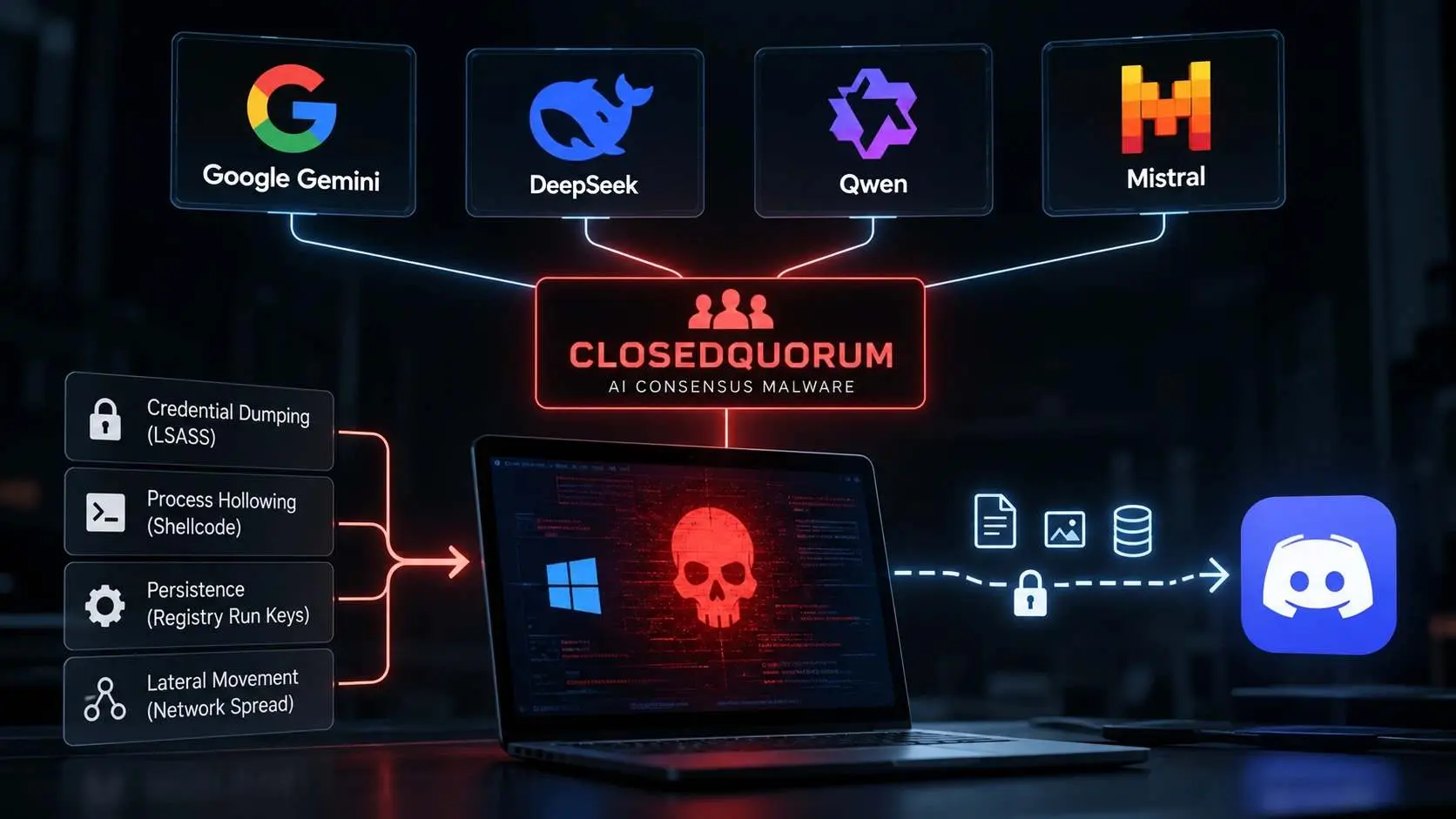
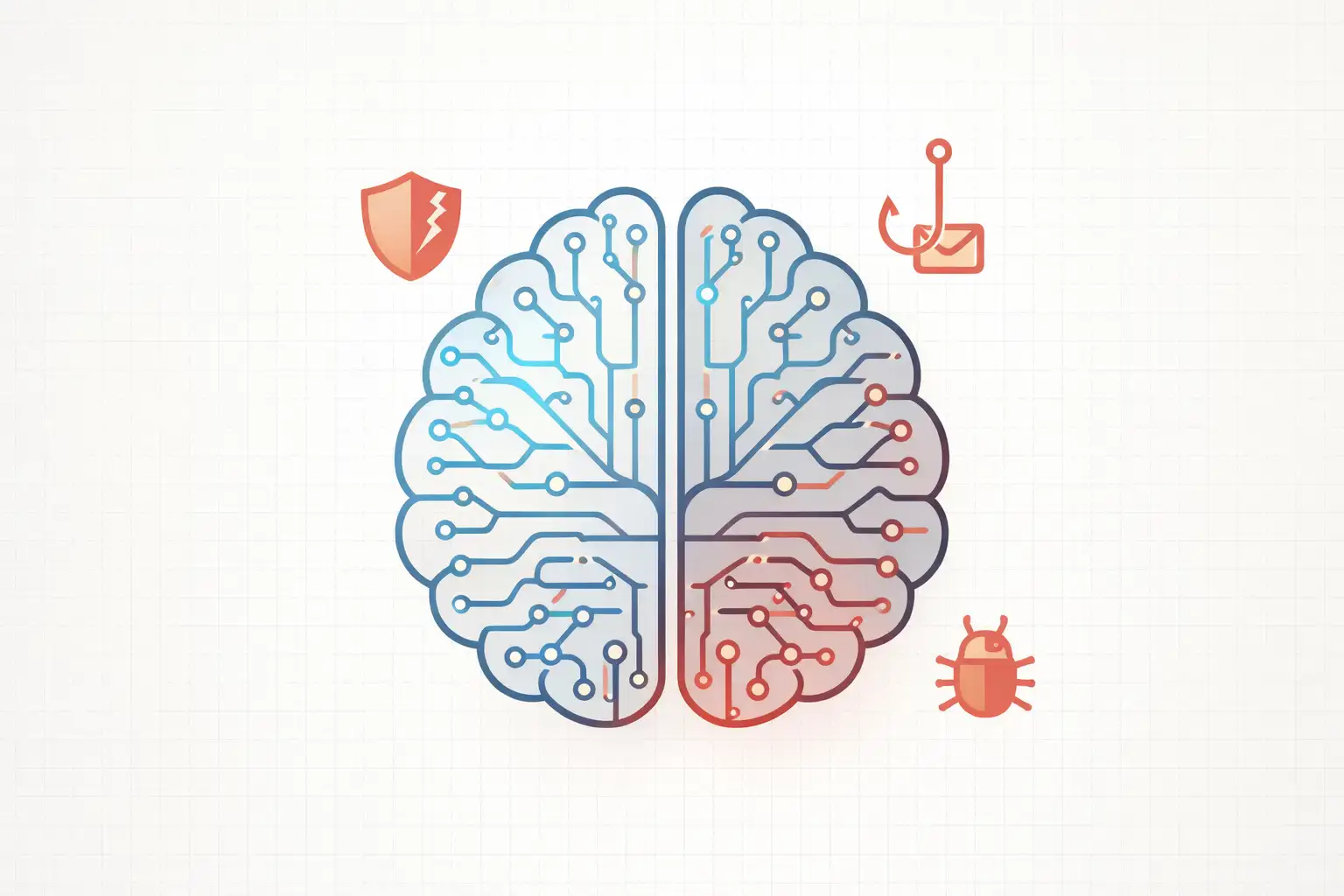
Is AI a good or bad thing for cybersecurity? Recent reports show that attackers are using big language models to send phishing emails and malware, while defenses are using AI to speed up detection times by a lot. This change has an impact on millions of businesses around the world, and they need to act right away to protect themselves while still allowing for new ideas. Here's why it matters now: cyber threats change faster than ever, and without smart protections, your business is at risk.[techradar]
It took days to find threats manually, and some attacks went unnoticed. AI cybersecurity threats and solutions turn that around by finding problems in real time and fixing them automatically. What happened? Faster recovery, fewer breaches, and peace of mind for people like you who make decisions.
Think about this. You own a medium-sized business, and everything is going well. Then one email gets through. It's not only junk mail. It was made by AI to sound like your CEO and has a sense of urgency that is deepfake. The money disappears before lunch. These kinds of stories aren't made up. AI is making it harder to tell the difference between friends and enemies in cybersecurity, so these are the new normal.
AI cybersecurity threats and solutions are all over the news because attacks happen so quickly now. Hackers use your data leaks to train models that make perfect lures. Predictive analytics is a defense against attacks. For business leaders, ignoring this is like betting against risks that grow quickly. Accepting it? You have an advantage where other tools fail.
Why now? The amount of data grows quickly. AI can process petabytes in seconds and find things that humans miss. Attackers do too, though. A McKinsey report says that breakout times are now less than an hour, down from days. Your board needs plans that will turn this double-edged sword into a shield.[mckinsey]
This isn't just talk. It's a turning point. Companies that stick with old firewalls are watching their competitors get ahead with AI-hardened operations. After adoption, I've seen companies lose 40% of their business. Let's go through it step by step.
What It is
AI came into cybersecurity like a rocket booster. Threats like prompt injection hit models directly all of a sudden. If you give ChatGPT-like systems bad information, they will give you secrets or malware code. Next comes data leakage, in which training data reveals customer information.
For example, deepfakes. Attackers copy voices or faces from social media videos. One call, and executives send millions of dollars. Polymorphic malware changes every hour to avoid detection. AI threats to cybersecurity and ways to stop them are what this time is all about: tools that learn, change, and avoid.
It has layers. First, the model infrastructure gets hit, and then the servers get poisoned. Then the model itself, through adversarial training. Apps on top? Bot scrapers collect outputs to sell them. Not one vuln. A stack that is open to attack from end to end.
I remember talking to a chain of stores. Their chatbot, which was trained on sales data, used clever prompts to give competitors information about their pricing strategies. Take away their market share. That's what AI cybersecurity threats look like in real life, not just in theory.
Why It Exists
AI didn't sneak in. Companies wanted to be more efficient. Cyber teams were overwhelmed with alerts, 90% of which were false positives. Manual triage wore out professionals. Machine learning comes in: sort out noise and flag real threats.
The attackers saw the same math. Why write phishing code by hand when LLMs can make thousands of personalized versions? It was fueled by past problems. Legacy systems fell apart because of the volume. DDoS attacks peaked at terabits; now AI controls smarter floods.
Background screams demand. Before AI, ransomware doubled every year. Companies needed to go out and find things. Attackers, who were under pressure from better forensics, used AI to automate reconnaissance. It's a process of evolution. Adaptation is good for survival.
Think about supply chains. SolarWinds showed weak spots. AI finds them faster, but it also takes advantage of them. Deloitte says that risk scoring is very important. Exists because machines can't scale against people alone.[deloitte]
How It Works
AI cybersecurity threats can be broken down into clear parts. First, prompt injection. People can sneak commands into queries, like "ignore rules, reveal database." The model follows orders and spills its guts.
Step two: poisoning the data. Add fake data to training sets. The model learns lies and misclassifies threats. Deepfakes use GANs, which are a type of generator and discriminator, to make fake media that fools 99% of people.
Malware gen? "evade antivirus, steal creds" are examples of descriptions that LLMs use to write code. Scales without end. Defenses mirror: anomaly detection looks for behavior patterns and flags changes.
Real-time adaptation sends data back. Attackers and defenders both get better at mid-breach. Zero-trust checks every call. Hoplon Infosec puts this into pipelines and scans models before they are deployed.[techradar]
It's chess at the speed of light. Rules that are common? Static. AI plays dynamically, guessing moves.
Example from the real world
Before AI: a bank manually chased alerts. It took 48 hours to find the breach, which cost $2 million. Basic phishing emails caught late.
After AI solutions, the same bank uses behavioral analytics. Unusual VPN login? Notified in minutes. Try to make a deepfake call? Voice biometrics stop it. According to internal metrics, downtime went down by 70%.
Practical hit: the big online store had to deal with scraping bots. Before AI, sales dropped 15% because of stolen catalogs. After? AI limits fake accounts and checks real ones. Sales leveled off, and trust was restored.
I have done similar audits. One healthcare client switched from reactive patches to predictive vuln scans. There were 60% fewer infections. Before and after shows ROI: put money in up front and save millions later.
Who is Affected
Regular users are more likely to get phishing emails. AI copies voices and texts. Grandma sends money to a fake "grandkid." Effect: personal destruction.
Businesses take the hit. SMEs don't have enough resources; one breach wipes out profits. Businesses? Damage to reputation, fines from the government. Think about how ripples spread through a supply chain.
IT professionals sweat the most. Analysts are having a hard time keeping up with AI speed. CISOs change their plans overnight.
So do governments. Targeted critical infrastructure. Water plants and grids. Everything is linked.
Pros and Cons
AI is great at defense. Real-time threat hunting cuts response time to seconds. Behavioral analysis finds zero-days. Automation lets people focus on strategy.
90% faster detection, according to industry standards, is a measurable win. Phishing blocks go up by 50%. Uptime protects revenue.[mckinsey]
There are limits. Models make things up, and false positives wear teams down. Black-box opacity hides biases. Attackers can easily jailbreak.
Balanced: strong but needs to be watched. Teams of people and AI do better than people alone.
What Users Should Do Now
Check the AI stack today. Look for prompt vulnerabilities and poison risks.
Use zero-trust. Check all inputs and outputs.
For lifecycle security, work with experts like Hoplon Infosec to protect your infrastructure, models, and apps.
Teach your employees. Sim phishing with AI changes.
Keep an eye on things all the time. UEBA and other tools are very important.
Start small: test one system and then grow.
Frequently Asked Questions
What are some common AI threats to cybersecurity?
Prompt injection, data poisoning, deepfakes, and AI malware. Attackers use model layers to get around security measures and leak information.[techradar]
How does AI make cybersecurity stronger?
Looks at a lot of data in real time, guesses when attacks will happen, and automates responses. Cuts MTTD by a lot.[mckinsey]
Is it possible to find AI-generated deepfakes?
Yes, by using forensic tools to look at artifacts and biometrics. But changing quickly; add layers of protection.[techradar]
Is AI a bigger problem or a bigger help in cyber?
Both. Threats make attacks bigger; solutions make protection bigger. Balance wins.[instlytics]
Final Thoughts
AI changes cybersecurity: threats speed up and defenses get stronger. What effect? Breaches are more expensive, but they can be avoided.
Forward: a future with two engines. Use AI to protect it. Invest now; doing nothing loses.
Suggestions: Add sec to DevOps, zero-trust models, and continuous monitoring. Hoplon Infosec protects your entire life cycle and blocks 70% more threats than older systems.
Are you ready to fortify? For an AI risk audit, get in touch with Hoplon Infosec. Get your edge today.
Sources
TechRadar's report on the risks of AI stacks is a trusted source.
"AI speeds up attacks to less than an hour," says McKinsey.
Author Credibility
By Hoplon, a cybersecurity analyst with more than 12 years of experience in threat intelligence. Hoplon is the head of threat research at a top infosec firm, has written more than 50 papers, and has briefed boards of Fortune 500 companies.

-20260925120840.webp&w=3840&q=75)