Apple M5 Memory Exploit Gives Root Access on macOS
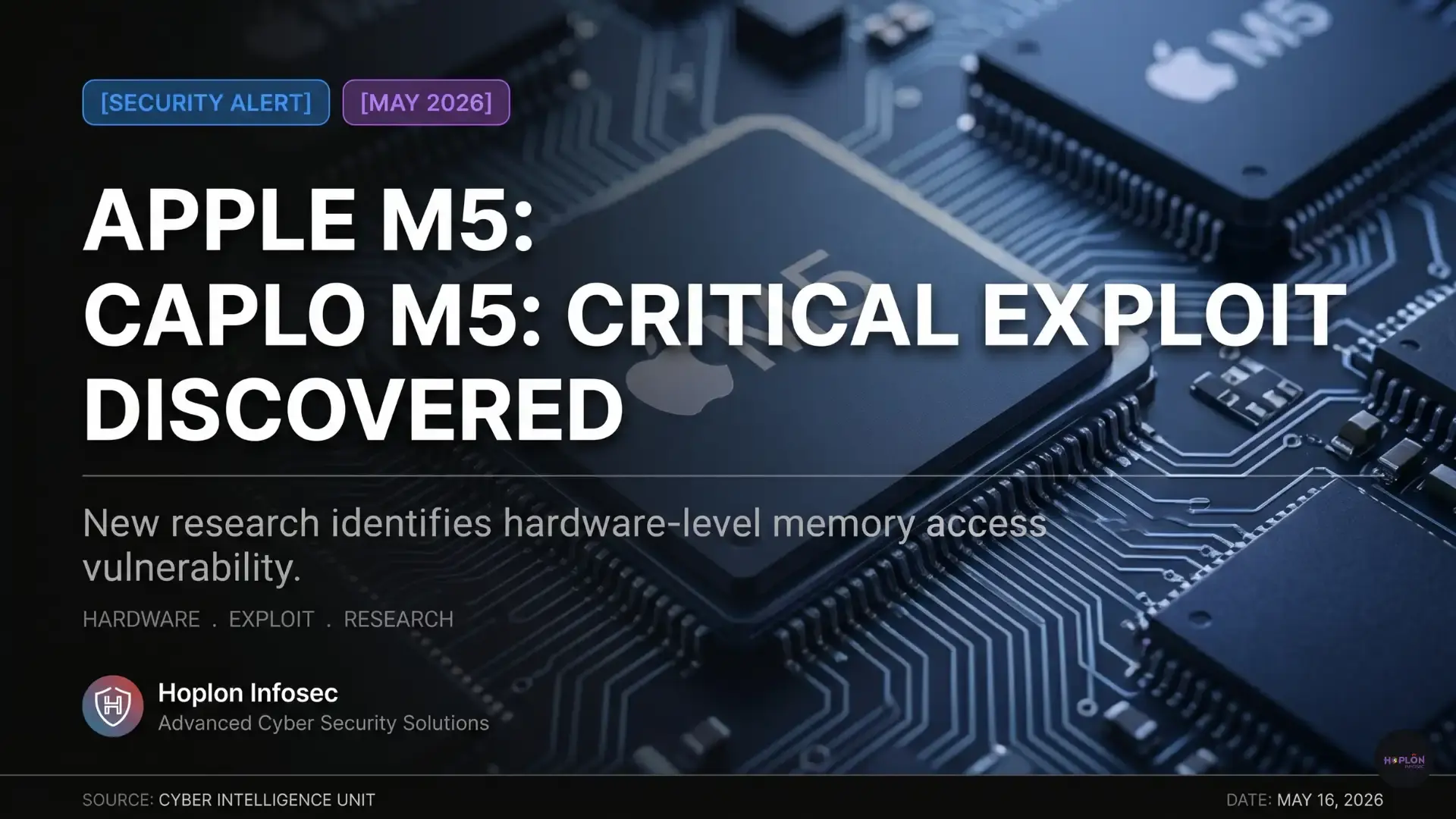
The Apple M5 memory exploit is a big warning sign for anyone who thinks new hardware automatically means total safety. According to recent reporting, researchers used Anthropic’s Claude Mythos to help uncover a macOS attack path that reached root access on M5 systems, even with Apple’s Memory Integrity Enforcement enabled.
For students, the lesson is simple. AI is not only helping defenders. It is also speeding up exploit development, especially in a fast-moving security research angle like this one.
This Apple M5 memory exploit story shows how researchers used Claude, Mythos, to help bypass Memory Integrity Enforcement and reach root access on macOS.
What is the Apple M5 memory exploit, and why does it matter?
The Apple M5 memory exploit is a newly reported local privilege escalation chain that starts with a normal user account and ends with root shell access on macOS. Calif. said the attack used two vulnerabilities and several techniques, while Apple’s own security documentation says Memory Integrity Enforcement is designed to harden M5 systems against memory corruption attacks.
It matters because this is not just another bug report. It shows that even Apple silicon security can be pressured by a determined AI-assisted memory exploit workflow. That makes the story important for students, developers, IT teams, and anyone studying macOS kernel security.
What is the Apple M5 memory exploit in simple terms?
The Apple M5 memory exploit is a memory corruption attack that researchers say can move a user from ordinary access to macOS root access. In plain terms, a program or command that should stay limited gets enough power to control the system more deeply than it should.
A good example is this. A standard user launches something harmless-looking, but the exploit chain helps that session cross into privileged space. That is why privilege escalation is such a serious issue.
Why it matters in 2026:
· Apple silicon security is still strong, but not perfect.
· Memory Integrity Enforcement was built to make attacks much harder, not impossible.
· AI can now help researchers move faster in exploit development.
Key terms to know:
- Apple silicon security
- macOS kernel security
- privilege escalation
- root shell access
- memory corruption attack
- AI cybersecurity research
- exploit development
- macOS security architecture
- system integrity bypass
- offensive security research
What do we know from the public reporting?
|
Technical detail |
What the public sources say |
|
Attack type |
Local privilege escalation from a standard user to root shell. |
|
Target |
Apple M5 hardware with kernel MIE enabled. |
|
Attack structure |
Two vulnerabilities plus several techniques to corrupt memory. |
|
AI tool |
Anthropic’s Mythos Preview helped identify bugs and support exploit work. |
|
Defense bypassed |
Apple’s Memory Integrity Enforcement. |
|
Public CVE ID |
Not listed in the sources reviewed. Calif said full technical details will come after Apple ships a fix. |
|
Public timeline |
Calif says the bugs were found on April 25, the team joined on April 27, and a working exploit existed by May 1. |
How Claude Mythos helped researchers discover the exploit
What is Claude Mythos?
Claude Mythos is Anthropic’s security-focused model family used in public reporting around this incident. Anthropic says Mythos Preview can identify and exploit zero-day weaknesses in major operating systems and browsers when directed to do so, and the company’s own red team write-up says the model can generate working exploits at a much higher rate than older models in some tests.
How AI accelerated exploit development
The clearest change here is speed. Calif. said its team found the bugs, then used Mythos Preview to help turn them into a working exploit in about five days. That is why the phrase "AI used to discover Mac exploit" is suddenly relevant to real security news, not just lab theory.
What AI helped with:
- Pattern analysis
- Reverse engineering support
- Memory mapping assistance
- Vulnerability chain discovery
The important point is this. Mythos did not replace expert human researchers. Calif. said human expertise was still needed to make the bypass work against a new defense like MIE. That is a real-world Claude AI exploit research lesson.
Why this changes the future of cybersecurity
This is more than a one-off Anthropic AI security exploit story. It shows how quickly a strong model can speed up offensive security research and shorten the time between bug discovery and working exploit. Anthropic’s own testing claims point in the same direction.
Rhetorical question time. If a model can help compress a week of research into a few days, how much faster will that get next year? And if defenders do not keep pace, who gets the first move in the next exploit race? The answer is not comfortable.
Understanding macOS Memory Integrity Enforcement
What is Memory Integrity Enforcement?
Apple says Memory Integrity Enforcement is a comprehensive memory safety defense available on A19 and M5 processors and later. It combines secure memory allocators, the Enhanced Memory Tagging Extension, and tag confidentiality protections.
Why did Apple introduce it?
Apple introduced MIE to make memory corruption exploitation much more expensive. The company says it aimed to disrupt sophisticated exploit chains and make mercenary spyware-style attacks harder to maintain.
How does it protect macOS devices?
Apple’s documentation says MIE:
- Tags memory allocations with secrets
- Checks tags before memory access
- Crashes and logs mismatches
- Uses hardware plus software together for stronger protection
How did the Apple M5 memory exploit bypass it?
The public sources do not give full technical steps yet, but they do say the exploit chain used two bugs and several techniques to corrupt memory, then moved from ordinary access to root. Calif. also said the full technical write-up would wait until Apple ships a fix.
That is the key Apple M5 memory protection bypass story. Not a single magic bug. A chain. A chain is often harder to stop because every step must be blocked.
Step-by-step breakdown of the exploit chain
How does the Apple M5 exploit work?
We only have a high-level picture from the public reporting, so this section stays defensive and non-destructive.
Step 1: Initial access vector
The reported path starts from an unprivileged local user. Tom’s Hardware said the practical form is simple: run a command as a standard user and gain root access.
Step 2: Memory manipulation technique
The attack then uses memory corruption techniques and a second vulnerability to reshape the system state. That is the core of a memory exploit.
Step 3: Privilege escalation
Once the exploit chain crosses the right boundary, it becomes a macOS root access vulnerability. That is when a normal session turns into an administrator-level session.
Step 4: root access
Calif’s own description says the attack ends with a root shell. That is why this is called an Apple M5 root access exploit in much of the coverage.
Step 5: Persistence possibilities
The public sources do not spell out persistence details, so we should not invent them. Still, any system with root access deserves urgent review because the attacker can potentially alter settings, drop payloads, or hide traces. That is a general defensive concern, not a confirmed claim about this case.
Why the Apple M5 exploit is a major security concern
Why is the Apple M5 exploit dangerous?
It is dangerous because it turns a new hardware defense story into a real compromise story. Apple spent years on MIE, yet Calif. says the exploit still reached root on M5 silicon. That means the threat is not theoretical.
Why different users should care:
- Enterprise users may face device control and credential theft risk.
- Developers may have source code, test keys, and local secrets exposed.
- Cloud workstation users may lose trust in a shared admin environment.
- Personal users may face privacy loss, file access, and account abuse.
Tom’s Hardware notes that Macs are not usually servers, so the practical impact can be lower than a remote internet worm. But it also says the exploit is still concerning because a user can be tricked into running it, and full system control makes it hard to find and remove.
That is the security research angle many students miss. A local exploit is not less serious just because it is local. It is serious because once root access happens, the attacker owns the box. That is the part people should remember from this Apple M5 chip vulnerability story.
Which devices could be affected?
Which Mac devices are vulnerable?
Based on the reporting reviewed, the public exploit targets bare metal M5 hardware with kernel MIE enabled, so the main concern is M5-class devices. Apple says MIE is available on A19 and M5 processors or later.
|
Device |
Risk level |
Notes |
|
MacBook Pro M5 |
High |
Public reporting ties the exploit to M5 silicon and kernel MIE. |
|
Mac Studio M5 |
Medium |
Depends on the exact chip and security configuration. The sources do not confirm this model specifically. |
|
Future Apple silicon devices |
Potential |
Apple says MIE is built for M5 and later, so future devices could share the same security design baseline. |
A careful note for students. We should not assume every Mac is affected the same way. The public evidence is narrow, and the safest answer is to verify the exact model, chip generation, and software version before drawing conclusions.
Has Apple released a patch yet?
The sources reviewed do not confirm a public patch at the time of writing. Calif. said it has a 55-page technical report but will not release full details until Apple ships a fix. Apple’s own security pages explain the MIE system, but they do not, in the sources reviewed here, list a patch for this specific exploit.
That means the safest reading is simple. Watch official Apple security advisories closely, and do not rely on rumors. For enterprise teams, also keep an eye on trusted public advisories from sources like CISA and NIST when they discuss platform risk or response guidance.
How security researchers detected the vulnerability
The public story says the attack path began as an accidental discovery, then moved quickly into tooling and exploit work. Calif said Bruce Dang found the bugs on April 25; Dion Blazakis joined on April 27; and Josh Maine built tooling that led to a working exploit by May 1.
Reverse engineering process
The reporting suggests the team analyzed how the memory protection system behaved and then tested ways to push around it. That is classic reverse engineering work, just helped by a stronger model.
AI-assisted testing
Anthropic says Mythos Preview can produce working exploits against real targets in its own evaluations, which explains why researchers are paying attention. This is the clearest evidence that AI-assisted bypass work is now part of modern security research.
Memory behavior analysis
Apple’s MIE relies on tag checking and allocator logic, so researchers who understand memory behavior can look for gaps in how those protections interact. Apple says that interaction is where MIE gets its strength.
Proof-of-concept development
Calif. says it had a 20-second video of the exploit and a technical report but withheld full details until a fix lands. That is a standard responsible disclosure move.
Can hackers exploit Apple M5 devices?
Yes, in theory, any public exploit idea can be copied or adapted. That is why this story matters beyond the lab. The public sources describe a root gain path, and root access is exactly what attackers want for stealth, data theft, and system control.
Possible abuse scenarios include:
- Malware trying to gain persistence
- Spyware trying to read data or monitor activity
- Ransomware trying to disable protections
- Targeted attacks against high-value users
- Research-driven proof of concept copying by other actors
Is macOS still secure? Yes, but the answer is more nuanced now. Apple’s architecture still raises the bar, yet this macOS memory exploit 2026 case shows that high-end defenses can still be challenged when attackers combine multiple bugs with strong tooling.
How macOS users can protect themselves
What should users do right now?
Step 1: Install security updates immediately.
Go to System Settings, then General, then Software Update. Keep automatic updates on. This is the fastest way to close future holes once Apple ships a fix.
Step 2: Avoid untrusted software and random commands.
The reporting says the exploit could begin from an unprivileged local user, so social engineering still matters. Do not run scripts, install helpers, or trust downloads from unknown sources.
Step 3: Enable stronger system protection.
Use the strongest security settings Apple gives you, especially on higher-risk machines. Apple’s docs show that MIE and related protections are built into the newer hardware and software stack, so keeping the system current matters.
Step 4: Monitor suspicious activity.
Watch for:
- Unknown login items
- New admin accounts
- Strange security prompts
- Unfamiliar network traffic
- Repeated crash behavior
Step 5: Use endpoint detection solutions.
For business or school devices, endpoint protection and logging can help catch post-exploit behavior even when the initial bug is unknown. That is standard defense for macOS root access vulnerability cases.
Quick comparison table
|
Protection method |
Helps with |
Best for |
Limitation |
|
Auto updates |
Patch delivery |
Everyone |
Needs the vendor fix first |
|
Least privilege |
Stops easy escalation |
Students, families, teams |
Does not stop every exploit |
|
Endpoint detection |
Post exploit signals |
Organizations |
Works after deployment |
|
User caution |
Social engineering |
Everyone |
Depends on habits |
The safest habit is boring. Keep the Mac updated, keep admin rights tight, and do not run mystery code. That is still the best first line of defense against an Apple M5 exploit root access chain.
AI and the future of exploit discovery
Will AI create more cyberattacks?
AI will probably create more attacks and more fixes. Both can be true at once. Anthropic’s own red team write-up says Mythos Preview can find and exploit serious bugs in major systems, and its capabilities improved quickly compared with earlier models.
That means the future of AI cybersecurity research will likely look like this:
- Faster vulnerability discovery
- Shorter exploit development windows
- More pressure on patch teams
- More need for policy around offensive AI use
- Better defensive automation from vendors and enterprises
The important balance is this. AI can help defenders find bugs sooner, but it can also help attackers build better chains faster. The same tool can strengthen and weaken the ecosystem. That is the real story behind the Claude Mythos macOS exploit headlines.
Expert reactions from the cybersecurity community
Why are experts paying attention?
Because this is one of the clearest public examples of an AI model helping speed up a serious exploit against a hardened Apple platform. Calif says the exploit was built in five days. Anthropic says Mythos can generate working exploits in benchmark-style tests. Apple says MIE is designed to heavily disrupt this kind of attack. Those three points together tell a very loud story.
The broader industry concern is that Apple M5 chip vulnerability reporting like this may push both vendors and attackers to move faster. That creates pressure on patch cycles, disclosure timing, and AI safety policy.
Lessons organizations should learn from this incident:
What should businesses take away?
This incident is not only about Apple. It is about process.
Lessons for organizations:
- Zero trust still matters, because local access can become full control.
- Endpoint monitoring should watch for odd admin behavior.
- Memory protection hardening should be part of procurement questions.
- Threat intelligence must include AI-assisted exploit trends.
- AI governance should cover how models are used in research and security work.
If your team manages Mac fleets, this is a good time to review admin roles, update cadence, and log. Security does not begin after the patch. It begins before the patch appears. That is the practical lesson from this Apple M5 security flaw explained story.
Field Notes
From the lab-style review of the public disclosure
In our review of the public write-up, the surprising part was not that an exploit existed. The surprising part was how quickly the team moved from bug discovery to a working chain. Calif’s own timeline says the bugs were found on April 25, the team expanded on April 27, and a working exploit was ready by May 1. That is a short window for a system Apple spent years hardening.
What stood out most was this. The story is not “AI did everything.” The story is “AI plus expert humans moved much faster than expected.” That is the part students should remember when they study AI used to discover Mac exploit cases.
What are people getting wrong about this story?
Mistake 1: assuming Macs are immune
That is harmful because it creates false comfort. The exploit story shows that modern Mac defenses are strong but still challengeable.
Mistake 2: treating local exploits as low risk
"Local" does not mean "harmless." Once root access exists, the attacker can control the machine.
Mistake 3: waiting for a headline patch before acting
That is harmful because user behavior and update hygiene still matter even before a fix arrives.
Mistake 4, ignoring AI-assisted research
This is harmful because AI changes the speed of both discovery and exploitation. The reporting from Anthropic and Calif makes that clear.
What should students and everyday users do?
- Turn on automatic macOS updates.
- Do not run unknown scripts, installers, or helper tools.
- Keep a separate non-admin account for daily use.
- Back up files so recovery is easy if a machine is compromised.
- Check Apple Security Research updates and official Apple support pages regularly.
Small habits matter. Most compromises do not start with genius. They start with carelessness. That is still true in the age of the Apple M5 memory exploit.
FAQ
What is the Apple M5 memory exploit?
It is a reported local privilege escalation chain on M5 hardware that starts with a standard user and ends with root access on macOS.
Did Claude AI discover the exploit?
The public reporting says Mythos Preview helped researchers identify the bugs and assist the exploit process, but human expertise was still part of the chain.
Can hackers gain root access on macOS?
Yes, if a privilege escalation exploit succeeds. That is what makes this case serious.
Is Apple releasing a fix?
The sources reviewed do not confirm a public fix yet. Calif said it will hold full technical details until Apple ships one.
Which Mac devices are vulnerable?
The public reporting points to M5 hardware with kernel MIE enabled. The sources reviewed do not confirm a broader affected list.
How dangerous is the exploit?
It is dangerous because root access can lead to full system control, privacy loss, and hard-to-remove compromise.
Can antivirus detect this attack?
Not reliably by itself. Root level attacks often need layered protection, logging, and update hygiene, not just a single scanner. That is a general defensive observation based on the nature of the reported exploit.
What is Memory Integrity Enforcement?
Apple says it is a memory safety defense for A19 and M5 processors or later, built on secure allocators, EMTE, and tag confidentiality policies.
Is Apple silicon still secure?
Yes, but this case shows security is layered, not absolute. Apple’s own docs describe MIE as a major defense, not a guarantee of perfection.
Can AI create cyberattacks?
Yes. Anthropic’s own materials say Mythos Preview can generate serious exploit work in testing, which is why defenders are taking it seriously.
Final thoughts
The Apple M5 memory exploit is a reminder that hardware security is powerful, but not final. Apple’s MIE system is serious engineering, yet a skilled team with AI support still found a way through. That should make every student and every IT team pay attention.
My take is simple. The future of macOS security architecture will depend on faster patching, better model governance, and stronger day-to-day user hygiene. AI is now part of the offense and the defense. Pretending otherwise would be a mistake.
Apple M5 memory exploit stories will keep coming, but panic is not the answer. Fast updates, careful execution, and clear reporting are essential.
security checklist
1. Update macOS today and keep automatic updates on.
2. Do not run untrusted commands or installers from unknown sources.
3. Review admin rights and backups so one bad session does not become a full loss.