Is the CRESCENTHARVEST RAT malware a new state-sponsored threat designed to monitor political activists?
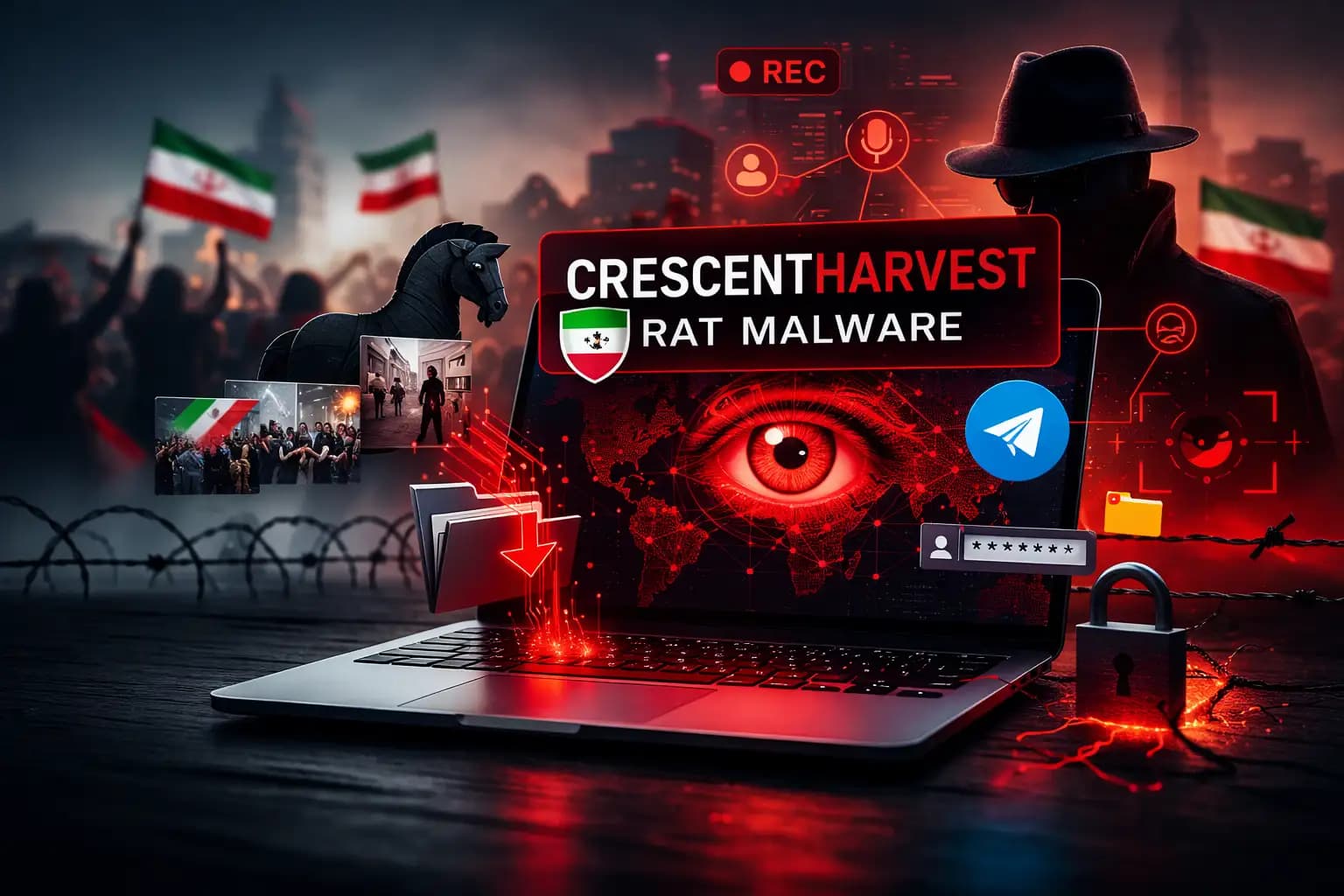
Yes. On February 19, 2026, cybersecurity researchers confirmed a targeted espionage campaign called CRESCENTHARVEST. This operation specifically tricks supporters of Iranian protest movements into downloading a Remote Access Trojan (RAT). It is designed to steal Telegram data, log every keystroke, and monitor the private lives of dissidents in real time.
I want to talk to you about something that has been hitting the news over the last few days, and honestly, it is pretty heavy. We all know how much activism has moved to social media and encrypted apps. But hackers have caught on to that, and they are now turning our passion for human rights into a weapon. There is a new campaign called CRESCENTHARVEST RAT malware that is specifically preying on people who want to stay informed about the protests in Iran.
Imagine you are a researcher or just someone who cares about what is happening in the world. You get a message or an email with what looks like an exclusive video of a recent protest. You click it, thinking you are getting informed, but behind the scenes, your computer is being handed over to a stranger. This isn't just a simple virus that slows down your PC. It is a digital stalker. This person can sit on the other side of the world, watching what you type and seeing exactly who you talk to.
Why does this matter right now? Because as we speak in February 2026, the digital space has become the main battlefield for stopping protests. The use of this specific malware proves that attackers are getting much better at emotional hacking. They are not trying to win you over with a fake prize anymore. They are tricking you with a cause you actually believe in.
-20260219113306.webp&w=1080&q=75)
What Exactly Is CRESCENTHARVEST?
The CRESCENTHARVEST RAT malware is a high-level piece of spyware. It is called a Remote Access Trojan because it acts like a secret backdoor into your operating system. Once it is inside, the hacker has the same power over your computer that you do. This is a long-term surveillance operation, not a quick hit to steal a credit card number.
The people behind this are very clever about how they hide their tracks. They do not send a file that looks like a virus. Instead, they send a folder that actually contains real images and videos of protests to make it look legitimate. But buried in that folder are "shortcut" files. When you click on what you think is a video, it opens the video for you, but it also triggers a silent script in the background.
The technical part that really worries me is how it avoids detection. It uses a trick called DLL side loading. Basically, it takes a perfectly safe program and tricks it into loading a malicious file. Because the main program is one your computer already trusts, your antivirus might just ignore the whole thing while the malware starts digging through your private files.
Why Was This Malware Created?
You might wonder why a group would put this much effort into targeting individuals instead of a big bank. The goal is intelligence and fear. By finding out who is supporting a protest from the outside, an adversary can map out an entire movement. They want to know who is talking to the leaders, how money is being moved, and who is leaking information to the press.
Historically, we have seen this from groups like Charming Kitten. These are Advanced Persistent Threats. The CRESCENTHARVEST RAT malware exists because these groups need a way to stay inside a victim's computer for months without being noticed. It is about building a list of people they consider troublemakers.
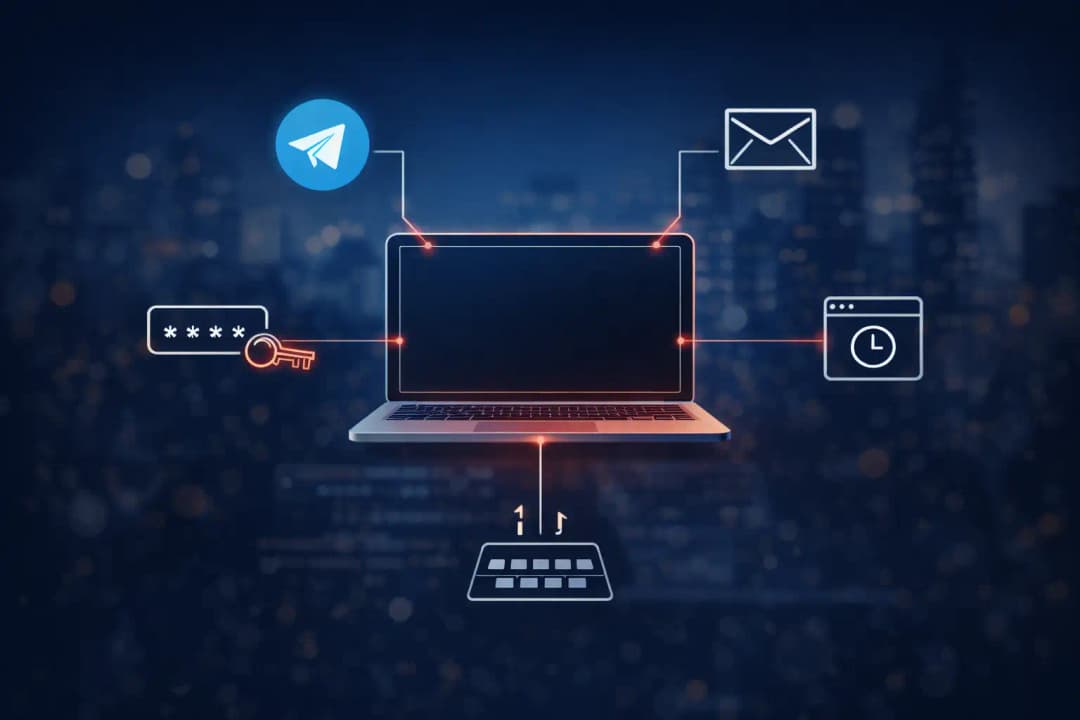
Another major reason is the use of Telegram. In many places, Telegram is the only way for activists to talk safely. This malware has a specific part of its code dedicated to stealing Telegram desktop sessions. They do not need to hack the app itself. They just steal the "digital key" from your computer that keeps you logged in. Once they have that, they can read every message you have ever sent.
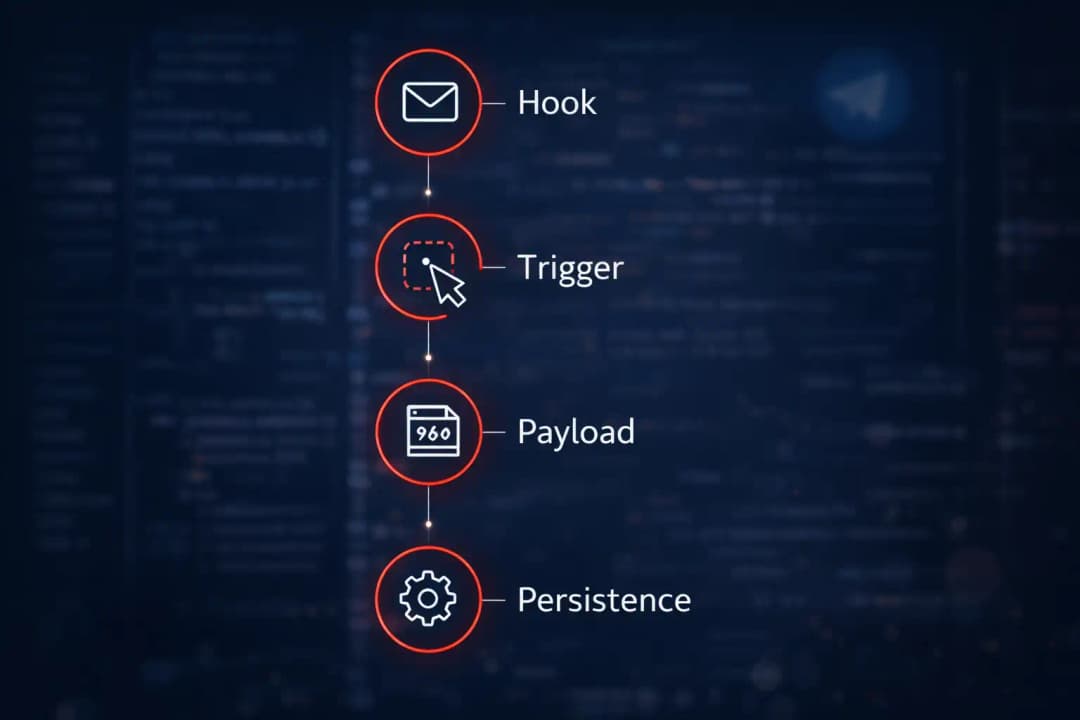
How the Infection Happens Step by Step
The way this thing spreads is a lesson in how hackers exploit human trust. It is not a technical glitch in your computer; it is a trick played on your mind.
The Hook: You receive a file disguised as a protest report or a gallery of photos. The language is usually Farsi, which is meant to attract the Iranian community living abroad.
The Trigger: You click a shortcut file. While a photo pops up on your screen, a hidden command starts talking to the attacker's server.
The Payload: The script downloads a ZIP file containing the actual CRESCENTHARVEST RAT malware. It often hides inside a folder with a trusted name like Google.
Staying Power: The malware does not just run once. It sets up a "Scheduled Task" that triggers every time your computer connects to the internet. Even if you restart your PC, the spy is still there.
The Theft: The RAT starts its shopping list. It grabs your browser history and your saved passwords and starts recording every single letter you type on your keyboard.
A Real-World Scenario: The Before and After
Let us look at a scenario involving a guy named Mark. He is a journalist in New York who covers Middle Eastern politics.
The Before Scenario: Mark is careful. He uses a VPN and thinks he is safe. He receives a link to a folder called "Evidence of Human Rights Abuses." He downloads it. He sees several photos and a video file. He clicks the video. It plays perfectly. Mark feels he has a great story and starts writing his article.
The After Scenario: The moment Mark clicked that video, the CRESCENTHARVEST RAT malware was installed. Because it was hidden inside a trusted program, his security software stayed silent. Over the next month, the attackers read every email Mark sent to his sources. They saw the names and addresses of people who were risking their lives to talk to him. A few weeks later, those sources suddenly go missing. Mark's computer still looks fine, but he has accidentally put his friends in danger because of one click.
Who Is Currently at Risk?
This is not a random virus. It is a targeted spear meant for specific people.
Individual Activists: Anyone using their home computer to help organize or discuss political change.
Journalists: Those documenting the truth. By hitting one journalist, an attacker can get to dozens of secret sources.
NGO Workers: People who work for groups providing aid or legal help to protesters.
Diaspora Communities: People living in the USA, Canada, or Europe who still have family and ties to their home country.
Benefits and Limitations of This Attack
From the perspective of the hacker, the CRESCENTHARVEST RAT malware is incredibly useful. One benefit is that by using side loading, they can bypass many standard security checks that look for "bad" files. Another benefit is the use of network-based triggers. The malware only acts when you are online, which makes it harder to find during a manual check.
However, it does have some weaknesses. A big limitation is that it requires the user to actually click a file. If you are suspicious and you don't open that initial shortcut, the attack fails completely. Another limitation is that once the command server is found and blocked by internet providers, the malware becomes "headless" and cannot send your data anywhere.
What You Should Do Right Now to Stay Safe
If you are active in any political circles or just want to be safe, here is what I suggest you do right now.
Stop Clicking Shortcuts: If someone sends you a folder, never click a file that has a "shortcut" arrow on it. Legitimate photos and videos are not shortcuts.
Show File Extensions: Go into your Windows settings and make sure "Hide extensions for known file types" is turned off. This lets you see if a file is actually named "video.mp4.exe" instead of just "video.mp4."
Avoid Telegram Desktop for Secrets: If you are a high-risk target, use the web version of Telegram in a very secure browser. It is much harder for this specific RAT to steal your session from a browser than from the desktop app.
Check Your Scheduled Tasks: Open the Task Scheduler on your PC. Look for any tasks you didn't create that are set to run when the internet connects.
Use Proper Scanning Tools: Standard antivirus is a good start, but for these kinds of threats, you need a dedicated anti-malware scanner.
Frequently Asked Questions
Does this malware affect Mac or iPhone users? Right now, the versions we are seeing are built for Windows. The files it uses are specific to how Windows handles shortcuts and library files.
Can my VPN stop this? No. A VPN hides your location from the world, but it does not stop a program from running on your computer. If the malware is on your PC, it will just use your VPN to send your data to the hacker.
How would I know if I have been targeted? If you have been active in protest forums or groups, your email might be on a list. Look for weird activity on your social media or your computer fans running very loud when you aren't doing anything.
Is this definitely from a specific government? Security firms have not officially named a country, but the timing, the language, and the targets all suggest a group aligned with a specific state interest.
What is a RAT exactly? It stands for Remote Access Trojan. It is a piece of software that gives a remote user full control over your device without you knowing.
Final Thoughts: The Cost of Digital Dissent
The CRESCENTHARVEST RAT malware is a sobering reminder that our digital tools can be used against us. It shows that hackers are willing to play on our best intentions to do their worst work. The impact of these campaigns is not just about stolen data; it is about the safety of real people on the ground.
As we move forward into 2026, we have to realize that being an activist also means being a bit of a security expert. We have to be as smart with our data as we are passionate with our words. Always be skeptical of the "urgent" file that lands in your inbox, no matter how important it seems.
For more latest updates like this, visit our homepage.