Is mobile data secure at the moment?
Is mobile data secure in real life, not just in theory? What about when you're paying bills, checking email, or scrolling late at night? That question about whether mobile data is secure is more important than ever because phones have become all-in-one wallets, offices, medical records, and social hubs on a small screen.
People often don't understand mobile data security. A lot of people think that mobile networks are safe just because they feel personal and private, so they assume mobile data is secure by default. Some people think that using mobile data is just as dangerous as using open Wi-Fi. The truth is somewhere in the middle, and it depends on the choices people make about technology, policies, and how they use their phones every day.
Today, mobile networks use strong security measures like encryption and carrier authentication. That's great news for mobile data security. There are still privacy gaps, especially when apps, ads, and trackers are involved. This article talks about what mobile data security really looks like, why it matters, how attacks happen, and what users can do to protect themselves.
What it really means to protect mobile data
When your phone connects to the internet through a cellular network instead of Wi-Fi, mobile data security is how the information is kept safe. This includes things like browsing history, app data, messages, and background connections that happen without you knowing.
4G LTE and 5G mobile networks encrypt mobile data between your device and the carrier's infrastructure on a technical level. This makes mobile data much harder to casually intercept than on public Wi-Fi. Mobile networks need SIM authentication, which adds another level of control, unlike open hotspots.
But security and privacy are not the same thing. Carriers can still see metadata like which sites you connect to and when, even if your mobile data is encrypted. Apps may gather their own data on their own. Advertisers can follow how people act across different services. So, even though mobile data is more secure from attackers who are close by, it is still not hidden.
Why people are worried about the privacy of their mobile data
Phones are very personal devices. They go everywhere, keep track of habits, and quietly store years of digital life. When people ask if mobile data is secure, they really want to know if their private moments are safe from being used or seen by others.
Tracking people's locations is a big worry tied to mobile data security. Location data is necessary for mobile networks to work. This allows for accurate movement patterns, even without GPS. Carriers say they limit access, but past investigations have shown that location data can be shared or sold through middlemen.
Another thing to worry about is how apps work. A lot of popular apps ask for network access and permissions that go above and beyond what users expect. Apps can still send analytics, identifiers, and usage patterns to third parties even when you're using mobile data. A lot of the time, this happens in the background.
Is it safer to use your phone's data than public Wi-Fi?
People ask this question a lot when comparing mobile data security to Wi-Fi security. Yes, mobile data is safer than public Wi-Fi in most situations.
A lot of the time, public Wi-Fi networks aren't encrypted or are set up wrong. People who are on the same network as attackers can sometimes steal traffic or pretend to be hotspots. Mobile data, on the other hand, encrypts traffic at the network level and doesn't let nearby users see what you're doing.
That being said, safety isn't always guaranteed. No matter what kind of network you have, malicious apps, phishing attacks, and unsafe websites can still hurt you. Mobile data security lowers some risks, but it doesn't replace basic security awareness.
In real life, how private is mobile data?
There is no visible network name or login screen, so mobile data feels private and secure. But who controls the infrastructure and how mobile data is handled will affect privacy.
Carriers run the network and can keep track of mobile data connections for billing, maintenance, or legal reasons. Depending on the jurisdiction, this data may be kept for different amounts of time. Content is encrypted, but metadata is not always completely hidden.
Apps add another level. Even though many apps use encrypted connections, they still gather device information, identifiers, and behavioral signals through mobile data. A lot of the time, privacy policies say this, but not many people read them closely.
So, how private is mobile data? It is private from people who live nearby, but not completely private from businesses you deal with.
-20260209172158.webp&w=1080&q=75)
How the attack works on mobile data networks
Knowing what attacks are helps make real risks to mobile data security clearer.
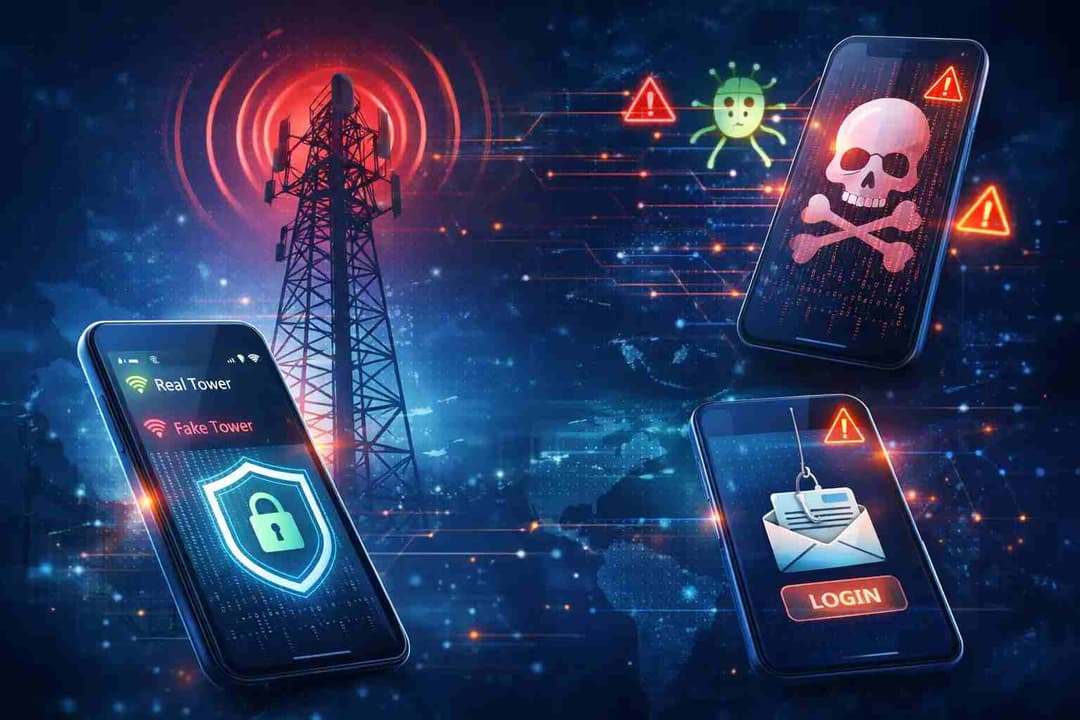
One way to do this is to use fake cell towers, which are sometimes called IMSI catchers. These devices look like real towers and trick nearby phones into connecting to them. Once they are connected, attackers can get identifiers or make mobile data encryption weaker. These tools are costly and mostly used by governments, but they show that mobile data networks can be exploited.
Apps are another way to attack mobile data security. An app that is malicious or poorly made can send mobile data in an unsafe way or leak information through trackers. This doesn't break the network itself; it just takes advantage of people's trust in software.
Phishing is still a big problem. Links sent in text messages or messaging apps can steal your login information. This can happen even if your mobile data connection is secure.Mobile data doesn't keep people from being fooled.
A real-life example of how to keep mobile data secure
A few years ago, I saw a coworker who would not use public Wi-Fi at the airport. Instead, they only used mobile data for sensitive work emails.That gut feeling about mobile data security was right. Network attacks happen a lot at airports.
Later, the same person installed a free flashlight app that sent mobile data from the device to advertisers without the user knowing. The network was secure, but the app didn't protect privacy well. This example shows that the weakest link is what makes mobile data security and privacy work.
Mobile data kept the connection secure, but it couldn't stop apps from acting badly.
The effects of using mobile data in an unsafe way
When mobile data security fails, the results are different. For people, it could mean targeted ads, having their account hacked, or having their identity stolen. For businesses, it could mean that credentials have been leaked or that systems have been accessed without permission.
On a larger scale, the way mobile data is collected makes people worry about being watched and being profiled. Patterns found in mobile data can show habits, connections, and weaknesses. This has an effect on society as a whole, not just on people.
The stakes are higher because more and more people are using phones to pay for things, keep track of their health, and prove who they are. Mobile data security is no longer just a small issue.
Best practices for mobile security that really work
Good habits really do make a difference for mobile data security.
Make sure your phone is up to date. Updates to the operating system often fix security holes that attackers use to access mobile data.
Be careful when you install apps. Look at the permissions and stay away from apps that ask for access that isn't related to their function.
Use apps and websites that you trust and that use HTTPS. This helps protect mobile data even when you're not thinking about it.
If privacy is important to you, think about getting a good VPN. VPNs aren't perfect, but they can make it harder for carriers to see mobile data activity.
You don't need to know a lot about technology to do these things. They just need to be looked at.
Is it safe to use your phone to make payments and do banking?
Most financial apps use strong encryption and other security measures, such as biometrics. When apps are official and devices are secure, it's usually safe to use mobile data for banking.
Malware can get into phones, and phishing scams can trick people into giving out their personal information. Mobile data itself is not usually the weak link in financial fraud.
Banks also keep an eye on strange behavior and may stop transactions that look suspicious. This layered approach helps lower the risk.
The future of keeping mobile data secure
5G promises faster speeds and better mobile data security features. The design includes network slicing and better encryption. But things also get more complicated, which can make things harder.
The rules about privacy are changing. Some places have laws that try to limit mobile data collection and make it clear. Enforcement is still not even.
In the future, there will probably be stronger technical protections and more people who know how to use them. Security alone won't make mobile data privacy issues go away. Policies and actions are important too.
-20260209172159.webp&w=1080&q=75)
People Also Ask
Is it safer to use mobile data?
Yes, in most cases mobile data is safer than public Wi-Fi because it uses encrypted connections and doesn't connect to networks that are shared.
Is the data on my phone secure?
Mobile phone data security depends on network encryption, apps, carriers, and how the user acts.
How secure is mobile data?
Mobile data is secure from attackers nearby, but not completely secure from carriers, apps, or advertisers.
Can hackers get to my phone data?
It's hard to directly intercept mobile data, but phishing, malware, and tracking can still do it.
Should I stay away from public Wi-Fi altogether?
Stay away from it for important tasks. If you use it, only use it with HTTPS and trusted services.
Useful suggestions
• Use mobile data for private tasks like banking.
• Be very strict about what apps can do.
• Allow system updates to happen.
• Be wary of free apps that make money by collecting mobile data.
• Find a balance between ease of use and being aware.
In the end, is mobile data secure?
Yes, mobile data security protects you better than public Wi-Fi in many ways. But privacy and security are not the same thing, and technology alone can't keep you safe.
There is no guarantee of mobile data security. Networks, apps, and users all have a part to play in this.