OpenLoop Health Data Breach Exposes 716,000 Patients in 2026
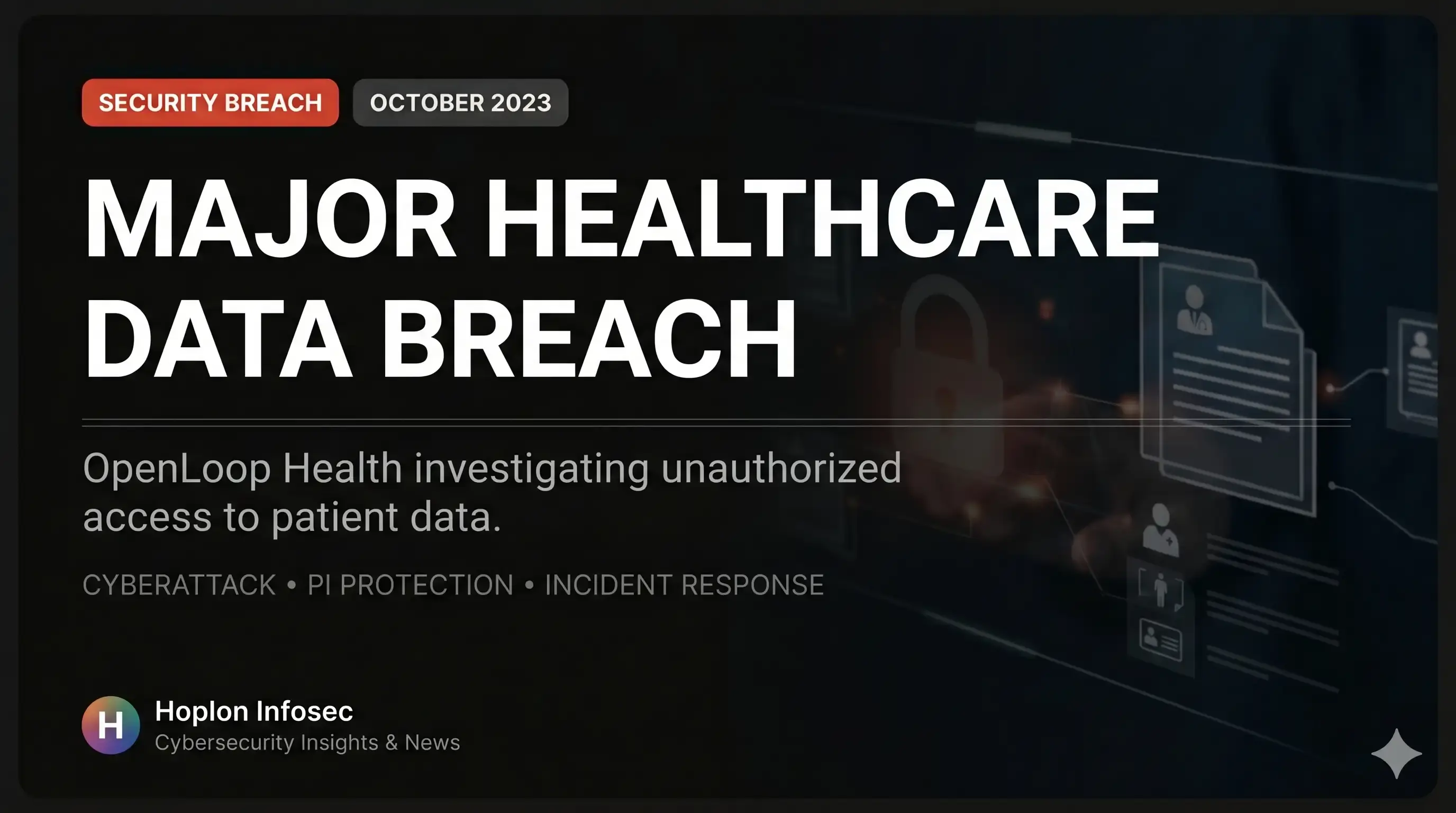
The OpenLoop Health data breach is a serious telehealth incident with a wide reach. Public reporting says 716,000 people were affected, and the company’s notice shows the intrusion happened in January 2026.
This guide is for patients, families, and anyone who used a telehealth service powered by OpenLoop. We break down what happened, what data was exposed, what was not exposed, and what you should do right now.
Key Insights About the OpenLoop Health Data Breach
- The OpenLoop Health data breach highlights how telehealth companies are becoming major targets for cybercriminals because they store both personal and medical data in centralized systems.
- Even without Social Security numbers or bank details, exposed healthcare information can still be used for phishing, insurance fraud, and identity-based scams.
- Modern healthcare breaches are no longer limited to hospitals. Third-party telehealth providers like OpenLoop now hold sensitive patient records for multiple healthcare brands and partners.
- The breach demonstrates a growing cybersecurity issue in the healthcare sector where backend vendors can create large-scale exposure across many organizations at once.
- Healthcare attackers increasingly focus on patient identity data because medical records often stay valuable longer than stolen payment card information.
- The OpenLoop incident shows why vendor risk management and zero trust security models are becoming critical for healthcare platforms in 2026.
- Telehealth infrastructure has expanded rapidly in recent years, but security maturity in many healthcare ecosystems still struggles to keep pace with that growth.
- Healthcare data breaches often create delayed risks. Victims may not notice misuse immediately because medical identity fraud can surface months later.
- The incident also raises broader concerns about HIPAA compliance, breach notification timelines, and how healthcare companies secure cloud-based patient systems.
- Cybersecurity analysts continue to warn that healthcare remains one of the most targeted industries because attackers know patient services cannot easily shut down during an attack.
-20260513173633.webp&w=1080&q=75 "OpenLoop Health data breach")
What is the OpenLoop Health Data Breach?
The OpenLoop Health data breach is a security incident where an unauthorized third party accessed certain OpenLoop systems and removed information. OpenLoop’s California notice says the company learned of the intrusion on January 7, 2026, and that access lasted from January 7 to January 8, 2026.
OpenLoop says it provides telemedicine platforms through other companies, which means it sits in the middle of a larger virtual care ecosystem. That matters because one breach can touch many brands, not just one website.
Timeline of events
January 7, 2026: OpenLoop learned of the unauthorized access.
January 7 to January 8, 2026: The intrusion window identified in the notice.
March 17, 2026: The California notice was dated, and the breach notice was filed with state authorities.
May 13, 2026: SecurityWeek reported that the HHS breach portal had been updated to show 716,000 impacted individuals.
How was the breach discovered?
OpenLoop says it discovered the issue on January 7, 2026, then brought in external cybersecurity specialists to investigate and confirm the unauthorized access had stopped. The company also says it coordinated with federal law enforcement.
How Many People Were Affected?
The reported impact is 716,000 individuals. SecurityWeek says that number was added to the U.S. Department of Health and Human Services breach portal in May 2026, while the state notice confirms the breach began in January 2026.
That scale is what makes the OpenLoop Health data breach more than a routine notice. This was not a small internal issue. It was a large healthcare exposure with national reach.
What Data Was Exposed in the OpenLoop Health Breach?
The California notice says the exposed data included each recipient’s personal information category, but the public letter does not spell out the redacted variable field. SecurityWeek reports that the exposed data included names, addresses, email addresses, birth dates, and medical data.
OpenLoop also says the incident did not involve access to:
Electronic health records
Social Security numbers
Financial account information
Was financial data compromised?
Based on the notice, no. OpenLoop explicitly says financial account information was not accessed. That lowers some risks, but it does not erase the privacy harm from exposed identity and medical details.
-20260513173632.webp&w=1080&q=75 "OpenLoop Health data breach")
Who is OpenLoop Health?
OpenLoop Health is a telehealth infrastructure company. Its site says it provides white-label telehealth support, provider staffing, technology platform services, payer coverage and revenue cycle management, licensing and credentialing, and practice management. The company also says it serves patients in all 50 states and supports 600-plus insurance plans.
That background matters because telehealth vendors often handle sensitive data for many downstream brands. If one platform is exposed, the blast radius can reach patients who never even remember the vendor name. That is a real weakness in modern healthcare delivery.
How Did the Breach Happen?
The public notice says an unauthorized third party accessed certain OpenLoop systems and removed information. The notice does not name a malware family, a CVE, or a specific exploit chain. So the safe reading is simple: this was an unauthorized access incident, not a publicly documented vulnerability disclosure.
Was this a ransomware attack?
There is no public confirmation that this was ransomware in the sources I reviewed. OpenLoop’s notice and the SecurityWeek report describe unauthorized access and data removal, but they do not identify ransomware or a ransom demand.
Third-party vendor involvement
OpenLoop says it provides telemedicine platforms through other companies, which makes vendor and platform integration part of its business model. The notice also says the company used external cybersecurity specialists after discovery. That tells us the environment was not isolated, and the response required outside help.
Data Insight
Here is the incident snapshot that matters most.
|
Technical detail |
Publicly reported information |
Why it matters |
|
Incident name |
OpenLoop Health data breach |
Helps readers find the right notice quickly |
|
Discovery date |
January 7, 2026 |
Shows when response started |
|
Intrusion window |
January 7 to January 8, 2026 |
Helps narrow exposure timing |
|
Impacted people |
716,000 |
Shows scale of the incident |
|
Data exposed |
Names, addresses, email addresses, birth dates, medical data |
Indicates privacy and fraud risk |
|
Data not exposed |
SSNs, financial account info, EHR access |
Reduces some identity theft risk, but not all |
|
Threat actor |
Not publicly named |
No confirmed attribution in the sources reviewed |
|
Malware or CVE |
Not publicly disclosed |
No technical exploit details were provided in the notice |
Why This Matters
The OpenLoop Health data breach is not just a healthcare headline. It shows how telehealth platforms can become high-value targets because they sit behind many consumer-facing services. One backend provider can hold enough patient data to create a huge privacy event.
For a patient, the risk is mostly about identity exposure, medical privacy, and scam follow-up. For a business using a vendor like OpenLoop, the risk is broader. It includes trust loss, notice obligations, legal review, and vendor risk cleanup. Which one hurts more in the long run, the stolen data or the lost confidence? That is the question leaders need to answer fast.
Am I Affected by the OpenLoop Health Data Breach?
You may be affected if you received a notice letter from OpenLoop or if one of the telehealth services you used was powered by OpenLoop. The California notice says affected individuals were being contacted, and it offers a free one-year identity and credit monitoring service through IDX.
If you did not receive a letter, that does not prove you are safe. It may simply mean your notice has not arrived yet, or your data was not in the affected set. Check any mailed notices carefully and keep the envelope.
What Should You Do If Your Data Were Exposed?
Here is the practical part. Do these steps in order.
1. Place a credit freeze.
A credit freeze is the strongest first move if you are worried about new accounts being opened in your name. The FTC says credit freezes and fraud alerts can help protect you from identity theft.
Why it matters: a freeze blocks most new credit applications until you lift it.
Example: If a scammer tries to open a credit card, the lender usually cannot move forward without you unfreezing your file.
2. Set up fraud alerts.
A fraud alert is lighter than a freeze and still useful. The FTC says it tells creditors to take extra steps to verify your identity before extending new credit.
Why it matters: It adds friction for fraud without locking down your credit as tightly as a freeze.
Tip: Use this if you expect to apply for credit soon but still want extra protection.
3. Review your medical and billing statements.
OpenLoop’s notice recommends monitoring account statements and free credit reports. That advice is smart here because the exposed data includes medical information, not just contact data.
Why it matters: Medical identity misuse can show up as strange appointment logs, unexpected bills, or claims you did not make.
Tip: Compare each Explanation of Benefits statement with the care you actually received.
4. Use the free monitoring service if you received a letter.
OpenLoop says affected people are eligible for one year of complimentary identity and credit monitoring through IDX, and the activation deadline is June 17, 2026.
Why it matters: monitoring can catch new credit activity or restoration issues early.
Tip: save the enrollment code, but do not share it with anyone.
5. Report suspicious activity quickly.
OpenLoop’s notice points people to the FTC and state law enforcement if they suspect identity theft. The FTC also says consumers can report identity theft at IdentityTheft.gov.
Why it matters: fast reporting helps you document the issue and start recovery steps.
Tip: Keep screenshots, letters, and account alerts in one folder.
-20260513173721.webp&w=1080&q=75 "OpenLoop Health data breach")
How to Protect Yourself After a Medical Data Breach
This is the workflow we would use with a patient or a small clinic team.
Read the breach letter fully.
Why it matters: It tells you exactly what data may have been involved. OpenLoop’s notice says the public version may vary by recipient.Check whether SSNs or financial data were exposed.
Why it matters: the response changes a lot if those fields were touched. OpenLoop says they were not.Freeze credit if the exposure included identity data.
Why it matters: It reduces the chance of new account fraud. The FTC supports this step.Watch for medical billing mistakes.
Why it matters: a stolen medical profile can create confusing claims or fake care activities.Keep a copy of every notice.
Why it matters: If a lawsuit, insurance dispute, or identity theft report happens later, the paper trail helps.
Quick Comparison Table
|
Action |
Why It Helps |
Difficulty |
Recommended Speed |
|
Credit Freeze |
Blocks fraudulent accounts |
Easy |
Immediate |
|
Fraud Alert |
Adds lender verification |
Easy |
Immediate |
|
Password Reset |
Stops reused credential abuse |
Easy |
Same day |
|
MFA Activation |
Reduces account takeover risk |
Easy |
Same day |
|
Insurance Monitoring |
Detects medical fraud |
Medium |
Weekly |
|
FTC Reporting |
Creates legal documentation |
Medium |
If fraud appears |
OpenLoop Health Response to the Breach
OpenLoop says it terminated the unauthorized access, investigated with external cybersecurity specialists, coordinated with federal law enforcement, and deployed additional controls. The company also says it is improving its security posture to reduce the chance of similar incidents.
The response also includes a free one-year identity and credit monitoring offer. That is useful, but it should not be treated as a full fix. Monitoring helps after the fact. Better controls help before the next breach.
HIPAA Violation and Legal Implications
The breach notice itself is not a final legal ruling, but healthcare breaches often trigger HIPAA breach notification duties, state attorney general review, and possible class action interest. OpenLoop’s California notice shows state reporting and federal law enforcement coordination, which is exactly the kind of paperwork trail lawyers look at later.
Is OpenLoop Health facing a lawsuit?
I did not find an official lawsuit filing in the sources I reviewed. What I did find is early law firm interest and public breach coverage, which often happens before any case becomes public record. That means legal risk is possible, but not confirmed in the materials we have here.
How to join a class action
Do not rush into filing any claim form from an ad or social post. Wait for a verified notice from the company, a court filing, or a reputable law firm's announcement. If you think you were affected, keep all letters and monitor the docket later. The open public sources here do not confirm a class action yet.
Telehealth Data Breaches: A Growing Problem
Telehealth vendors are attractive targets because they store identity and health data in one place, then distribute services through multiple brands. OpenLoop’s own business model shows that kind of layered setup. The more partners involved, the more places a mistake can spread.
That is why this story belongs in the larger healthcare cybersecurity conversation. A backend provider breach can feel invisible at first, then suddenly become a major patient notification event months later. The delay is frustrating, but it is common in breach investigations because scope takes time to verify.
Common Mistakes People Make
Ignoring the letter because SSNs were not exposed
Why it is harmful: names, contact data, and medical details can still support scams.
How to avoid it: read every notice and keep monitoring active.Clicking random links in emails claiming to be from the company
Why it is harmful: breach-related phishing is common.
How to avoid it: type the company name yourself or use the phone number on the official notice.Skipping credit checks because the breach was “only medical”
Why it is harmful: Identity data can still be abused in other ways.
How to avoid it: review your credit reports and watch for new accounts.Throwing away the notice after a week
Why it is harmful: the free monitoring deadline matters.
How to avoid it: save the document and mark the activation deadline.
Expert Tips
Use a password manager and change the password on any patient portal whose password you reused elsewhere.
Turn on account alerts for bank, credit card, and healthcare portals.
Check Explanation of Benefits statements even if you rarely use medical care.
Keep a short incident folder with the breach letter, dates, and support numbers.
If you manage a clinic, review vendor access, logging, and account cleanup after termination.
Checklist
· Read your OpenLoop notice from start to finish
· Confirm what data type was exposed
· Activate free monitoring before the deadline
· Place a credit freeze or fraud alert if needed
· Review credit reports and medical statements weekly for a while
Frequently Asked Questions
What happened in the OpenLoop Health data breach?
An unauthorized third party accessed certain OpenLoop systems and removed information, and later the incident was tied to 716,000 impacted individuals in public reporting.
What information was exposed?
Public reporting says names, addresses, email addresses, birth dates, and medical data were exposed. OpenLoop says EHR access, SSNs, and financial account data were not involved.
Was Social Security information stolen?
OpenLoop says no. The notice explicitly states that the incident did not involve Social Security numbers.
What should I do first after getting a breach letter?
Read the notice, activate any free monitoring, and review your credit and medical statements. The FTC says credit freezes and fraud alerts can also help protect against identity theft.
How can I check whether I am affected?
Look for a mailed notice from OpenLoop, review any telehealth service messages tied to OpenLoop, and compare the letter against the breach details. OpenLoop says affected people were offered free monitoring.
Is there a lawsuit yet?
I did not find an official public lawsuit filing in the sources reviewed. Legal interest is possible, but not confirmed here.
3-Point Security Checklist
Check your notice and confirm what data was involved.
Turn on the free monitoring and save the deadline.
Review credit reports and medical bills for anything strange.
The OpenLoop Health data breach matters because it shows how fast telehealth exposure can become a patient privacy problem. Stay alert, stay organized, and treat every new notice like a real risk signal.
Conclusion
The OpenLoop Health data breach is a reminder that telehealth data can be exposed even when the company is not a household name. The smart move now is simple: read the notice, activate monitoring, and tighten your identity protection.