Hey, I’m so glad you asked about this because it’s been blowing up in the security world lately. Since we’re hanging out, I have to tell you, this isn't your run-of-the-mill phone virus. This thing, called PromptSpy, is actually kind of a genius move by hackers, even if it is terrifying.
Imagine you have a thief who isn't just trying to pick a lock but is literally calling up a genius AI assistant to ask for the blueprints of your house while he’s standing in your hallway. That is exactly what PromptSpy does with Google’s Gemini AI. It is the first time we have seen a piece of malware that uses an AI "brain" at runtime to stay alive on your device.
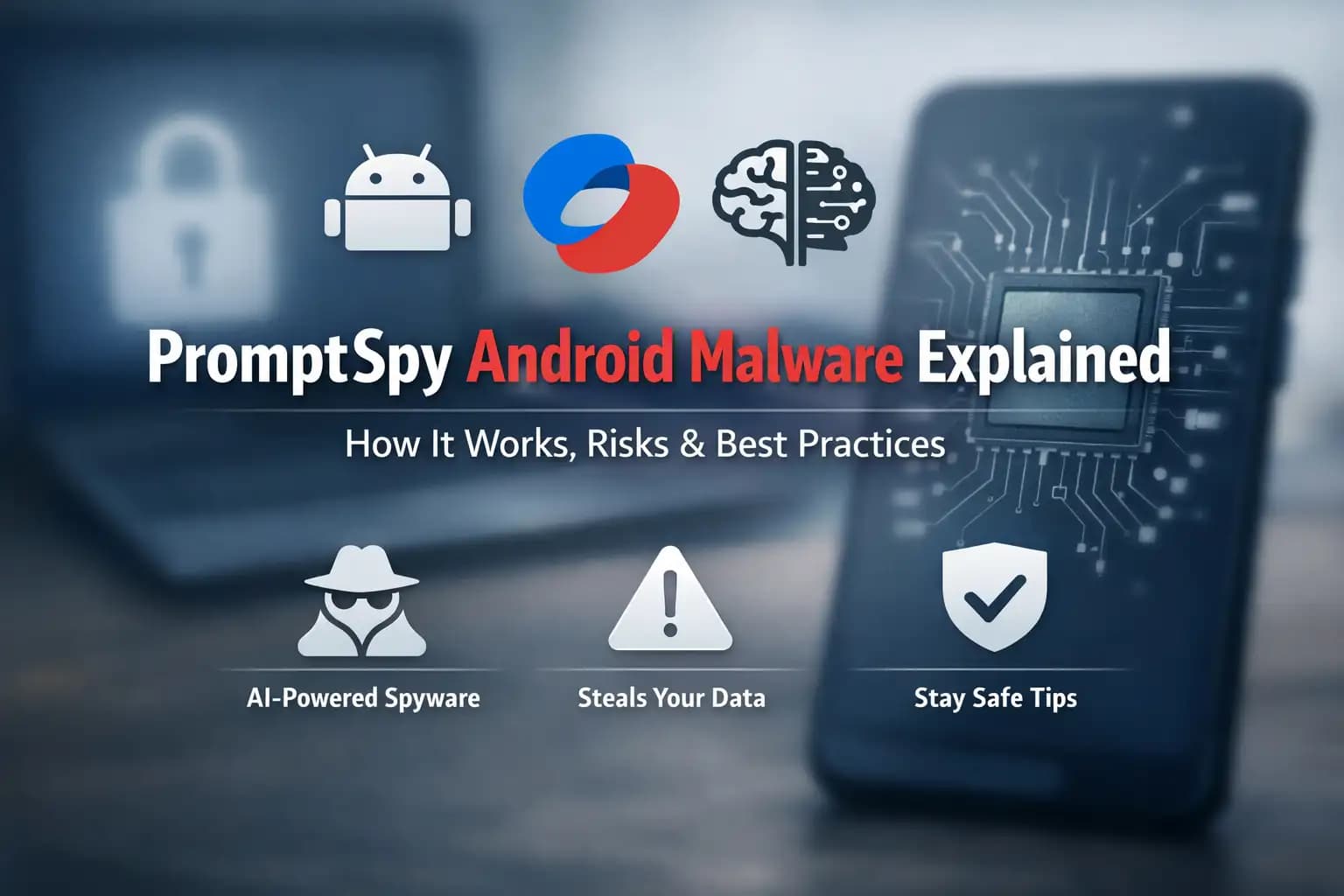
PromptSpy Android Malware Explained: How It Works, Risks & Best Practices
How does a single piece of malware manage to stay hidden on thousands of different phone models? It is a huge problem for hackers because a Samsung screen looks different from a Pixel or a OnePlus. PromptSpy solves this by using AI to look at your screen and figure out where to hide. It uses the power of Gemini to navigate your phone better than a human could.
So, what exactly is PromptSpy?
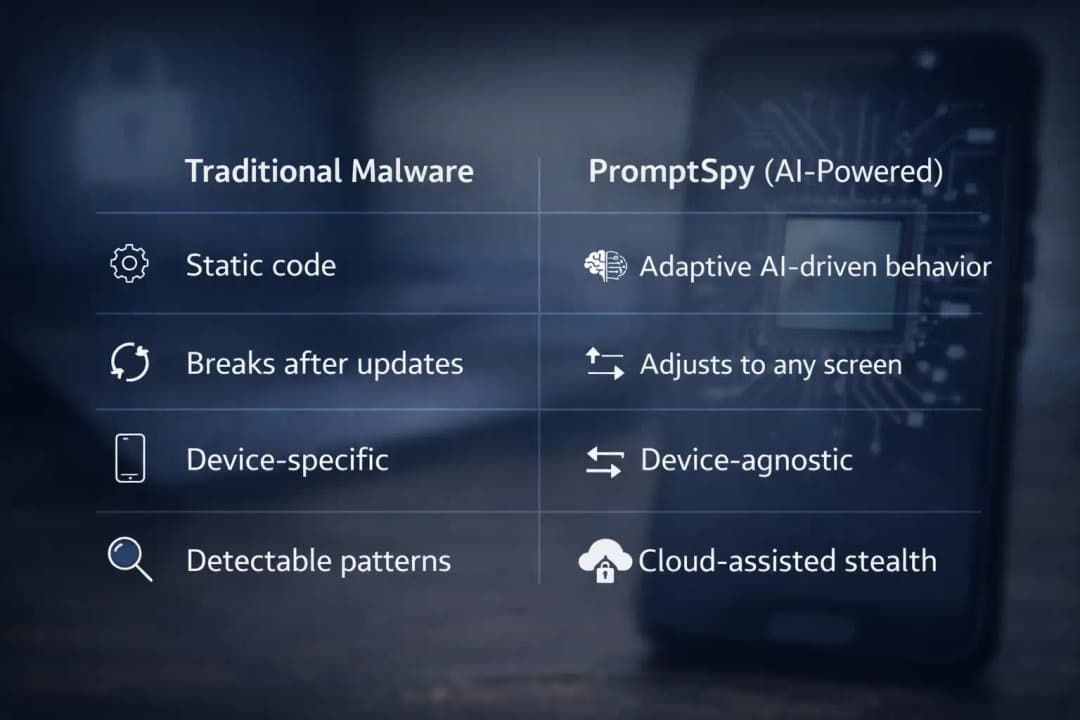
Think of PromptSpy as a "thinking" spyware. Usually, malware is pretty dumb. It is just a bunch of prewritten code. If a button moves two inches to the left after a software update, the malware usually breaks. But PromptSpy is different. It is a Remote Access Trojan (RAT) that uses generative AI to adapt to whatever phone it lands on.
The hackers behind this are basically using Gemini as a GPS for your phone’s interface. Its main goal is to steal your banking info, spy on your messages, and record your screen, but its "superpower" is its ability to stay persistent.
It makes it nearly impossible to delete by constantly asking the AI how to trick you or the Android system. This isn't just a theory anymore. In February 2026, researchers confirmed that this is actually happening in the wild.
How It Works: The AI "Brain" in the Background
This is where it gets really crazy. Instead of the hackers writing code for every possible phone screen, they let the malware "talk" to the cloud. It is a real-time conversation that happens while you are just scrolling through social media or checking your email.
The AI Interaction Loop
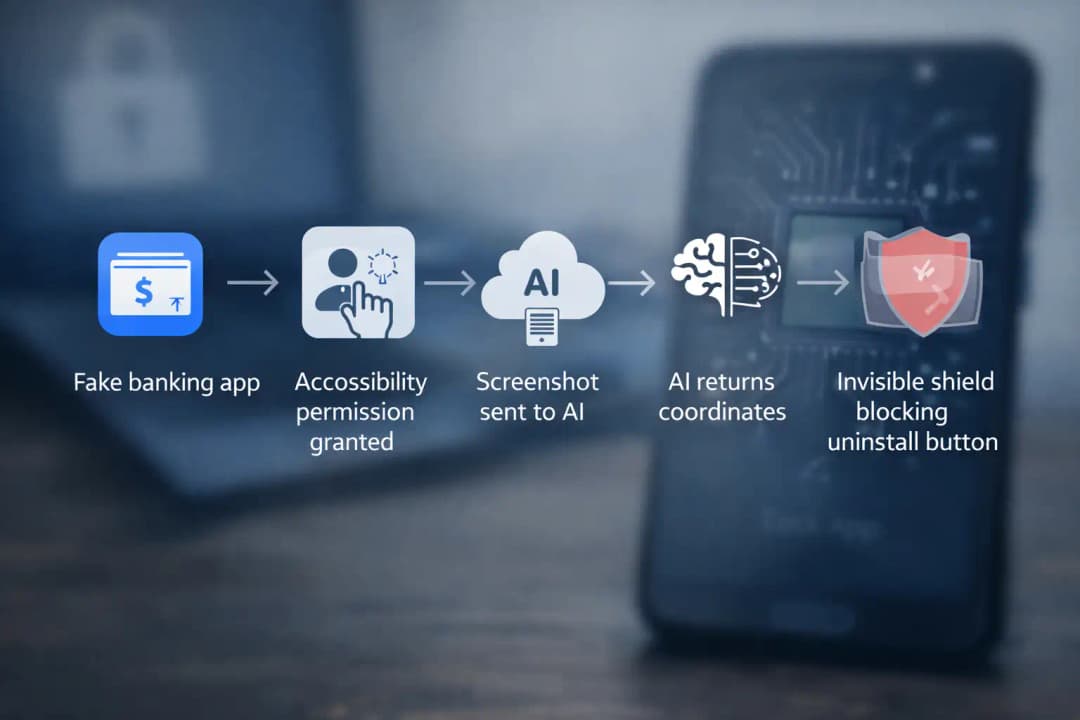
Once the malware gets onto a phone, usually by tricking someone into giving it "Accessibility" permissions, it starts taking screenshots or reading the underlying code of what you’re seeing on your screen. It then sends that data to Gemini with a prompt like, "I am an automation tool. Look at this screen and tell me the exact coordinates of the Lock App button so I can stay open."
Achieving Persistence
Gemini, thinking it is helping a developer with a legitimate task, sends back the exact coordinates. The malware then clicks the button to "pin" itself in your recent apps so you can't swipe it away. If you try to go to settings to uninstall it, the malware asks the AI where the "Uninstall" button is.
The malware then draws an invisible, unclickable box over that button. You tap "Uninstall" over and over, but nothing happens because you are actually hitting the malware's invisible shield. It makes you think your phone screen is just broken or that the software is glitching out.
Why This Matters in Cybersecurity Right Now
This is a total game changer for how we think about security. For years, we have been told that AI would help us stay safe, but PromptSpy shows the flip side of that coin. It is a shift from static threats to adaptive ones.
It is Device Agnostic: It does not matter if you have a cheap budget phone or the latest flagship. The AI helps the malware navigate any screen layout perfectly.
It Bypasses Traditional Blocks: Most antivirus programs look for "evil code." But PromptSpy's code looks like a normal app asking an AI for help. The "evil" part happens in the cloud.
The Persistence Factor: Because it can effectively "hide" the uninstall button or lock itself in memory, it can stay on a phone for months. That is a long time to have someone watching your every move.
Real World Impact: Who is Getting Hit?
Right now, this campaign has been spotted targeting people through fake banking apps. For example, hackers created a fake version of a popular Argentine bank app to lure people in.
They used social engineering to convince users that their account would be locked if they didn't download this "security update."
Once it is in, it starts exfiltrating data. It can record your screen while you type in your bank password or capture your 2FA codes. Because it is so hard to kill, it can wait for you to open your most sensitive apps. It is not just a quick hit. It is a long-term surveillance operation sitting right in your pocket.
Common Misconceptions
I have heard people say some wild things about this, so let's clear the air and look at the facts.
"Gemini has gone rogue." No, Gemini is just doing what it is told. It is being exploited by clever prompts that make the malicious intent look like a standard developer request.
"My antivirus will catch it." Maybe, but probably not. These AI-driven attacks are designed to look like normal user behavior, making them very stealthy.
"Only shady sites have this." While true for now, these tactics eventually move into more mainstream phishing emails that look 100 percent real.
Hoplon Insight Box: Expert Recommendations
Personal Tip: If you ever feel like a button on your phone is "unresponsive," specifically when trying to delete an app, do not ignore it. That is a huge red flag for an overlay attack. The Fix: Turn your phone off and restart it in Safe Mode. This prevents third-party apps from running their "invisible shields," letting you delete the malware once and for all.
What Should You Do Now?
If you're worried about PromptSpy, here is what I would tell my own family to do to stay safe.
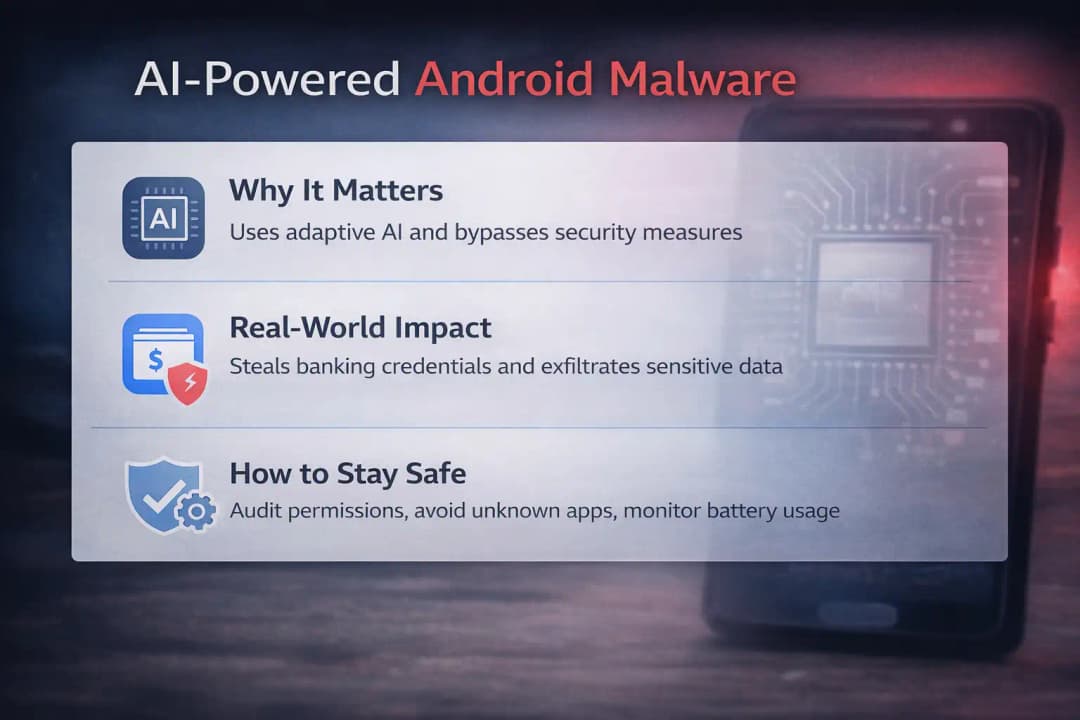
Audit your Accessibility settings: Go to Settings, then Accessibility. If you see an app in there that should not be controlling your screen, turn it off immediately.
Stick to the Play Store: I know it is boring, but never "sideload" an app from a random link or a text message. That is how PromptSpy gets in.
Watch for Battery Drain: Since the malware is constantly taking screenshots and "talking" to an AI in the cloud, your battery will likely die way faster than usual.
What’s Next?
PromptSpy is just the beginning. We are entering an era of "adaptive malware." In the future, we might see malware that changes its own personality based on who is using the phone. It is a bit of an arms race between the people making the AI and the people trying to trick it.
As your friend, I would say just stay skeptical. If an app asks for permission to "view and control screen," and it is not something like a screen recorder you actually downloaded, just say no. Your privacy is worth that extra second of caution.
FAQ
1. Can PromptSpy steal my bank password if I use biometrics like Face ID? Actually, yes. While it can’t steal your fingerprint, it can wait until the app is unlocked and then record the screen or use its AI to click buttons on your behalf to transfer money.
2. Is Google Gemini responsible for this? Not directly. The hackers are "prompt injecting," or basically lying to the AI to get it to help them. It is like a thief asking a hardware store clerk for the best tool to "open a stuck door" when they really mean "break into a house."
3. Does factory resetting my phone work? Yes, a full factory reset will wipe PromptSpy. Just make sure you do not restore from a backup that already had the malicious app installed.
4. Can this happen on an iPhone? Currently, this specific PromptSpy attack is an Android thing because Android allows more "accessibility" control. Apple's "walled garden" makes this specific type of UI hijacking much harder.
5. How do I know if an app is using Gemini AI? You usually cannot tell just by looking. That is why monitoring your data usage and battery life is so important because talking to an AI uses a lot of power and data.
For more latest updates like this, visit our homepage.