
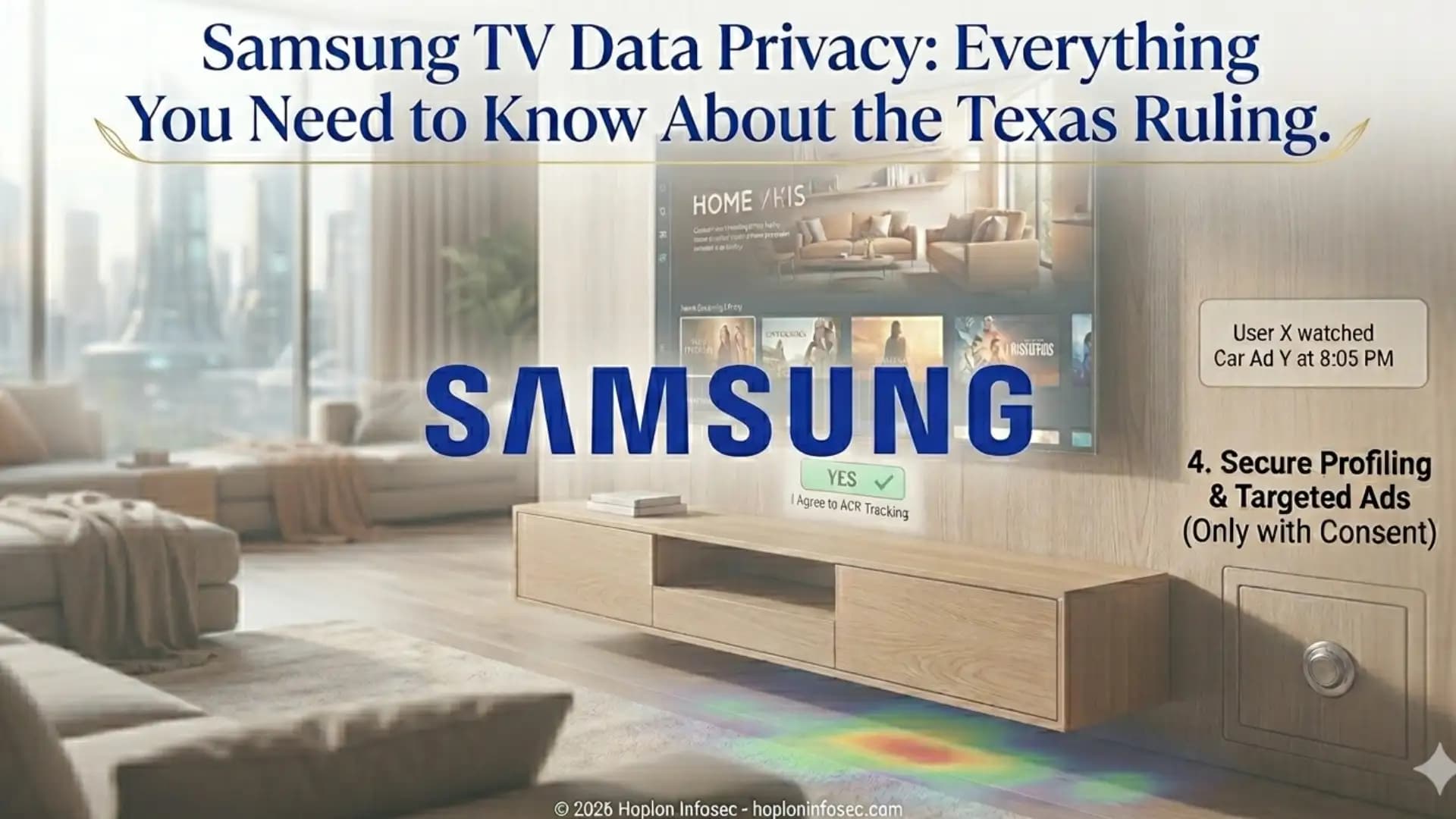
Is Samsung actually required to stop collecting data from Texas residents without their explicit permission?
Yes. As of March 2, 2026, following a settlement with the Texas Attorney General, Samsung must obtain "express consent" before activating Automated Content Recognition (ACR) on its Smart TVs. This resolution ends a multi-year investigation into deceptive data practices and mandates transparency for millions of users. (Source: Texas AG Consumer Protection Division).
Your Smart TV is Finally Asking for Permission: The End of Default Tracking
Look, we’ve all had that slightly "creepy" feeling. You’re watching an obscure indie film or a specific sports match, and suddenly, your phone starts showing you ads for that exact thing. For years, the "old way" of owning a Samsung TV meant you were unknowingly opted into a massive data-harvesting machine the moment you plugged it in. The "new way" established by this 2026 settlement changes the result: your TV is now legally a "guest" in your home, not a silent observer.
The traditional approach to privacy was, frankly, a bit of a mess. Companies would hide tracking permissions inside 50-page "Terms of Service" documents that no sane human would ever read. This settlement introduces a new standard for the consumer: Mandatory Transparency. Unlike previous vague "privacy notices," Samsung is now forced to use clear, "Yes/No" language before any pixel-tracking begins.
At Hoplon Infosec, we’ve long argued that privacy shouldn't be a hidden feature you have to hunt for. It should be the foundation. This shift in Texas is a massive step toward making that a reality for everyone, not just the tech-savvy few. It’s about making sure your hardware works for you, not the other way around.
The Deceptive Trade Practices Violation
The Texas Attorney General’s investigation, which spanned several years of consumer complaints, focused on a specific legal breach: the Texas Deceptive Trade Practices Act (DTPA). The state argued that Samsung’s use of Automated Content Recognition (ACR) was inherently deceptive because it was buried in the setup process. Samsung didn't just track what you watched; they created a mathematical profile of your life based on every frame of video that crossed your screen.
Legally, this wasn't just about "metadata." It was about "pixel hashing." Samsung TVs capture small samples of pixels from the screen, turn them into a digital "fingerprint" (a hash), and compare that hash against a massive database of movies, shows, and ads. This happened in real-time, whether you were using an antenna, a gaming console, or a streaming app. The settlement now mandates that this process remains dormant unless you explicitly flip the switch.
Under the terms of the settlement, Samsung didn't just pay a fine, they agreed to a total overhaul of their user interface for residents of the Lone Star State. This means the days of "implied consent" (where the company assumes you’re okay with tracking just because you didn't spend three hours in the settings menu) are over.
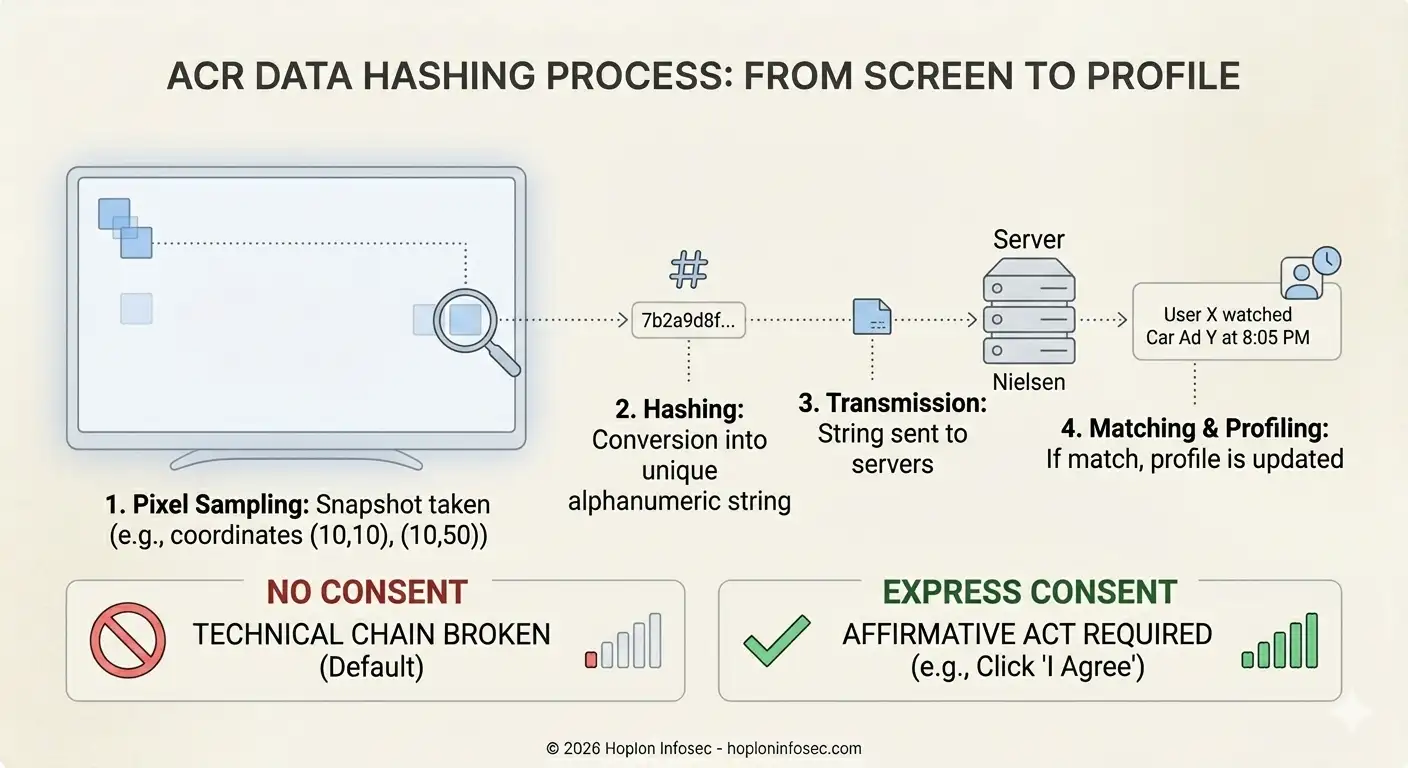
Technical Deep Dive: How ACR Hashes Your Life
To understand why this settlement matters, we need to look under the hood. Most people don't realize how invasive ACR truly is. It doesn't "watch" you like a person; it analyzes the mathematical structure of the image on your screen.
Pixel Sampling: Every few seconds, the TV takes a snapshot of specific coordinates on the screen. It doesn't need to see the whole picture; just a few "fingerprints."
Hashing: These snapshots are converted into a unique alphanumeric string (a hash). This is clever because the company can claim they aren't "recording" you, but the hash is unique enough to identify the content with 99% accuracy.
Transmission: This string is sent to Samsung’s servers or third-party partners like Nielsen.
Matching: If the hash matches a known commercial or show, your profile is updated with "User X watched Car Ad Y at 8:05 PM."
The "Express Consent" rule means this entire technical chain must be broken by default. Legally, "express consent" means an affirmative act, like clicking a button that says "I Agree to ACR Tracking." A pre-checked box or a hidden menu no longer counts. This is a massive win for network performance too, as your TV stops constantly "phoning home" with your viewing data.
Comparison: Samsung TV privacy Texas settlement
This isn't the first time a TV giant has been caught. To understand the impact, look at how this stacks up against past actions:
While the 2017 Vizio settlement was a wake-up call, it mostly resulted in better "disclosures." The Texas ruling goes further by demanding a change in the actual user interface. It’s more aggressive than the CCPA because it doesn't just give you the right to stop tracking; it prevents it from ever starting without your "Say-So." It’s a proactive defense rather than a reactive one.

Real-World Impact: Before vs. After
Imagine a small business owner in Houston, "David," who uses a Samsung TV in his lobby to show internal company reels or confidential training videos.
Before: David’s TV was hashing those internal reels, sending the digital fingerprints to servers. Even if Samsung didn't have the original video, they were collecting data on David’s usage patterns and screen time without his knowledge.
After: Because those reels aren't "authorized" for tracking, the ACR engine stays off. David’s business data stays inside David’s office.
This is a measurable outcome. For the average Texan, this means a significant reduction in the "data exhaust" their home produces. Research suggests that disabling ACR can reduce the background data a Smart TV sends by up to 30% to 40%, improving network performance and privacy simultaneously. It's essentially like putting a "Do Not Disturb" sign on your data.
Who is Affected and What You Should Do
This ruling directly affects the 30+ million people living in Texas, but the ripples are global. Samsung is unlikely to maintain two completely different software builds for long, meaning these privacy-first features will likely "leak" into TVs sold in other states and countries.
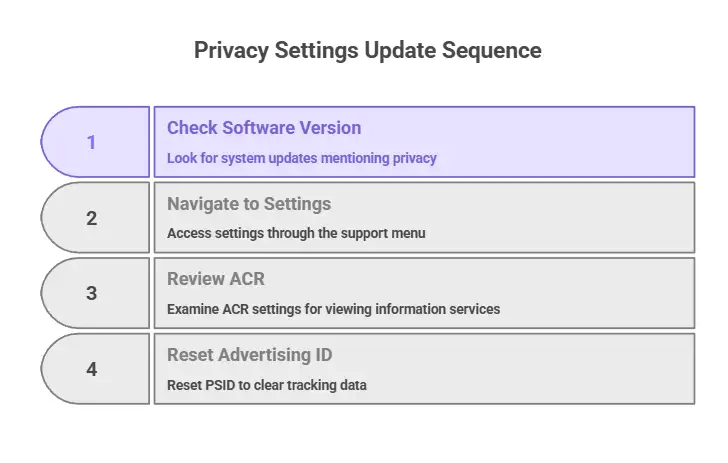
Immediate Action Steps:
Check Your Software Version: If you're in Texas, look for a system update that mentions "Privacy Updates" or "Consent Management."
Navigate to Settings: Go to Settings > Support > Terms & Policy.
Review ACR Specifically: Look for "Viewing Information Services." If it’s on and you didn't explicitly turn it on, the settlement gives you the grounds to disable it immediately.
Reset Your Advertising ID: While you're there, reset your "PSID" (Personalized Service ID) to wipe the slate clean of previous tracking data.
FAQ: What the People are Asking
1. Does this apply to my old Samsung TV or just new ones?
The settlement applies to "active" sets in Texas. This means Samsung must push a software update to older Smart TVs to bring their consent screens up to the new legal standard. You should see a new pop-up next time you update.
2. What happens if I click 'No' to express consent?
Nothing bad. Your TV will still stream Netflix, play games, and show cable. You simply won't get "targeted" ads or recommendations based on your history. You might actually find your TV runs slightly faster without that background process.
3. Is Samsung being fined?
While the exact dollar amount of the settlement is often tied to administrative costs and consumer education funds, the real "cost" to Samsung is the loss of data revenue, which is estimated in the tens of millions for the Texas market alone.
4. Why is Texas leading this instead of the Federal government?
In the absence of a unified federal privacy law, individual state Attorneys General like Ken Paxton are using state-level consumer protection laws to fill the gap. It's becoming a "state-by-state" battle for digital rights.
Conclusion: The Future of the "Transparent" Living Room
The Samsung TV privacy settlement in Texas is more than just a legal footnote; it’s a blueprint for the future of the Internet of Things (IoT). It moves us away from the "surveillance by default" model and toward a world where your devices actually respect your boundaries. The impact is clear: higher consumer trust, lower unauthorized data transmission, and a clear warning to other manufacturers like LG and Sony that the "old way" of doing business is over.
It feels like we're finally getting back to a place where technology serves us, rather than harvesting us. Whether you're a casual viewer or a business leader, this change is a massive win for your digital sovereignty.
Summary
This settlement shifts the burden of privacy from the user to the manufacturer through mandatory "Express Consent" UI changes, moving away from buried disclosures.
Texans regain control over their "viewing fingerprints," reducing unwanted profiling and significantly cutting background data transmission.
Hoplon Infosec provides the necessary oversight and technical guidance to help users and businesses navigate these evolving privacy landscapes, ensuring that "smart" devices don't become "spying" devices.
Your privacy shouldn't be a secondary thought. If you want to ensure your business or home network is truly secure against silent data harvesting, let the experts at Hoplon Infosec audit your digital perimeter today.



-20260925120840.webp&w=3840&q=75)