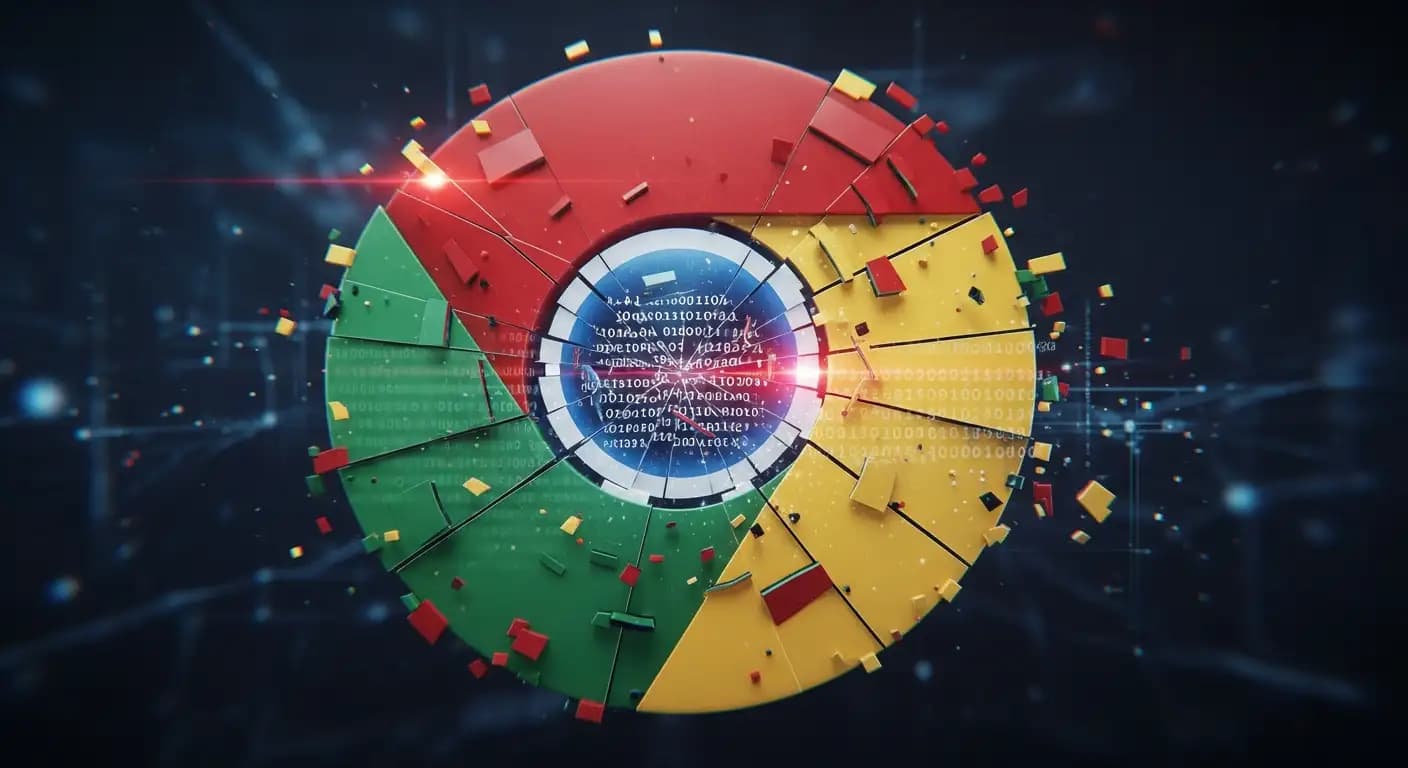
Can the Chrome WebView vulnerability really get around security measures? Should regular users be worried right now?
As of January 2026, security researchers found a flaw in Chrome WebView that could let hackers get around some of the built-in security features. Cybersecurity News discussed the problem in public, using research results and Google's response as examples.
Google admitted the problem, gave it the CVE-2026-0628 number, and released a fix through a Chrome update. Some technical details are still intentionally limited, but the confirmed information shows that this was not a cosmetic bug. It changed how WebView enforces security boundaries, which is a key layer of protection.
A summary of what the researchers really found
CybersecurityNews says that researchers found that Chrome's WebView component didn't always follow certain security rules. In some cases, this gap could let untrusted web content get around intended restrictions. The problem was fixed in Chrome version 143.0.7499.192. It is common practice to keep some exploit details private to stop abuse before users update.
There is no public evidence that widespread active exploitation was going on at the time of disclosure.
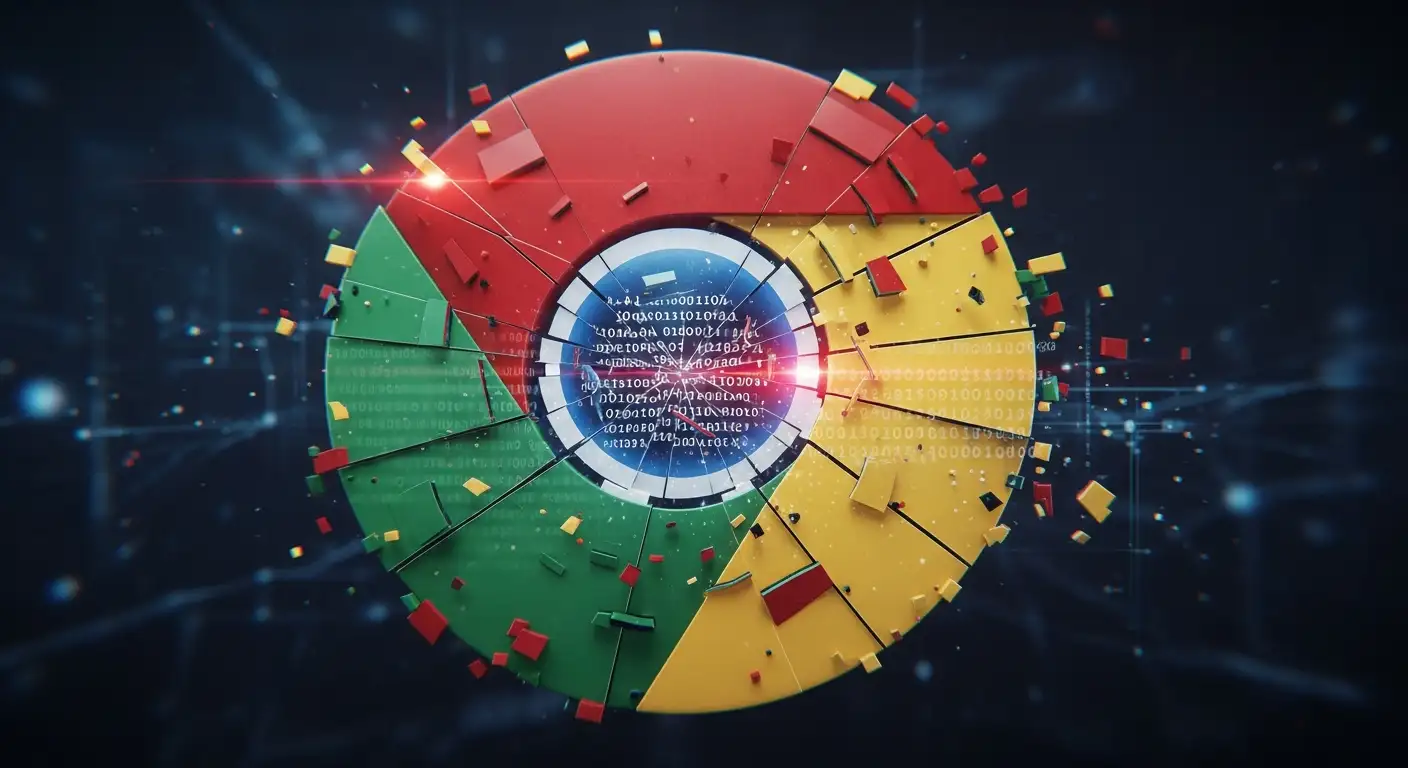
Why does this problem seem different from "just another Chrome bug"
All the time, Chrome fixes security holes. Most people don't even notice. This one is different because users can't see WebView, but it's a big part of their daily lives.
Chrome is not the only browser that has WebView. It exists in apps. Apps for banking, work, logging in, getting help, and confirming payments. You probably use WebView a lot without even knowing it.
That's why security experts were worried about the Chrome WebView flaw. When a bug shows up here, it doesn't stay in one window. It gently touches a lot of apps at once.
A simple explanation of what WebView does
WebView is like a built-in browser window that apps use instead of opening Chrome. It feels smooth, which is why developers like it. People like it because it feels familiar.
Security teams put up with it because WebView is supposed to be safe. Some rules saywhat web content can and can't do. Those rules are all that matters.
When policy enforcement fails, WebView can act more like a full browser than a limited one. The code change is small, but it has a big effect.
What CVE-2026-0628 really proves and what it doesn't
CVE-2026-0628 says that there was a security problem that was bad enough to need a patch. It shows that in some cases, policy enforcement could be skipped.
It doesn't confirm full device takeover, automatic data theft, or mass exploitation, though. There are claims like that online, but they don't have any proof to back them up.
Based on what we know, the Chrome WebView vulnerability is dangerous when it is used with bad content and apps that don't work properly. That little difference is important.
How a WebView bypass could really be used for bad things
Think of an app that uses WebView to load a login page. The app thinks that WebView stops access to important storage and system functions.
If those restrictions don't work, a bad page could get to session data or do things with the app that it shouldn't. The user doesn't see anything strange. No pop-ups. No warnings. Everything seems fine.
Security teams are most worried about that quiet failure.
Why Android users should pay more attention
WebView is a big part of Android. A lot of apps take a long time to update. Some packages include older parts. Apps might not keep up with Chrome updates, even though they happen quickly.
That is why Android WebView flaws usually have a longer risk tail. This doesn't mean you should panic. It means being aware.
The Chrome WebView flaw serves as a reminder for Android users to keep Chrome, Android WebView, and system updates in sync.
Enterprise environments are at risk differently
WebView is often used in businesses to manage internal dashboards, identity portals, and cloud tools.
A device that hasn't been patched can become a weak link. Not because the vulnerability is magical, but because trust assumptions break without a sound.
Security teams often pay more attention to servers and endpoints. WebView is in the middle, which makes it easy to miss.
Timeline of when information was made public and when it was acted upon
According to news reports:
• Researchers told Google about the problem in private.
• Google gave it the CVE-2026-0628 number.
• A patch was made and sent out.
• Chrome version 143.0.7499.192 fixed the problem.
• Advisories said to update right away.
It is normal for browser security cases not to make exact discovery dates public.
-20260107100047.webp "Chrome WebView vulnerability")
How does this stack up against previous WebView problems
WebView bugs have usually fallen into one of two groups. Errors in logic or memory corruption.
This problem looks like it belongs in the second group. It's harder to see and less likely to be noticed when there are logic errors. They often get past testing because nothing goes wrong.
That's why the Chrome WebView security hole needs to be fixed, even if there aren't any scary videos of it being used.
How to lower your risk right now
For users:
• Update Chrome right away.
• Restart after updating.
• Keep Android WebView up to date.
• Don't open apps or links in apps that you don't know about.
For developers:
• Limit WebView permissions
• Don't load content from untrusted sources
• Use strict content security policies
• Test apps against WebView bypass scenarios
When it works, security is boring. That's a good thing.
Getting rid of false information
Some online posts say that this flaw makes it certain that someone will take over your account. That is not true.
Certainly, the security boundaries were not as strong as they should have been. That makes things possible, not certain.
Being honest builds trust. Exaggerating risk does the opposite.
Why is this still important after patching
The lesson stays the same, even after updates are released. Embedded parts should be looked at just as closely as visible ones.
The Chrome WebView vulnerability is more about being aware than being afraid. Quiet systems can fail without making a sound.
Questions and Answers
What is the flaw in Chrome WebView?
CVE-2026-0628 is the name of a security flaw that affects WebView policy enforcement.
How can you get around WebView security?
Based on what has been reported in the news, some restrictions may not work as intended in some situations, which could lead to unintended behavior.
Is there a patch that has been confirmed?
Yes. The problem was fixed by Google in Chrome 143.0.7499.192.
Does fully updating Chrome fix the problem?
Google says that updating fixes the known security hole.
A last thing for people to remember
Not all security problems are loud. Some people whisper.
The Chrome WebView flaw didn't break the internet, but it did show us how much trust we put in things we can't see. Updating might seem boring, but that's what safe systems look like.
Keep being curious. Stay in the know. That habit is still more important than any headline about an exploit.
You can also read these important cybersecurity news articles on our website.
· Apple Update,



-20260925120840.webp&w=3840&q=75)