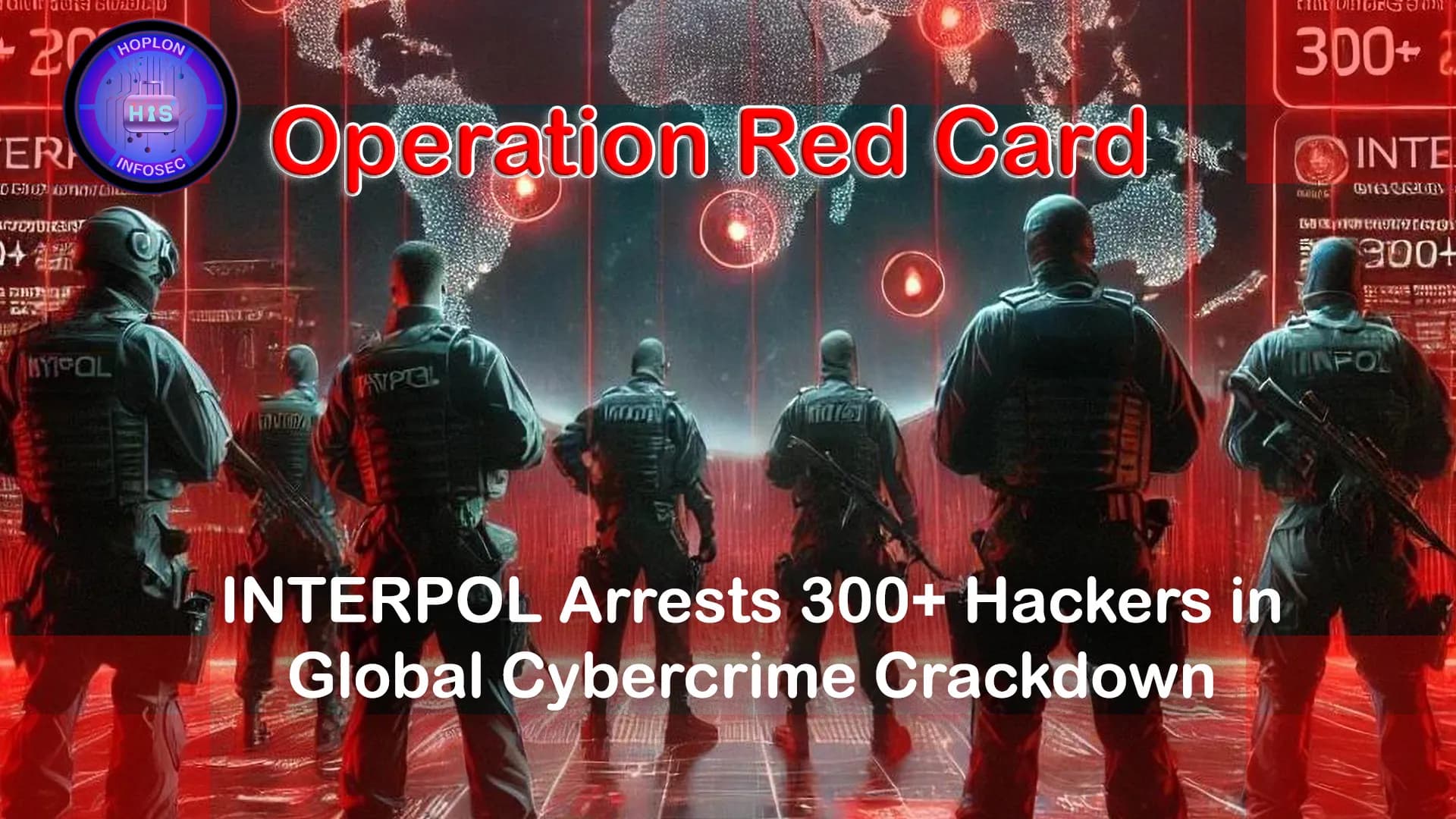
In a groundbreaking international cybercrime takedown, authorities have arrested more than 300 individuals in what has been dubbed Operation Red Card. This massive operation, coordinated by INTERPOL in collaboration with law enforcement agencies across several countries, targeted organized cybercrime syndicates involved in various fraudulent online activities. From phishing and business email compromise (BEC) scams to identity theft and online romance frauds, these criminals had left a trail of financial and emotional destruction around the world.
The operation highlights not only the sophistication of modern cybercrime but also the increasing capability of international agencies to coordinate and execute large-scale crackdowns. The arrests send a powerful message: even in the virtual world, justice can and will catch up. But what exactly happened in Operation Red Card? Who were these cybercriminals? And what does this mean for everyday internet users and the future of cybersecurity?
Let’s dive into the details of this global cybercrime bust.
What Is Operation Red Card?

Operation Red Card was launched as a collaborative international effort to disrupt and dismantle a network of cybercriminals operating across multiple continents. The mission: arrest and prosecute individuals engaged in online fraud, financial scams, and hacking activities that were exploiting individuals and organizations on a global scale.
The operation was orchestrated by INTERPOL’s Cybercrime Directorate and involved law enforcement from over 30 countries, including Nigeria, the Philippines, Brazil, and South Africa. Many of the arrested suspects were identified as part of organized cybercrime groups specializing in Business Email Compromise (BEC), phishing, online scams, and data theft.
The name “Red Card” itself symbolizes a strong warning to cybercriminals worldwide, signifying a decisive move to penalize those abusing the digital space. Authorities investigated thousands of complaints and leads, which ultimately led to one of the largest cybercrime busts in recent years.
Among the 300+ arrested, a significant number were found to be connected to cybercrime-as-a-service (CaaS) networks, offering phishing kits, malware, fake websites, and services designed to help other hackers. This bust didn’t just take down individuals – it disrupted an entire ecosystem of cybercriminal infrastructure.
How the Operation Was Conducted
The success of Operation Red Card was not accidental; it was the result of careful planning, intelligence sharing, and cooperation across international boundaries. INTERPOL and partner agencies tapped into cyber threat intelligence, digital forensics, and real-time collaboration to identify and track suspects.
Key steps in the operation included:
- Monitoring dark web forums where cybercriminals sold stolen credentials, phishing kits, and hacking tools.
- Tracing fraudulent transactions made through compromised business accounts.
- Coordinating arrests and raids based on real-time intelligence.
- Seizing digital evidence such as computers, mobile phones, SIM cards, and cryptocurrency wallets.
One notable example is the arrest of a Nigerian national who was the mastermind behind a sophisticated phishing ring. This individual operated under multiple aliases and used malware and social engineering to defraud victims in Europe and the United States.
Another case involved a group of suspects in the Philippines who were involved in online investment fraud and romance scams, manipulating victims into transferring large sums of money.
Through a centralized coordination effort led by INTERPOL, national police units were able to act swiftly, often making arrests simultaneously across different regions to prevent suspects from alerting each other or fleeing.
Types of Cybercrimes Involved

Operation Red Card uncovered a wide array of cybercrimes, some of which were disturbingly intricate and damaging. Here are the major categories:
1. Business Email Compromise (BEC)
BEC is a scam where hackers impersonate business executives or suppliers to trick employees into wiring money to fraudulent accounts. These scams are often highly personalized, using information gleaned from hacked email accounts or public company profiles.
Victims included companies in logistics, real estate, manufacturing, and even nonprofits. Losses ranged from thousands to millions of dollars, with several cases resulting in severe financial distress for the organizations involved.
2. Phishing and Credential Theft
Many arrested individuals were involved in creating and distributing phishing emails that mimic trusted entities like banks, government institutions, or tech companies. Once a victim clicked on a malicious link and entered their login credentials, the attackers used the information to gain access to financial accounts.
Some phishing kits even included two-factor authentication bypass mechanisms, making them extremely dangerous.
3. Romance Scams
In these scams, criminals build fake online relationships with victims, gaining their trust and manipulating them into sending money. Some victims were tricked into taking loans or liquidating retirement savings, believing they were helping a loved one.
The emotional toll of these scams was enormous, often leaving victims with both financial loss and psychological trauma.
4. Investment and Crypto Scams
Fraudulent crypto platforms promising high returns were another common tactic. Victims were enticed into investing in fake cryptocurrency trading platforms, only to find that their funds had vanished overnight.
One Philippine-based group offered bogus forex trading opportunities, attracting dozens of victims globally.
5. Identity Theft and Synthetic Identities
Some cybercriminals specialized in stealing identity documents and creating synthetic identities to apply for loans, open bank accounts, or carry out further fraudulent activities. These identities were sold on the dark web, enabling other criminals to bypass Know Your Customer (KYC) checks.
The Global Impact of Operation Red Card
The arrest of over 300 cybercriminals is a major milestone in global efforts to combat cybercrime. Here are some of the significant outcomes:
- Disruption of organized cybercrime groups: Many of the arrested individuals were key players in larger networks. Their removal has temporarily halted numerous ongoing scams.
- Confiscation of tools and digital evidence: Devices seized during the operation will provide further intelligence into hidden networks and possibly lead to additional arrests.
- Increased public awareness: The publicity surrounding Operation Red Card serves as a wake-up call to both individuals and organizations to strengthen their cybersecurity posture.
- Boost in international cooperation: The operation demonstrated the power of global collaboration in tackling borderless cyber threats.
Law enforcement agencies also froze or recovered millions in stolen funds, some of which are being returned to victims. In several countries, this operation has led to renewed efforts to strengthen cyber laws and improve digital policing infrastructure.
The Role of International Collaboration in Fighting Cybercrime
Cybercrime is inherently transnational. Criminals often operate from countries with weak enforcement while targeting victims globally. This makes international cooperation essential.
INTERPOL’s success in Operation Red Card illustrates the value of:
- Information sharing across borders
- Joint training programs for cybercrime units
- Harmonized cyber laws and extradition treaties
Previous operations such as Operation Falcon and Operation Killer Bee also highlight the growing trend of joint international cyber enforcement. But Red Card stands out for its scale and effectiveness.
How Individuals Can Protect Themselves Online

While law enforcement is stepping up, individuals must also take proactive steps to secure their digital lives. Here are some actionable tips:
1. Be Skeptical of Unsolicited Emails
Never click on links or download attachments from unknown senders. Always verify email addresses, especially when handling financial matters.
2. Enable Multi-Factor Authentication (MFA)
Use MFA wherever possible, especially for banking, email, and social media accounts. This adds an extra layer of protection even if your password is compromised.
3. Avoid Oversharing on Social Media
Cybercriminals use publicly available information to craft convincing scams. Limit what you share online.
4. Check URLs and Domain Names
Fake websites often look identical to real ones but may have slight spelling differences. Always double-check before entering sensitive information.
5. Report Suspicious Activity
If you receive a suspicious message or notice unauthorized activity, report it immediately to your bank or local cybercrime authority.
What This Means for the Future of Cybersecurity
Operation Red Card is a powerful example of how coordinated efforts can strike at the heart of global cybercrime networks. However, experts warn that this is just one battle in a long war.
Cybercriminals are constantly evolving, using artificial intelligence, deepfakes, and new attack vectors. As one group is taken down, others will emerge. This means:
- Governments need to invest in cyber education and law enforcement training.
- Businesses must prioritize cyber hygiene, including employee training and regular security audits.
- Individuals should remain vigilant and informed.
Cybersecurity is no longer just an IT issue – it’s a shared responsibility across society.
Conclusion
Operation Red Card is a landmark achievement in the fight against cybercrime. With over 300 cybercriminals arrested and multiple fraudulent networks dismantled, the operation delivers a strong message: cybercriminals are not beyond the reach of law enforcement.
This success was only possible due to international cooperation, advanced cyber forensics, and real-time intelligence sharing. It underscores a vital truth: while cybercrime continues to evolve, so too does the resolve and capability of global enforcement agencies.
For everyday users, this is both a victory and a reminder. Stay cautious, stay informed, and take steps to protect your digital identity. Because in the battle for cyberspace, awareness and vigilance are your best defenses.
More- Cybersecurity News
-20260715153016.webp&w=3840&q=75)