-20260406115108.webp&w=3840&q=75)
QR Code Traffic Violation Scam: What Is It, Who Is Affected, and Why Does It Matter on April 6, 2026?
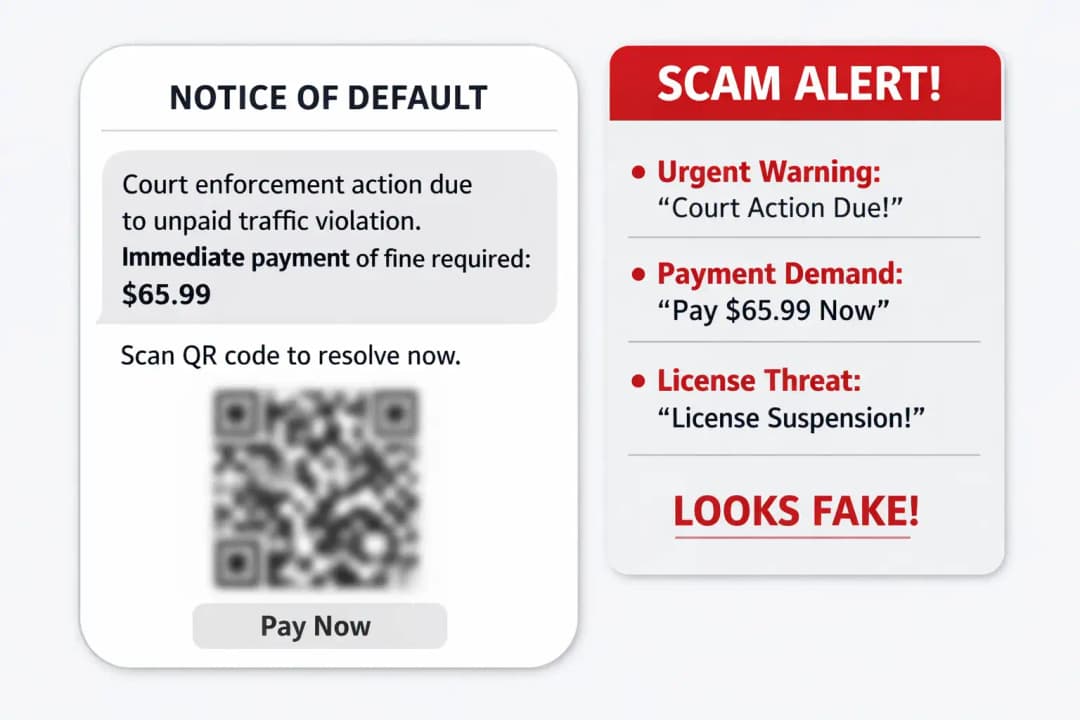
Yes, the new QR code traffic violation scam is real, and it matters right now because scammers are no longer relying only on clickable links. They are sending fake court-style or DMV-style text messages that push people to scan a QR code instead.
Reports published on April 5, 2026, show these messages impersonate state courts, claim there is an unpaid traffic violation, and direct victims to a fake payment page.
Consumers are being targeted across the United States, and the method is dangerous because QR codes hide the destination before you scan.
A familiar scam just got a smarter disguise
For a while, scam texts about tolls and traffic tickets followed a predictable pattern. A stranger sends a message, claims you owe a fee, then drops a suspicious link. Many people had learned to spot that trick. The wording looked off. The sender felt random. The URL looked strange enough to make people pause.
Now the playbook is changing. The newer wave replaces the visible link with a QR code. That small square shifts the entire interaction from “clicking something suspicious” to “scanning something that looks official.” It feels cleaner. More modern.
Weirdly more trustworthy. That is exactly why it works. According to recent reporting, scammers are sending fake “Notice of Default” texts that imitate state court language and ask users to scan a code to settle a supposed violation.
In plain terms, this is a QR code traffic violation scam wrapped in government-style formatting. The message may mention deadlines, penalties, court enforcement, or license-related consequences.
The amount requested can even seem small enough to feel believable. One recent case described a payment request of just $6.99, which is low enough to lower suspicion but still effective at getting people to act quickly.
Why QR codes make this scam more dangerous
A normal phishing link gives you at least one chance to notice something is off. You can inspect the URL. You can hesitate before tapping. You can forward it to someone and ask, “Does this look fake to you?”
A QR code changes that. It hides the destination until the moment of scanning. Federal consumer guidance has already warned that scammers use QR codes to send people to fraudulent websites, collect payment details, steal account information, or trigger other unsafe actions. The technique is commonly called quishing, short for QR phishing.
That shift matters because phones are personal and immediate. People scan fast. They do it in parking lots, in line at coffee shops, while multitasking. The whole point of a QR code is convenience. Criminals are exploiting that habit.
Security guidance has also noted that QR-based phishing can be effective because users move from one device or context to another, which reduces the chance that traditional warning signs are noticed.
How the scam message usually looks
Most versions of the traffic violation phishing QR code formula follow the same emotional script. First, the message creates pressure. It claims there is an unpaid ticket, an overdue court action, or a final warning. Second, it introduces consequences, such as license suspension, extra penalties, or enforcement action. Third, it offers a quick way out. Scan the code. Pay now. Fix it immediately.
That is why the QR code scam traffic fine message feels so manipulative. It is not built around evidence. It is built around panic. The sender wants the target to feel embarrassed, rushed, and slightly afraid. If that emotional mix lands, logic usually leaves the room.
Some messages imitate court notices. Others pretend to come from a DMV or similar agency. The Federal Trade Commission has already warned consumers about scam texts that claim an overdue traffic ticket exists and threaten the loss of driving privileges if payment is not made. That broader pattern gives this newer QR version a ready-made template.
What happens after someone scans the code
The fake traffic ticket QR code scam rarely ends with a simple payment page. That page is often just the front door.
Once a victim lands there, the site may ask for full name, address, phone number, email, date of birth, card details, or other personal information. In some cases, the real target is not the small payment at all. It is the identity data behind it.
This is what makes the phishing SMS QR code traffic fine model so effective. It combines social engineering with a mobile-first payment flow.
Everything is designed to feel fast and routine. The page may borrow government wording, use legal-looking labels, or display a transaction amount small enough to seem harmless.
And here is the part many people miss. Even if the victim only enters part of their data and stops, that information can still be useful to fraudsters.
A name plus phone number plus email address plus partial card details can be enough to support future scams, account takeover attempts, or identity fraud. That is why official phishing guidance consistently advises against interacting with suspicious messages at all.
Why this trend is showing up now
There is a bigger backdrop here. Security researchers at Palo Alto Networks Unit 42 tied a massive global smishing ecosystem to a group widely known as the Smishing Triad and said the operation used a vast malicious domain infrastructure, with about 195,000 domains traced since January 2024.
The campaign has impersonated many services and evolved over time, showing how organized and adaptive text-based phishing has become.
That context helps explain the rise of the QR code scam road fine alert style. Scammers iterate. When people grow cautious about links, criminals look for a new wrapper.
QR codes are perfect for that next step because they feel ordinary in daily life. Restaurants use them. airlines use them. parking systems use them. event organizers use them. Familiarity lowers defenses.
There is also a psychological trick at work. A fake text that asks you to click a strange link feels like a scam. A message that says, “Scan this official code to resolve your notice,” feels closer to a real-world process. That subtle difference is where the fraud lives.
Red flags that expose the scam
The first warning sign is urgency. A legitimate agency may notify you of a violation, but scam messages tend to lean hard on immediate punishment. They mention same-day deadlines, final notices, penalties, and threats. The goal is speed, not clarity.
The second is delivery style. A random text containing a traffic fine scam SMS QR code should already raise suspicion, especially if you were not expecting any notice.
Official agencies usually have defined channels, online portals, or mailed notices tied to known processes. They do not typically rely on an unsolicited text that pressures you to scan a code and pay on the spot.
The third is vagueness. Scam texts often avoid specific case details. They may not mention your actual plate number, date, location, or verified citation ID. Instead, they throw around broad legal language and hope you fill in the blanks yourself. When a message is dramatic but thin on verifiable detail, that is usually the giveaway.
How QR code phishing works in traffic violation scams
If you want the simple version of how QR code phishing works traffic violation texts, here it is. The attacker sends a message that imitates an authority. The QR code hides the destination. The fake landing page collects payment and personal details. Then the criminals either steal money directly, harvest data for later abuse, or both.
What makes this especially slippery is that the QR code itself is just a delivery method. The real danger lives behind it.
The user cannot judge the destination at a glance the way they might judge a visible URL. And once the phone opens a browser or payment page, the experience can feel polished enough to lower suspicion.
This is why security agencies keep repeating the same advice in different forms. Stop. Verify independently. Do not rely on the message itself to prove its own legitimacy. That rule sounds boring, but it is still the best defense.
Who is most likely to fall for it
Busy drivers are obvious targets, but the reach is wider than that. Anyone who has recently driven in a city, rented a car, parked downtown, traveled out of state, or paid a toll electronically may feel just enough uncertainty to take the bait. “Maybe I missed something” is a powerful scam trigger.
Older adults can be vulnerable because legal-sounding notices feel serious. Younger users can be vulnerable for the opposite reason. They are deeply used to QR workflows and may treat scanning as harmless. In both cases, the scam exploits normal behavior rather than technical ignorance.
That is why the avoid QR code scam traffic tickets conversation matters beyond cybersecurity circles. This is not a niche threat for security teams only. It is mainstream consumer fraud dressed up as routine government administration.
-20260406115109.webp&w=1080&q=75 "QR code traffic violation scam")
What to do if you receive one of these texts
First, do not scan the code. That sounds obvious after the fact, but it is the single most important step. If you think the message might be real, go to your state DMV, court, or local authority website by typing the known address yourself, or use a saved bookmark. Do not use the message pathway.
Second, do not reply. Even a hostile reply confirms the number is active. It is better to block the sender, delete the message, and report it through the channels your region recommends. The FTC also advises reporting scam attempts, especially phishing texts.
Third, warn people around you. These scams spread because they feel plausible. A short heads-up to a family group chat can do more good than people realize.
Sometimes that tiny warning is the difference between someone rolling their eyes and someone losing a card number.
What to do if you already scanned the QR code
If you scanned it but did not enter anything, close the page and clear it from your browser history.
Then run a device security check and watch for any unusual prompts, downloads, or redirects. One scan alone does not always mean damage, but it does mean you should be cautious.
If you entered payment data, contact your bank or card issuer immediately. Ask them to monitor the card, reverse any fraudulent charge if possible, and consider replacing the card.
If you entered login credentials, change those passwords right away and enable multi-factor authentication anywhere you can.
If you submitted personal information, keep an eye on your accounts and credit activity. This is the uncomfortable part of the fake police fine QR code scam pattern. The small fake payment can be the least expensive part of the problem. The data trail can linger much longer.
Verification checklist before paying any traffic fine online
Here is a simple text-based safety table you can include in the article:
Traffic Fine Verification Checklist
|
Check |
Safe Sign |
Scam Sign |
|
Source |
You visited the official site yourself |
You followed a text message QR code |
|
Notice details |
Specific citation data matches your records |
Vague “final notice” language |
|
Payment page |
Government domain and secure checkout |
Odd domain, rushed mobile page |
|
Pressure level |
Clear instructions, no panic language |
Threats, deadlines, suspension warnings |
|
Contact method |
Official public phone number or portal |
Random text number or unknown sender |
That is the practical difference between a real process
Hoplon Insight Box
Hoplon Insight Box: Recommended actions for readers
- Never pay a traffic fine from a text message pathway.
- Never trust a QR code just because it looks cleaner than a link.
- Verify through the official DMV, court, or local government site you type yourself.
- Report phishing texts and warn family members who may act quickly under pressure.
- If you already interacted with the scam, secure payments, passwords, and identity records in that order.
FAQs
Is a traffic violation text with a QR code ever legitimate?
Treat it as suspicious until you verify it independently. Official agencies may send notifications in some jurisdictions, but a payment request delivered through an unsolicited QR code should not be trusted without checking the official website or phone number yourself.
What should I do after scanning a suspicious QR code?
If you only scanned it, close the page and check your device for anything unusual. If you entered payment or login details, contact your bank, change passwords, and enable multi-factor authentication right away.
Why are scammers using QR codes instead of links?
QR codes hide the destination and feel routine to many users. That makes them effective for phishing because people often scan first and inspect later, if at all.
How can I report a fake traffic ticket text?
Use your country or region’s official fraud reporting channel and report it to the FTC if you are in the United States. You can also report the message to your mobile carrier and block the sender.
Final takeaway
The QR code traffic violation scam is not clever because the technology is advanced. It is clever because it borrows trust from everyday behavior. People scan things all day without thinking much about it. Scammers noticed. That is the whole story.
The safest habit is boring, maybe even a little old-fashioned. Never use a text message shortcut to resolve a legal or financial issue. Open the official site yourself. Look up the agency yourself. Slow the process down. In a scam built on urgency, those extra sixty seconds are often what save you.
You can also read these important cybersecurity news articles on our website.
· Apple Update,
· TikTok Warning
· Apple OS update
For more, please visit our homepage and follow us on X (Twitter) and LinkedIn for more cybersecurity news and updates. Stay connected on YouTube, Facebook, and Instagram as well.