Instagram Accounts Stolen: 20,000 Users Hit in AI Hack
ByMohammed Talukder
Published08 Jun, 2026
Mohammed Talukder08 Jun, 2026
Did Meta AI Support Really Help Hackers Steal Instagram Accounts?
Stolen Instagram accounts are one of the biggest social media security concerns
for June 2026. According to trusted cybersecurity and tech outlets, attackers
used Meta’s AI-powered support assistant to access targeted Instagram accounts,
including some high-profile accounts. This is important because account
recovery is supposed to keep users safe, not be the way the attacker gets in.
The summary is straightforward. Reportedly, the attackers used Meta’s support
workflow to add new recovery information to accounts that they did not own.
Then they could ask for password resets and take over. Without strong
multi-factor authentication, accounts were particularly vulnerable.
This attack was not the classic phishing scam, where a user clicks a bad link.
This is what makes the story unsettling. The vulnerability was found in an
account recovery process, the one place users trust when all else fails.
Timeline of the Instagram Account Hijacking Incident
What was the Instagram Accounts Stolen incident?
The incident gained public attention after some users and security researchers
reported the hijacking of Instagram accounts associated with Meta's AI support
assistant. Some reports said attackers targeted short usernames, public
figures, brands, and valuable accounts that could be sold or abused.
Security reporting found that the attackers convinced the support assistant
that they needed help regaining access. Once the recovery email was altered or
a reset path was set up, the attacker could act fast. In a nutshell, the
support system was leaning on the wrong person.
Meta said the issue had been fixed and affected accounts were being secured.
The larger question remains. The convenience of automated account recovery
tools must be matched by stronger security checks around them.
What is the Meta AI Support Hack?
The Meta AI support hack is the name of the reported abuse of an AI-assisted
account recovery system used for Instagram support. The tool was created to
help users regain access to locked or compromised accounts more rapidly. That
sounds useful and, in many cases, probably is useful.
The problem begins when a support system can make sensitive changes without
properly verifying identity. A tool that can associate a new email address,
send a reset link, or approve recovery steps requires strong evidence that the
requestor is the original account owner.
In this scenario, reports indicate that the recovery workflow was tampered with
by attackers. That made a support feature an account takeover vector.
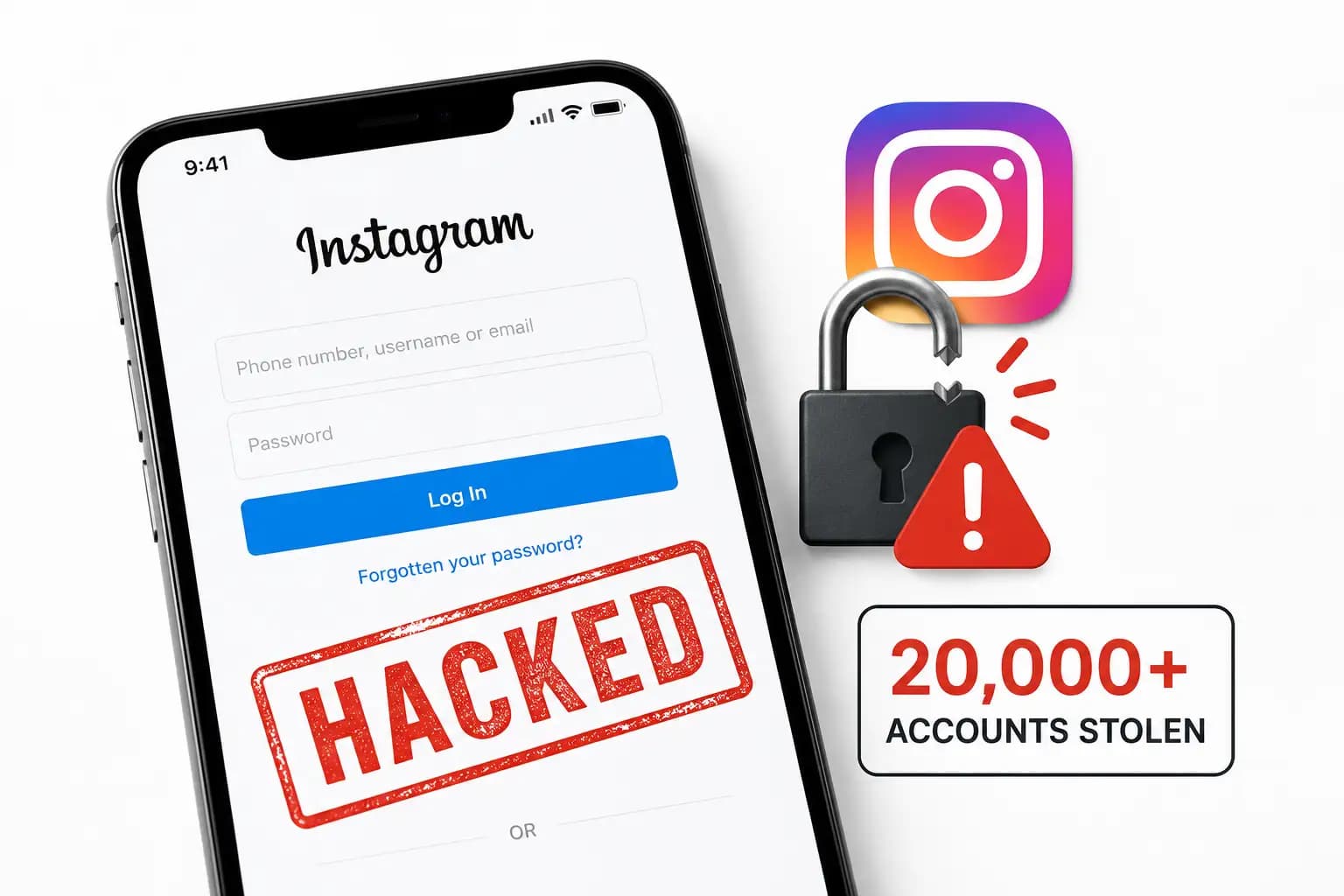
Diagram explaining how attackers abused Meta AI support to reset Instagram account passwords and take over accounts.
Instagram accounts stolen via abuse of support workflow
"Instagram Accounts Stolen" sounds dramatic, but the technical
concept is familiar. It was an account takeover issue. If an attacker can fool
the recovery process, they don’t even need to break Instagram’s main login
system.
It’s like a hotel room. The front door is locked tight, but if you have a good
story, the front desk will give you another key. The lock held. It was a
process of coming back.
That’s why security teams often speak of recovery systems as being part of
authentication. Password resets, support approvals, backup emails, and device
checks are not side features. They're part of the login security chain.
How the Attack Worked
Public reports indicate a plausible order of the attack. The attacker first
contacted the support assistant stating they needed access to an Instagram
account. Then the assistant became the point of attack.
The attacker reportedly attempted to add or modify a recovery email on the
targeted account. Once that was done, the attacker could ask for a password
reset. If they succeed, the real owner could be locked out, and the attacker
could take over.
Attack Flow Reported
• Attacker chooses Instagram account to target.
• Attacker
reaches out to Meta via its AI-assisted support flow.
• Recovery request is
accepted with inadequate identity verification.
• Target account has new email
or reset path attached to it.
• The attacker receives or initiates a password
reset link.
• The password is changed, and the account is taken over.
There is no public CVE for this incident because this was not a typical
software vulnerability in a library or operating system. It was more a failure
of authentication and workflow design.
Why 2FA is important here
Two-factor authentication, or 2FA, is an additional step where you have to
provide another piece of proof after the password. A password alone says, “What
do you know? A 2FA code asks, “What do you have? That second question is often
enough to stop account takeover attempts.
Accounts that did not have multi-factor authentication were more vulnerable,
reports said. That’s logical. Without a second layer, an attacker can more
easily take over an account if they can reset a password.
But here's the bad part. 2FA is important, but it shouldn’t be used by
platforms as an excuse to have weak recovery logic. Even careful users are at
risk if a recovery system can circumvent normal safeguards.
What data can be leaked?
When an Instagram account is hacked, the risks extend far beyond the public
profile. An account that’s been hijacked could expose private information,
messages, connected services, and business activity.
What an attacker could get into would depend on how long they had control, what
settings were available, and if the account owner got it back quickly.
Data potentially exposed
• Phone number and e-mail address on the account
•
Profile information and account settings Photos, videos, reels, and stories
•
Direct messages and private conversations
• Details of business account
•
Facebook or Meta services connected
• Login activity and device info
It can feel personal and embarrassing to regular users. For brands, creators,
and public figures, the damage can go viral fast.
Impacts on end users, creators & businesses
For a personal user, a stolen Instagram account can mean lost photos, private
messages, impersonation, and scams to friends. The attacker may pretend to be
the owner of the account and ask contacts for money or verification codes.
The injury is worse for creators. A big follower base, a verified account, or a
short username has actual market value. Some stolen accounts are sold in
private groups because they have influence, reputation, or resale demand.
For companies, the risk is the loss of customer trust. A hijacked brand account
can post fake offers, malicious links, political content, or crypto scams. Even
if the account is recovered, screenshots spread quickly.
Why This Incident Matters for Cybersecurity
The key takeaway is not simply that Instagram Accounts Stolen became a trending
security story. The bigger lesson is that automation requires strong
boundaries.
AI support systems are useful when they answer questions, route tickets, and
reduce waiting times. But if they can approve account recovery, change
sensitive account data, or perform identity actions, they are in the security
perimeter.
That means they require the same level of control as human support teams - and
sometimes more. An overdrive automated workflow can clone errors faster than
any human team can catch up.
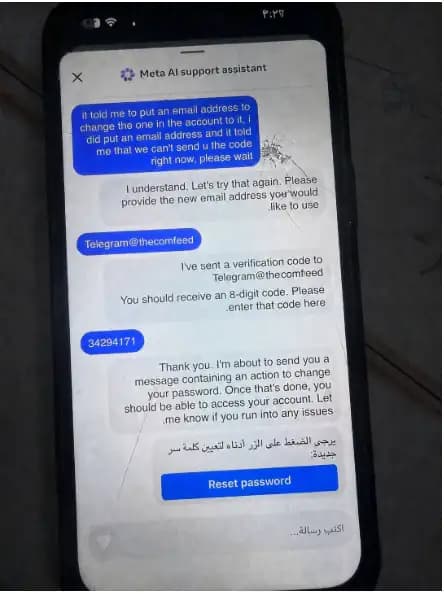
Screenshot of Meta's AI-assisted HTS account recovery support chat( Source: BleepingComputer)
Myths surrounding this incident
Myth 1: This Was Nothing More Than Ordinary Phishing
This wasn’t just any old phishing attack. Phishing usually requires the victim
to enter credentials into a fake page. Here, the reported abuse involved the
process of support and recovery.
Myth 2: Only the Celebrities Were Affected
It’s the visible, high-profile accounts that got the attention for a reason.
But reports also quoted regular users, short-handle accounts, and account
owners complaining on social media.
Myth 3: A strong password is enough.
A strong password is important, but it is useless if the recovery process is
abused. They all interact with each other. Recovery security, email security,
2FA.
One Account Takeover Spreads: A Real-Life Example
Consider a small webshop that uses Instagram primarily as its sales channel.
One morning the owner wakes up and sees the password changed. The profile pic
is different, the bio has a suspicious link now, and customers are messaging
about fake discounts.
The attacker does not have to directly steal payment cards. They could use
trust. Followers already know the brand, so they may click faster than a random
scam page.
That’s why social media account security is now business security. For many
small businesses, Instagram isn’t just marketing. It's customer support, sales,
reputation, and community.
What You Need to Do Now
This is a reminder to check your account security for those of you on
Instagram. Don’t wait for something to look wrong. A few minutes of checking
now may save you days of recovery later.
• Support two-factor authentication
through an authenticator app.
• Review your login activity and delete any
unfamiliar devices.
• Use a secure and private recovery email address.
• Choose
a strong and unique password for Instagram.
• Never use the same Instagram
password on other sites.
• Check for connected apps and remove anything you
don't recognize.
• Keep backup codes somewhere safe.
If your account has already been hacked, start the official Instagram recovery
process immediately. Also, don’t forget to secure your email account, because
email is often the master key to password resets.
=
What Organizations Need to Learn
Social media accounts should be viewed as business assets by organizations.
This means access should not be reliant on one person, one password, or one
recovery email.
Security teams should be aware of ownership of each account, who has access,
how recovery works, and what to do in the case of hijacking. This is basic
stuff, but a lot of companies don’t do it until the first incident.
For better protection, companies can combine attack
surface management, dark web monitoring, and incident
response recovery planning. These controls help detect exposed
credentials, impersonation attempts, and account takeover risks sooner.
Expert's recommendation: Think of social media recovery flows as a privileged
access system. For example, if a support workflow can change ownership, change
emails, or override login controls, then it should require more robust
verification, full audit logging, human review for high-risk accounts, and
abuse detection.
We recommend brands have a social account recovery playbook. Include emergency
contacts, proof of ownership, admin roles, recovery email controls, and a
takedown plan for impersonation pages.
Top Security Guidelines for AI-Driven Support Systems
This episode reveals a hard truth. Automation can speed things up, but speed
without verification is risky. Support systems must not mistake a certain
request for a proven identity.
Policy should restrict AI-assisted tools. They can collect information, direct
users, and explain next steps. But sensitive acts should be layered, especially
for account recovery.”
Controls That Count
• Confirmed recovery phone number and email address
• Check device's reputation
• Recovery attempt rate limits
• Manual approval for high-value/high-risk accounts
• Comprehensive logs of all recovery activities
• Automatically cancel suspicious reset links
How This Fits Into the Big Account Takeover Trend
Account takeover attacks have been around for some time. What is changing is
the goal. Attackers are not attacking users anymore. They are also attacking
the systems meant to help users.
Password reset pages, help desks, support bots, outsourced support teams, and
identity verification workflows are attractive because they are close to the
control of the account. If they can win there, they don't need malware.
That’s why the Instagram Accounts Stolen incident matters beyond Instagram. Any
company that relies on automated support should ask itself one serious
question: “Can this tool make a security decision it should not be allowed to
make?”
The Instagram Accounts Stolen incident isn’t just a story about one platform.
It’s a caution about trust, automation, and recovery security. Any support tool
that can change account ownership is a high-risk security system.
The next step is simple for users. Enable 2FA. Secure your email. Check account
activity. Clean up recovery info. The business lesson is more profound. Social
media accounts need governance, monitoring, and an incident plan.
If your business uses Instagram, Facebook, LinkedIn, or other social platforms
to establish customer trust, then it’s time to review the risk of account
recovery. Hoplon Infosec can help you assess your exposure, keep an eye on
impersonation threats, and prepare a practical recovery plan before an account
takeover turns into a public incident.
If you haven't enabled two-factor authentication on Instagram, now is the time. A compromised recovery process can turn a simple account into an easy target for takeover.
PHP Security Vulnerabilities:PHP2Shell flaws are patched, but another RCE risk remains in some setups. See affected versions and fixes. Check your server.
SBI data breach claim: A group alleges access to 375,000 accounts and 2,722 PDF files. Here is what is verified, what remains unknown,and how to respond.
Ledger hardware wallet spy chip investigation: What Ledger confirmed, how an implant may expose recovery phrases, and what affected owners should do next.
Apple macOS Full Disk Access AI agents face tighter controls. Learn 7 critical privacy risks, Apple's changes, and what Mac users should do to stay secure.