
What is the Linux malware
unauthorized access vulnerability that Red Hat warned about, and why is it
important now?
CVE-2024-3094 is a serious problem that involves hidden malicious code in a
popular Linux compression tool. This code lets attackers get around
authentication and get remote access without permission.
From Trusted Tools to Risk That is Not Clear
Not too long ago, most teams thought that core Linux tools were always safe.
You put them on your computer, update them, and then forget about them. That
was how things used to be.
Things feel different now. The fact that this Linux malware vulnerability lets
hackers get into systems without permission shows that even trusted tools can
be used to attack.
The result is simple but important. If you use Linux systems, you need to stop
thinking about just patching and start questioning the whole software supply
chain.
What Really Happened
The xz compression utility, which is used by many people, is at the heart of
this problem. It's not a tool that is hard to find. It can be found in almost
all Linux environments, from servers used by businesses to computers used by
individuals.
Security researchers found that some versions, especially 5.6.0 and 5.6.1, had
hidden harmful code.
This is the scary part. The main repository didn't show the bad code. Using
obfuscated macros, it was cleverly hidden inside build processes. That means that
even experienced developers looking over the code might not see anything wrong.
This is why the Linux malware vulnerability that lets people get into systems
without permission is so scary. It doesn't depend on obvious mistakes. It is
hiding in plain sight.
Why This Happened: The Rise of Supply Chain Attacks
This event is part of a bigger change. Attackers are no longer just going after
endpoints. They are going after the tools that developers trust.
Think about it. If you mess with one popular package, you can get into
thousands of systems in an indirect way.
This Linux malware vulnerability that lets people get into systems without
permission fits that pattern perfectly. Instead of hacking into systems one at
a time, attackers try to get into the software supply chain itself.
It works well. And to be honest, a little scary.
How the Attack Works
Let's make this easier to understand.
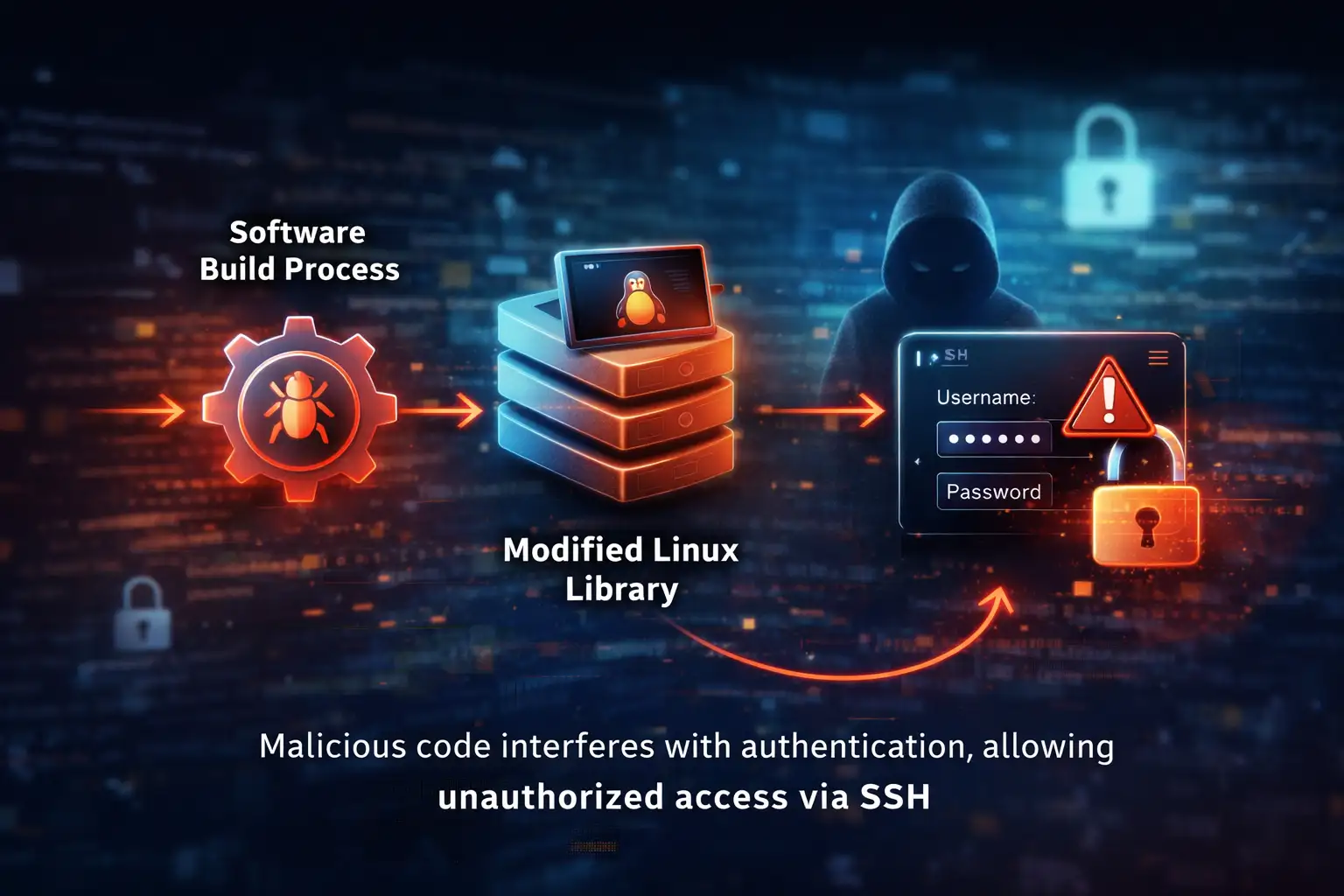
• The software build process starts the malicious code.
• It changes the way the library works after it is installed.
• It gets in the way of authentication processes in particular.
• It goes after SSH, which is a common way to get to a computer from afar.
Once it is turned on, the system may let people who shouldn't be able to get in
skip authentication checks.
That's what the Linux malware vulnerability that lets people get into systems
without permission is all about. It doesn't make systems crash. It opens a door
without making a sound.
Example from the real world: Before and After
A system administrator might have installed updates without thinking twice before this problem. People thought that updates made things safer.
Now that this has been found, that same admin has to check sources, verify
versions, and sometimes even roll back updates.
It's a small change, but it affects how people work every day.
For instance, a group using Fedora Rawhide might unknowingly install a version
that has been hacked. Everything looks normal. But behind the scenes, checks
for authentication might not be as strong. That's where the danger is.
Who is Affected
Different groups have different levels of risk:
• Users of Fedora Rawhide who have versions 5.6.0 or 5.6.1
• Fedora 40 beta environments with updates that don't work
• Debian unstable and some openSUSE distributions where the code was built
without any problems
• Business settings that depend on testing branches
Red Hat said that its enterprise Linux versions are not affected.
Still, the Linux malware vulnerability that lets unauthorized users in goes
beyond one vendor. It has an effect on the whole Linux ecosystem.
Pros and cons of the discovery
This isn't a completely bad situation.
The vulnerability shows a big problem with how software is distributed, on the
other hand. It shows how deeply attackers can get into things.
But early detection stopped more damage from happening. It's important that
security researchers caught this before it could be used on a large scale.
But the Linux malware unauthorized access vulnerability shows us that detection often happens late in the process.
What You Should Do Now
This is not something you should ignore if you manage Linux systems.
• Check your systems for xz versions that are affected.
• Get rid of versions 5.6.0 and 5.6.1 right away.
• Go back to a safe version like 5.4.x
• Don't use affected environments until they have been checked out as safe.
Red Hat told people to stop using some Fedora environments until the systems
are back to normal.
Taking action early lowers the risk of this Linux malware vulnerability letting
people in without permission.
Questions and Answers
What does CVE-2024-3094 mean?
There is a serious security hole in the xz utility that lets hackers hide
malicious code and gain access from afar.
Is this something that regular Linux users should worry about?
Yes, but the risk is higher for people who use testing or unstable
distributions.
Does this affect Red Hat Enterprise Linux?
No, an official source says it is not affected.
How bad is this security hole?
It is thought to be very serious because it can get around authentication
systems.
A Quiet Warning for What's to Come
This Linux malware vulnerability for unauthorized access doesn't just show a bug. It shows a bigger problem with how modern software is made and shared.
Tools that you trust are no longer always safe. Honestly, that idea seems
old-fashioned now.
In the future, security will depend less on individual patches and more on
checking whole supply chains.
This is the one thing you should remember. Even if the source is one you know,
always check what you install.