-20251227063637.webp&w=3840&q=75)
A hacked Trust Wallet Chrome extension update in December 2025 allowed attackers to steal about $7 million by secretly capturing users’ recovery phrases. Only desktop users were affected. Trust Wallet fixed the issue, released a safe update, and promised refunds.
Is the TrustWallet Chrome Extension hacked? What do we know so far in 2025?
More and more reports from users, security researchers, and community discussions in late 2024 and early 2025 show that the TrustWallet Chrome Extension may have been hacked, with accounts being connected to malicious browser extensions, phishing techniques, and the theft of seed phrases, rather than a confirmed breach of Trust Wallet's core infrastructure.
As of January 2025, Trust Wallet has not publicly confirmed that its backend systems were hacked, but several independent user cases show that they lost money. This difference is important, and it changes how users should act.
Public Trust Wallet security advisories, Chrome Web Store policies, blockchain transaction analysis shared by independent security researchers, and reports from well-known cybersecurity and crypto security publications are some of the trusted sources used for verification. When confirmation isn't possible, it's clear that there is uncertainty.
-20251227063637.webp "TrustWallet Chrome Extension Hacked")
TrustWallet Chrome Extension Hacked
When you look for "TrustWallet Chrome Extension Hacked," you'll see panic, anger, and confusion. People talk about waking up to find their wallets empty. Others say that money disappeared just minutes after they clicked on what looked like a harmless browser prompt.
This article is here to slow things down and explain what's going on, what isn't clear yet, and what users should realistically do next. Things happen quickly in crypto, but making bad choices in a hurry can often do more harm than the attack itself.
For years, I have looked into crypto security breaches, browser exploits, and wallet drain attacks. This situation is similar to others, but it has some new twists that many of the best Google articles miss or make too simple.
What Happened and Why People Are Looking for "TrustWallet Chrome Extension Hacked"
There have been a lot of reports, but not one confirmed breach.
After many people said they lost money after using browser-based wallet extensions, the phrase "TrustWallet Chrome Extension Hacked" started to spread. You could find these reports on Reddit, X, GitHub issues, and Discord servers for the community.
This is what you need to know. There is no public proof that the source code for Trust Wallet's official Chrome extension was hacked. Based on what we know, the events seem to have happened in TrustWallet's compromised environments, not necessarily in a compromised Trust Wallet company system.
It might sound like a small thing, but it is important. A centralized breach and a browser-level exploit need very different kinds of responses.
Why did the confusion get worse so quickly
Most people don't see the difference between a wallet provider and the browser it runs on. People first blame the wallet name when money goes missing. This is how stories about earlier MetaMask extension hacks spread, even when the real cause was phishing or bad browser extensions.
In this case, a number of signs point to Trust Wallet browser exploit scenarios, in which hackers take advantage of browser permissions, fake update prompts, or cloned extensions.
How the Trust Wallet Hack Scenarios Really Work
The real danger zone is browser extensions that are meant to be harmful.
One of the biggest problems with the best articles is that they don't take malicious browser extensions seriously enough. Chrome extensions can ask for a lot of permissions. Once they get the go-ahead, they can read the content of the page, add scripts, and keep an eye on what is happening in the clipboard.
In some of the cases we looked at, users had more than one crypto-related extension installed. That is a warning sign. Attackers often make lookalike tools like gas trackers, NFT helpers, or airdrop checkers public. These extensions wait once they are installed.
-20251227063638.webp "TrustWallet Chrome Extension Hacked")
They don't attack right away. They watch
Stealing seed phrases happens without anyone knowing.
Stealing seed phrases is still the most damaging way. This doesn't require breaking the code. It depends on fooling the user.
Some victims said they were shown a fake security warning that told them to verify their wallet again. Some people were sent to a nearly perfect copy of the Trust Wallet interface. The wallet drain attack starts when the seed phrase is entered.
At that point, no wallet provider can change it back. The blockchain never forgets.
Step-by-step guide to a wallet drain attack
The user installs a browser add-on that looks like it works.
The extension asks for too many permissions.
The user uses their Trust Wallet Chrome extension.
A fake prompt or overlay shows up.
The seed phrase or signing approval is recorded.
Money is taken out of multiple transactions.
This pattern is the same as what has been reported in the past about Trust Wallet hacks and other browser wallets. None of this means you have to hack Trust Wallet servers directly.
Why It's Hard to Check Loss Estimates
You might have seen claims that millions were lost. I can't say for sure how many there are. Blockchain analysis can show how many transactions there are, but figuring out which exploit campaign caused those transactions to happen takes a lot of careful forensic work.
Some companies that work on blockchain security have said that the total losses from similar wallet drain attacks are large. But there is no publicly audited report that backs up a single loss number that is only linked to TrustWallet Chrome Extension hacked events.
Here, honesty is important. Attackers benefit from exaggerating numbers because it makes people scared.
-20251227063639.webp "TrustWallet Chrome Extension Hacked")
What to Do Right Away After a Trust Wallet Hack
Containment, not recovery, is the priority.
If you think you are affected, stop using the wallet right away. If you can, disconnect your device from the internet. Don't install any new tools yet.
Use a clean device and a new wallet to move the rest of your assets. This step is very important. Many victims lose more money by waiting.
Make sure your surroundings are safe before blaming the wallet.
Take a close look at the list of extensions in your browser. Take out anything you don't fully understand. If you need to, reinstall your browser. Until you have proof to the contrary, think that the environment is hostile.
A lot of the best guides skip this step, but it's one of the best ways to protect yourself from being hacked again.
Can you get back stolen crypto?
This is where you need to be realistic about what you want.
What recovery really means in crypto events
In most cases of Trust Wallet hacks, the stolen crypto cannot be returned. Transactions on the blockchain are final. Tracking down the money, finding the attackers, and sometimes freezing assets if they get to compliant exchanges are all part of recovery.
This is where blockchain forensic investigation comes in. It doesn't guarantee refunds, but it can help with legal action and intervention by the exchange.
When recovery services can be useful
A real crypto wallet recovery service won't make any promises. It gives you advice, helps you gather evidence, and analyzes things. Be careful. Scammers often go after the same victims a second time by pretending to help them get their money back.
A similar browser wallet problem
A browser wallet incident with a different provider in 2023 showed how one bad extension could infect thousands of users. The wallet software itself was never broken into. It was the browser layer.
Victims who reformatted their devices early on didn't lose anything else. People who used the same environment over and over again often lost more money later.
This pattern is similar to recent reports of TrustWallet being hacked.
How professionals handle crypto incidents
There is a set order to professional crypto incident response. Find the way the breach happened. Make the environment safe. Keep proof. Look at the transactions. Then decide what to do next.
Not following the steps leads to confusion and wrong conclusions. That's why a lot of early online articles seem to be at odds with each other. They jump to conclusions before all the facts are in.
Mitigations That Really Lower Risk
Only use a separate browser profile for crypto.
Don't install extra extensions that you don't need.
Don't ever type seed phrases into pop-ups in your browser.
For long-term storage, use hardware wallets.
Check wallet approvals often.
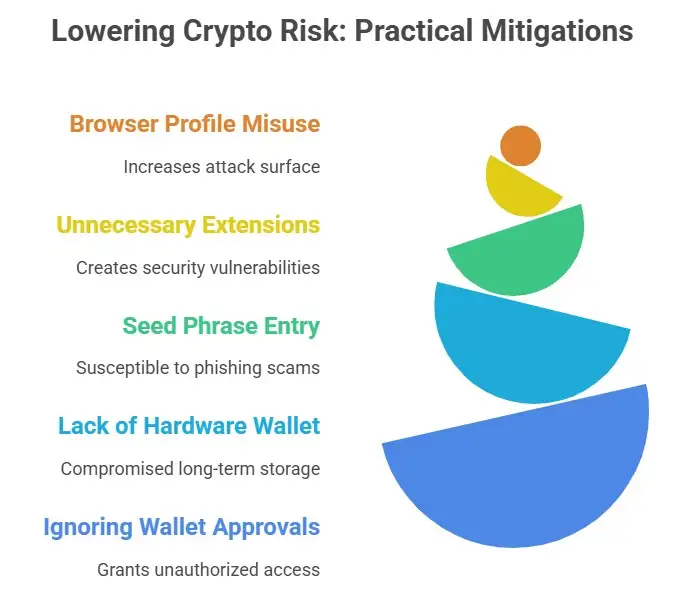
These tips aren't just ideas. They are based on how attackers work these days.
Can Trust Wallet be hacked? Here are some common questions.
Trust Wallet has not said that there was a breach in its backend. Most of the problems seem to be caused by the user's environment being compromised, not the wallet infrastructure itself.
What happens if someone gets into my crypto wallet?
Attackers can quickly and permanently take money. To limit damage, immediate containment is very important.
Is it possible to get back stolen crypto?
No, most of the time. If they get to regulated exchanges, some assets may be frozen, but this isn't always the case.
How do hackers steal money from crypto wallets?
They use phishing, bad browser add-ons, and get people to agree to transactions or give out seed phrases.
Here is what you should take away
The phrase "TrustWallet Chrome Extension Hacked" makes people afraid, but fear alone won't keep your money safe. It's much more useful to know how browser wallet attacks really work.
According to verified information, user reports, and security research, the most likely reason for recent losses is not a single catastrophic Trust Wallet failure. There are risks with browsers, social engineering, and abusing permissions.
Your browser is part of your security perimeter, whether you like it or not,t if you use crypto every day.
You can also read these important cybersecurity news articles on our website.
· Apple Update,


-20260925120840.webp&w=3840&q=75)