_compressed-20260417122628.webp&w=3840&q=75)
What is the RoguePlanet Microsoft Defender Vulnerability
RoguePlanet is the public nickname given to CVE-2026-50656, a Microsoft Defender vulnerability in the Microsoft Malware Protection Engine. It is a local elevation of privilege flaw that could allow an attacker with existing local access to reach SYSTEM-level privileges.
For readers who want broader context on endpoint protection, see Hoplon InfoSec's guide to endpoint security and its overview of endpoint security protection.
The vulnerability is important because Microsoft Defender operates with elevated privileges by design. A security flaw inside that trusted component can therefore become part of an attack chain rather than simply affecting an ordinary application.
For the latest Microsoft Defender platform and engine information, consult Microsoft's official Microsoft Defender Antivirus updates documentation.
Inside the Race Condition That Made This Windows Defender Vulnerability Work
Why mpengine.dll Was the Target
Mpengine.dll is an important component of Microsoft Defender's malware scanning architecture. Because security software needs privileged access to inspect files and system activity, vulnerabilities in these components can have significant consequences.
This is one reason organizations should treat endpoint security software as part of their broader attack surface rather than assuming security tools are automatically outside the scope of vulnerability management.
Hoplon InfoSec's guide to vulnerability management provides additional context on how organizations can identify, prioritize, and address vulnerabilities across their environments.
What CWE-59 Link Following Means in Practice
The technical root cause described for RoguePlanet involves improper link resolution before file access, classified as CWE-59. This type of issue can involve a time-of-check to time-of-use condition, commonly called TOCTOU.
At a high level:
- Defender's privileged file-handling logic checks a file or path.
- The system subsequently acts on that path.
- A change during the gap between those operations can cause the security decision and the resource ultimately accessed to differ.
- In a successful privilege escalation scenario, this can allow privileged operations to be redirected toward attacker-controlled resources.
For authoritative information about the vulnerability and Microsoft's remediation status, readers should check the official Microsoft Defender for Endpoint release notes.
How to Protect Windows From the RoguePlanet Defender Flaw
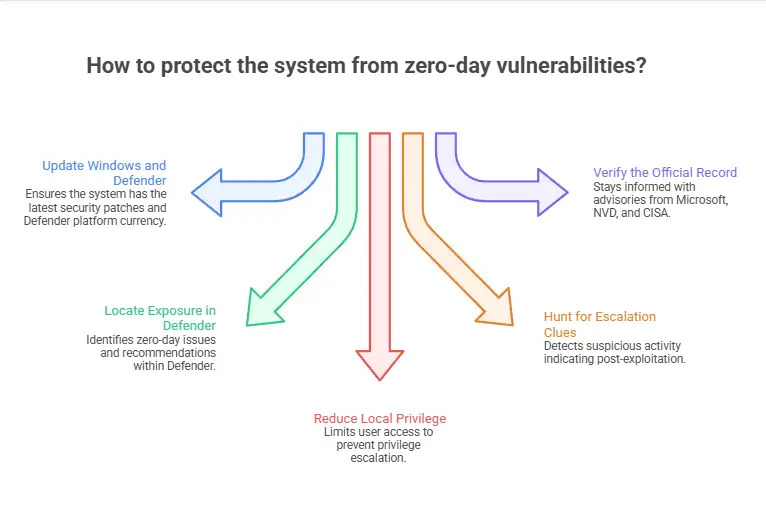
The practical response to this Microsoft Defender vulnerability starts with confirming that affected Defender components have received the appropriate security updates.
Microsoft documents that Defender Antivirus platform and engine updates are distributed through mechanisms including Windows Update, WSUS, and Microsoft Configuration Manager.
Organizations should therefore:
- Confirm the installed Defender platform and engine versions across managed endpoints.
- Verify that security updates have actually been deployed rather than assuming automatic updating succeeded.
- Maintain least-privilege access controls.
- Monitor endpoint telemetry for unusual privilege escalation behavior.
- Keep operating systems and security software current.
- Use layered endpoint monitoring rather than relying on a single security control.
For organizations reviewing their broader exposure, Hoplon InfoSec's managed endpoint security services content provides additional information about ongoing endpoint protection and monitoring.
Microsoft also maintains current documentation covering Defender platform and engine releases, including recent versions and fixes. Microsoft Defender release notes.
_compressed-20260417122628.webp "Windows Defender 0-day vulnerability")
Windows Defender 0-day vulnerability
RoguePlanet in the Bigger 2026 Microsoft Patch Tuesday Picture
RoguePlanet did not appear in isolation. It arrived alongside other Microsoft Defender vulnerabilities and highlighted why security teams should track vulnerabilities affecting security products themselves.
Organizations comparing Defender-related vulnerabilities can also review Hoplon InfoSec's coverage of the Windows Defender BlueHammer vulnerability.
Another related Hoplon article covers a Windows Defender Firewall service vulnerability, providing additional context on why Microsoft security components should remain part of regular patch management.
Detecting RoguePlanet Style Local Privilege Escalation on Windows
Security teams should focus on behavioral indicators rather than relying only on signatures tied to one proof of concept.
Useful areas to monitor include:
- Unexpected process creation associated with security software.
- Unusual privilege escalation events.
- Suspicious file and path manipulation.
- Unexpected activity involving reparse points or junctions.
- Abnormal Defender or endpoint security process behavior.
- Changes that appear immediately before a privileged process accesses a file.
Microsoft provides Defender health and version visibility through its endpoint management capabilities. Its documentation explains how organizations can determine whether antivirus engine, platform, and security intelligence versions are up to date. Microsoft Defender Antivirus health reporting.
This visibility becomes particularly useful when investigating whether vulnerable endpoints remain in an environment.
How Hoplon InfoSec Supports Vulnerability Management
Staying ahead of Windows vulnerabilities such as RoguePlanet requires more than reading an advisory after disclosure. Security teams need continuous visibility into endpoint versions, vulnerability exposure, patch status, and suspicious activity.
Hoplon InfoSec provides resources covering vulnerability management and endpoint security protection to help organizations understand these defensive areas.
Organizations can also review Hoplon InfoSec's gap assessment services when evaluating security-control or compliance gaps across their environment.
Frequently Asked Questions
What is RoguePlanet in cybersecurity?
RoguePlanet is the public name associated with CVE-2026-50656, a Microsoft Defender vulnerability involving the Microsoft Malware Protection Engine. Microsoft's current release documentation confirms that the vulnerability was addressed as an elevation-of-privilege issue.
Is CVE-2026-50656 still relevant?
Organizations should verify their current Microsoft Defender platform and engine versions rather than relying only on the date a Windows update was installed. Microsoft maintains current Defender release information and documents the versions used to address security issues.
How can organizations verify Microsoft Defender updates?
Microsoft recommends using supported update mechanisms such as Windows Update, WSUS, or Microsoft Configuration Manager. Defender's platform and engine versions can also be monitored through Microsoft's endpoint management tools.
Does disabling Microsoft Defender protect against RoguePlanet?
Disabling a security control should not be treated as a general remediation strategy. Organizations should instead apply Microsoft's security updates and verify the installed Defender platform and engine versions.
Where can I find official information about Microsoft Defender updates?
The official Microsoft Defender Antivirus documentation provides current information about security intelligence, platform, and engine updates:
Microsoft Defender Antivirus updates and support.
Official References
- Microsoft Defender for Endpoint release notes
- Microsoft Defender Antivirus updates and support
- Microsoft Defender Antivirus health reporting
- Microsoft Defender update for Windows installation images
Related Hoplon InfoSec Resources
- Windows Defender BlueHammer vulnerability
- What Is Endpoint Security?
- Endpoint Security Protection Services
- Managed Endpoint Security Services
- Vulnerability Management
- Gap Assessment
A leaked Windows Defender zero-day tied to BlueHammer is now reported as actively exploited, so unpatched Windows systems may be at immediate risk of SYSTEM-level compromise.