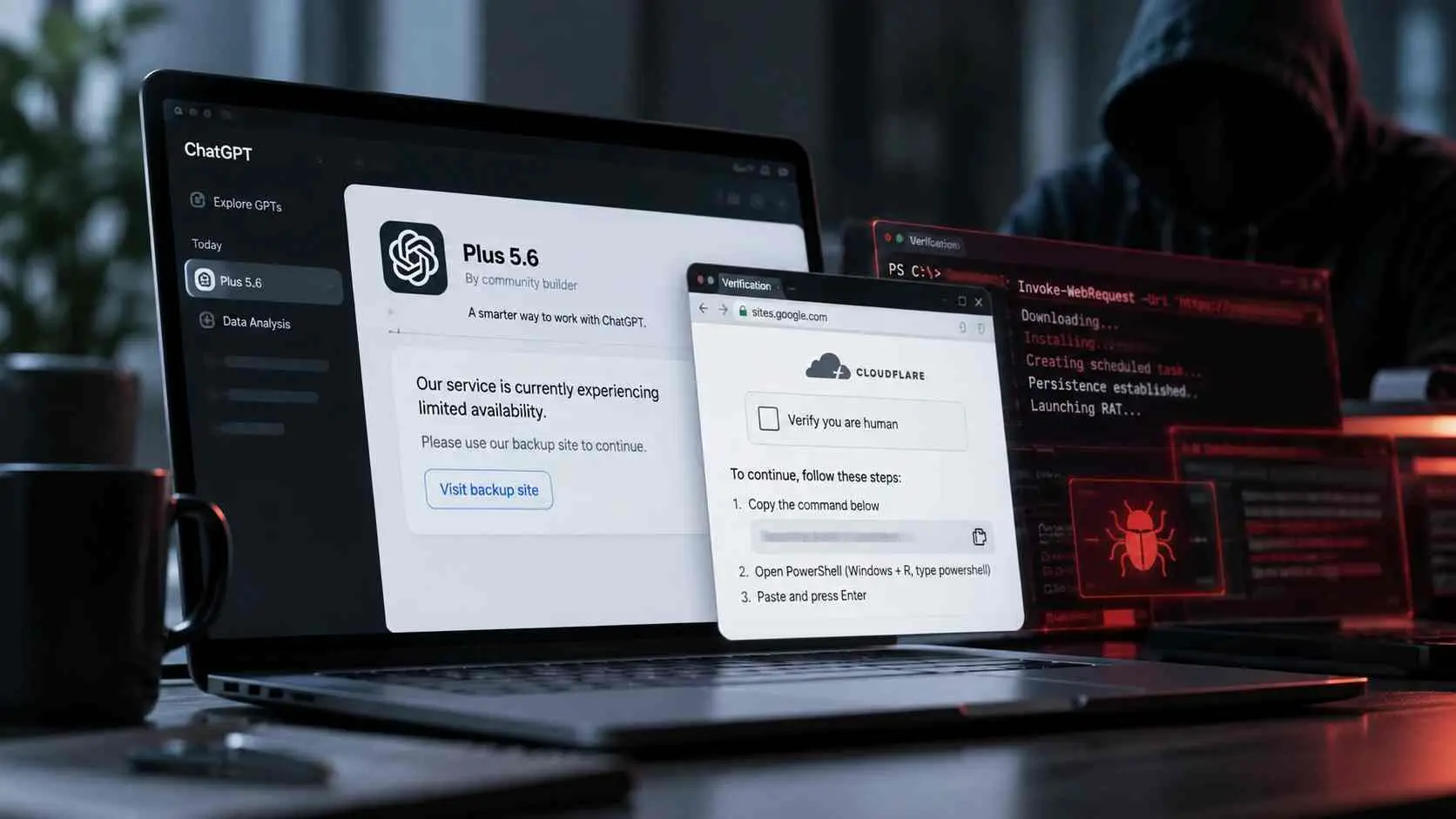
AI Phishing Attacks: How They Work and How to Stop Them
A finance employee in Hong Kong once joined what looked like a routine video call with his company's UK based CFO and several familiar colleagues. Everyone on that call was fake. Every face, every voice, every gesture was generated. By the time anyone realized it, the company was out more than 25 million dollars. That single incident, involving the engineering firm Arup, is the clearest proof that AI phishing attacks are not some future problem. They are already here, and they are already working.
If you have noticed that scam emails do not read like scam emails anymore, you are not imagining it. AI phishing attacks have quietly become the biggest shift in cybercrime since phishing itself was invented. The old red flags, bad grammar, weird formatting, obvious fake logos, have mostly disappeared. What replaced them is something harder to spot with the eye and easier to fall for with the gut.
This guide walks through how these attacks actually work under the hood, why they succeed so often, what the real numbers say for 2026, and what you can realistically do about it, whether you are protecting yourself or an entire organization.
What is An AI Phishing Attack
AI phishing attacks are scams where criminals use generative AI tools, large language models, voice cloning software, or deepfake video technology to create messages that feel personal and legitimate. Instead of a generic email blasted to ten thousand random addresses, the attacker can now produce a message written in your company's tone, referencing your actual project names, mentioning a colleague by name, and arriving at exactly the moment you would expect an update.
This is not a small technical upgrade. It changes the entire economics of the scam. A human scammer used to need thirty minutes or more to craft one convincing message. With a large language model, that same message can be generated in seconds, and dozens of unique variations can follow right behind it. Security researchers at IBM X Force have tracked this shift closely, noting that AI has cut the time needed to build a phishing email from roughly sixteen hours down to about five minutes for a full campaign.
Traditional Phishing Versus AI Phishing
The table below breaks down what actually changed once generative AI entered the picture.
| Factor | Traditional Phishing | AI Phishing |
|---|---|---|
| Writing quality | Frequent spelling and grammar errors | Grammatically clean, native sounding text |
| Time to build one campaign | Thirty minutes to several hours | Roughly five minutes |
| Personalization | Generic greetings like Dear Customer | Uses real names, job titles, and project references |
| Scale | Limited by human writing speed | Thousands of unique variations sent at once |
| Voice and video | Not possible | Cloned voices and deepfake video calls |
| Main detection method | Spotting spelling and formatting errors | Watching behavior, urgency, and unusual requests |
That last row matters more than people realize. If your entire defense strategy was built on catching typos, it will not hold up against a modern AI phishing attack, because there usually are no typos left to catch.
How AI Phishing Actually Works Behind The Scenes
Most people picture a scammer typing out a message by hand. That is not really what is happening anymore, and understanding the actual mechanics helps explain why these attacks slip past both filters and instincts.
Step One, Gathering Information On The Target
Before a single message goes out, attackers feed an AI system whatever public information exists about you or your organization. LinkedIn posts, company press releases, conference bios, and data pulled from old breaches all get scraped and fed in. The AI then has enough context to write something that references your actual job, your manager's name, or a project you recently posted about.
Step Two, Prompting The AI To Write The Lure
The attacker does not need coding skills. They simply type a prompt into a chat style tool, something like write an urgent email from the CFO to a named employee requesting approval of a vendor payment. The AI returns a polished draft in seconds, often including subtle details like referencing a meeting that supposedly happened yesterday, which makes the message feel grounded in reality rather than random.
Step Three, Using Uncensored Criminal AI Tools
Mainstream AI companies build in safety filters that block requests to write scam emails. Criminals responded by building their own stripped down models. Tools sold under names like WormGPT and FraudGPT circulate on dark web marketplaces specifically because they have no such restrictions. These tools exist purely to generate scam content, malicious code, and fake login pages on demand.
Step Four, Renting Ready Made Attack Kits
You do not even need to build any of this yourself anymore. Phishing as a service has turned attacks into a subscription business. A low skilled criminal can rent a complete kit, message templates, fake login pages, and delivery infrastructure, the same way you would rent software for a small business.
Step Five, Stealing The Session Instead Of Just The Password
This is the part most people miss. Modern attacks increasingly target session cookies and multi factor authentication tokens rather than just passwords, using what security researchers call adversary in the middle kits. Tools such as Tycoon 2FA, Mamba 2FA, and Evilginx sit invisibly between the victim and the real login page, capturing the session token the moment the victim logs in, even if they use MFA. According to Microsoft's 2025 Digital Defense Report, these kits are commodified and sold for as little as 120 to 350 dollars a month, which explains why session hijacking has exploded even at organizations that already require MFA.
Catching this kind of attack usually requires more than a spam filter. This is exactly where continuous monitoring through extended detection and response earns its place, since it can flag the abnormal login pattern even after the credentials and token were technically valid.
Why AI Phishing Attacks Work So Well
The honest answer is that these attacks target psychology, not technology. Fear, urgency, and authority still work exactly the way they always have, and AI just made the delivery smoother.
A few numbers explain the scale of the problem. According to Microsoft's 2025 Digital Defense Report, AI automated phishing attempts achieved a 54 percent click through rate compared to just 12 percent for standard attempts, roughly four and a half times higher. The Verizon 2025 Data Breach Investigations Report found the median time to click on a phishing link is now just 21 seconds. And research cited by KnowBe4 and Keepnet in 2026 puts the share of phishing emails containing AI generated content at around 82.6 percent.
Put simply, the messages look real, they arrive fast, and they hit before your brain has time to pause and question them.
Deepfake And Voice Cloning Scams Are Not Science Fiction Anymore
The Arup case mentioned earlier is not an isolated event. In a separate incident reported out of China, a scammer used real time face swapping technology on a video call to impersonate a trusted business partner, convincing the victim to transfer 622,000 dollars in minutes.
The technology behind this is getting cheaper by the year. The voice cloning market was valued at roughly 2.1 billion dollars in 2023 and is projected to reach 25.6 billion dollars by 2033. That growth curve should worry anyone who assumes they could never fall for a fake phone call, because studies show humans can only correctly identify a cloned voice about 60 percent of the time, which is barely better than a coin flip.
A 2025 Gartner survey of 302 organizations found that 35 percent had already experienced a deepfake related incident, yet only 10 percent of security leaders currently prioritize deepfake recognition training. That gap between what is happening and what companies are actually preparing for is one of the biggest blind spots in corporate security right now, and it is a big reason why running realistic scenario testing through AI driven automated red teaming has become worth the investment for finance and executive teams specifically.
The Different Flavors Of AI Phishing You Should Know
AI phishing attacks are not limited to email anymore. They have spread across every channel people communicate through.
- Spear phishing and whaling: highly targeted emails aimed at specific employees or executives, built using scraped personal and professional details.
- Vishing, or voice phishing: phone calls using cloned voices, which CrowdStrike's 2025 Global Threat Report found surged 442 percent between the first and second half of 2024.
- Smishing: text message scams, often impersonating delivery services or banks, asking the victim to click a link or call back.
- Quishing: QR code based phishing, which Microsoft Defender detections showed jumping from 7.6 million to 18.7 million in just three months during early 2026, a 146 percent increase.
- Business email compromise, known as BEC: impersonating an executive or vendor to redirect a wire transfer. The FBI's Internet Crime Complaint Center reported 3.05 billion dollars in BEC losses in 2025 alone, from just 24,768 complaints.
Every one of these channels benefits from AI in the same way, faster production, better personalization, and fewer obvious tells. Organizations that only invest in email security and anti phishing tools while ignoring voice and mobile channels are leaving a wide open door.
The 2026 Numbers Behind AI Phishing
| Metric | Figure | Source |
|---|---|---|
| Phishing and spoofing complaints, 2025 | 191,561 | FBI Internet Crime Complaint Center |
| Phishing losses, 2025 | 215.8 million dollars | FBI Internet Crime Complaint Center |
| BEC losses, 2025 | 3.05 billion dollars | FBI Internet Crime Complaint Center |
| AI attributed phishing losses, first year tracked separately | 10.3 million dollars across 803 complaints | FBI Internet Crime Complaint Center 2025 report |
| AI generated phishing click through rate | 54 percent versus 12 percent for traditional attempts | Microsoft Digital Defense Report 2025 |
| Average breach cost from a phishing initiated incident | 4.8 million dollars | IBM Cost of a Data Breach Report 2025 |
| Organizations reporting a deepfake incident | 35 percent | Gartner 2025 AI Risk Management Survey |
That 2025 number of phishing losses jumping from 70 million to 215.8 million dollars, a 208 percent increase in a single year, is the single clearest signal that something structural has changed in how these attacks operate.
How To Actually Spot An AI Phishing Attack
Forget checking for typos. Here is what actually matters now.
- Watch the request, not the writing. If someone is asking you to change payment details, approve an unusual transfer, or share credentials, slow down regardless of how well written the message is.
- Notice pressure to act immediately or privately. Legitimate requests rarely demand secrecy or an instant decision.
- Be suspicious of a sudden channel switch. If an email conversation suddenly asks you to move to a personal messaging app, that is a warning sign.
- Listen for subtle audio artifacts on calls. Unnatural pacing, strange pauses, or slightly robotic intonation can indicate a cloned voice, even when the voice sounds mostly right.
- Watch for lip sync mismatches on video calls. Deepfake video still sometimes struggles with natural facial movement during fast speech.
- Check whether the request matches how that person or company normally operates. A CEO who never emails directly suddenly sending an urgent wire request is a red flag on its own.
A short mental checklist before you act on any unusual request. Ask yourself if the request is unexpected, if urgency is being applied, if money or credentials are involved, if you are being pushed to a different platform, and if you have verified this through a separate channel yet. If you cannot answer yes to that last question, stop and verify first.
What To Do If You Already Clicked Or Responded
Mistakes happen, and panicking afterward rarely helps. Here is the order that actually limits the damage.
- Stop all further interaction with the sender immediately. Do not reply again or download anything else.
- Change your email password from a separate, trusted device, and turn on multi factor authentication if it is not already active.
- Review your account recovery settings and recent login history for anything unfamiliar.
- Move on to securing banking and other financial accounts, since email access is often the gateway attackers use to reset everything else.
- Report the incident through IdentityTheft.gov, IC3.gov, or the Anti Phishing Working Group, following FTC guidance on next steps.
If the incident affected a business account rather than a personal one, looping in a proper incident response and recovery team early tends to make the difference between a contained event and a much longer cleanup.
Building Long Term Protection Against AI Phishing
On a personal level, this mostly comes down to reducing how much of yourself is visible online. Reviewing privacy settings, limiting what personal details sit on public profiles, and being mindful of what gets posted publicly all reduce the raw material attackers can feed into an AI system in the first place.
On an organizational level, the strategy needs more layers. Ongoing risk guidance from a virtual CISO helps leadership understand where the actual gaps are, rather than assuming existing tools already cover the AI driven threats described above. Pairing that with realistic, updated security awareness training matters more than most companies assume. KnowBe4's 2025 benchmarking data found that twelve months of consistent training dropped phishing susceptibility from a baseline of 33.1 percent down to 4.1 percent, an 86 percent reduction.
Multi factor authentication and passkeys still matter here too, though it is worth being honest about their limits given the AiTM kits described earlier. Passkeys are bound to the specific website or app they were created for, which makes them meaningfully more resistant to phishing than a password, according to Google's own documentation. They are not a silver bullet against every attack style, but they close off a large chunk of the easiest wins for attackers.
Common Misconceptions About AI Phishing
A lot of the advice still floating around online is outdated, and believing it can leave you more exposed, not less.
Myth one, bad grammar is still a reliable warning sign. It was, years ago. Today, AI writes cleaner English than most native speakers under time pressure, so this signal has largely disappeared.
Myth two, only executives get targeted. Executives are valuable targets, but attackers increasingly go after mid level employees with access to payment systems, HR data, or vendor contacts, since they are often less guarded and less trained.
Myth three, spam filters now catch everything since they use AI too. Filters have improved, but AI generated phishing content is built specifically to avoid pattern based detection by varying wording slightly on every send, which is exactly what defeats signature based filtering.
Frequently Asked Questions
Can AI actually detect phishing emails? Yes, to an extent. Modern email security tools increasingly use AI to analyze sender behavior, login patterns, and contextual anomalies rather than just scanning for known bad links, but no filter catches everything, which is why human judgment still matters.
How do you spot an AI generated phishing email if the writing looks perfect? Focus on the request itself rather than the writing quality. Look for urgency, unusual payment or credential requests, and pressure to switch communication channels.
Is business email compromise the same thing as phishing? BEC is generally considered a specific and highly targeted form of phishing that focuses on impersonating executives or vendors to redirect payments, rather than a separate category entirely.
Are passkeys really phishing proof? Passkeys are significantly more resistant to phishing than passwords because they are bound to a specific site, but they are not a complete defense against every attack type, including some session hijacking techniques.
What exactly is a voice cloning scam? It is a scam where AI recreates someone's voice from short audio samples, often pulled from public videos or social media, then uses that cloned voice to make urgent phone requests for money or sensitive information.
How much do AI phishing attacks actually cost businesses? The FBI's 2025 Internet Crime Complaint Center report attributed 10.3 million dollars in losses directly to AI related phishing complaints in its first year formally tracking the category, and that figure only reflects reported cases.
Key Takeaways
AI phishing attacks have moved past bad grammar and obvious fake logos into a world of cloned voices, deepfake video calls, and messages that read exactly like a real colleague wrote them. The 2025 to 2026 data shows losses climbing sharply even as complaint volume stays roughly flat, meaning each successful attack is doing more damage than before. Verification through a separate channel remains the single most effective defense against every version of this scam, whether it arrives as an email, a phone call, or a video meeting.
Content Coverage Summary
This guide covers what AI phishing attacks are and how they differ from traditional phishing, the technical mechanics attackers actually use including data scraping, prompt engineering, uncensored AI tools, phishing as a service, and session hijacking kits, real world deepfake and voice cloning cases with documented losses, a full breakdown of attack types including vishing, smishing, quishing, and BEC, current 2026 statistics from FBI, Microsoft, IBM, and Gartner, practical detection steps, a recovery checklist for anyone who has already clicked, and long term protection strategy for individuals and organizations.
Hoplon Insight Box
Our recommendation for any organization handling wire transfers, vendor payments, or sensitive client data is simple. Treat every unusual request, even one that sounds and looks exactly right, as unverified until confirmed through a separate channel you control. That single habit would have stopped the Arup incident, the China face swap case, and the majority of AI phishing losses reported to the FBI in 2025.
For more research backed guides like this one, visit the Hoplon Infosec blog.
Ready To Close The Gap Before Attackers Find It
If your team has never actually tested how it would respond to a deepfake call or an AI written executive request, now is the time to find out, not after a real one lands. Reach out to Hoplon Infosec through our security on demand experts to get a clear, honest read on where your organization actually stands against modern AI phishing attacks.