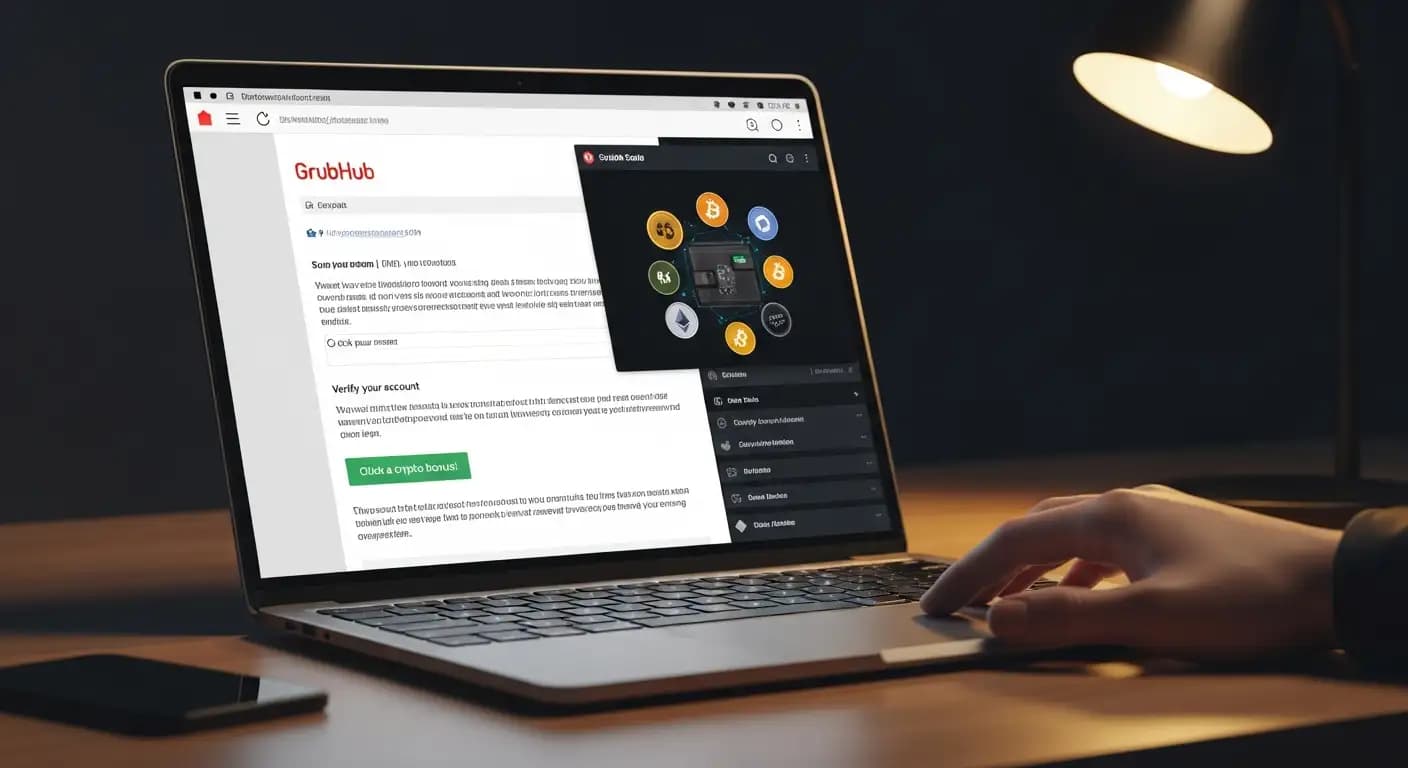
Is GrubHub really sending emails to users and offering them ten times their crypto back?
No, GrubHub is not giving out crypto rewards.
As of January 2025, security researchers and BleepingComputer, a trusted news source, say that these emails are part of a growing crypto phishing campaign. The goal is easy. Get people to send you cryptocurrency, then disappear.
This article explains the fake GrubHub emails crypto scam in simple terms. No tricks to scare you. No hype. Just the facts, the background, and some real insight so you can see it right away and not become the next victim.
What Are Emails That Look Like GrubHub Crypto?
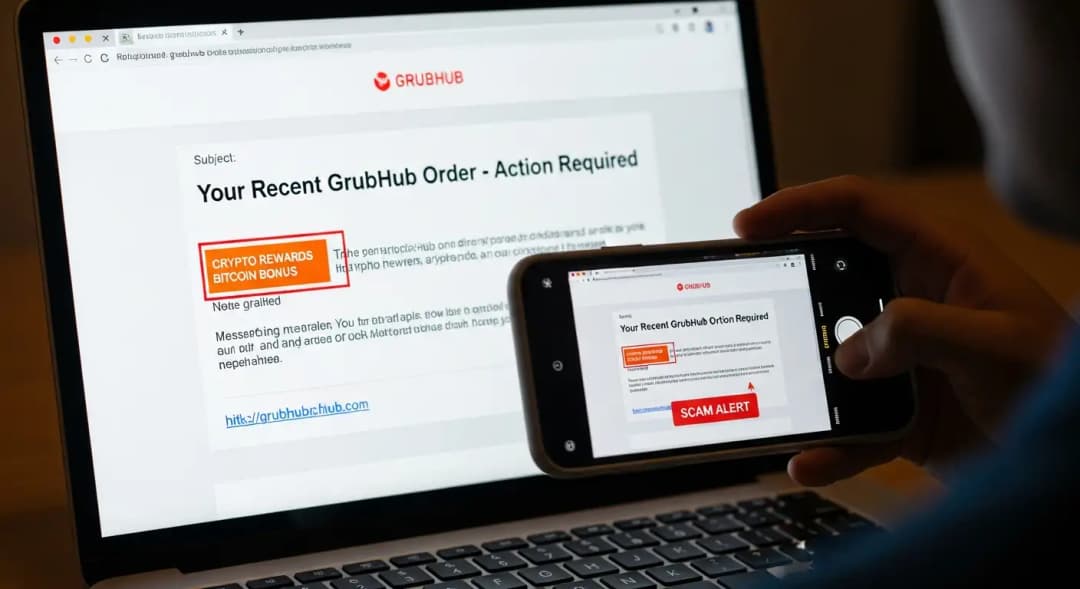
Fake GrubHub crypto emails are phishing messages that look like real GrubHub emails. They usually show up in your inbox out of the blue and say you can get a reward, a gift, or a loyalty bonus.
The message often says things like "testing crypto rewards" or "celebrating valued customers." Then the hook comes. To confirm your wallet, you need to send a small amount of cryptocurrency. The email promises a tenfold payout in return.
That promise is what gets you.
This GrubHub crypto email scam works because it seems like something that has happened before. A lot of people already get real GrubHub emails about orders, discounts, or refunds. When you get a fake reward email, it looks like a real one. Most people who fall for a crypto scam don't expect a food delivery company to be involved.
This is a classic case of phishing impersonation behind the scenes. The brand is not real. The person who sent it is fake. There is no reward.
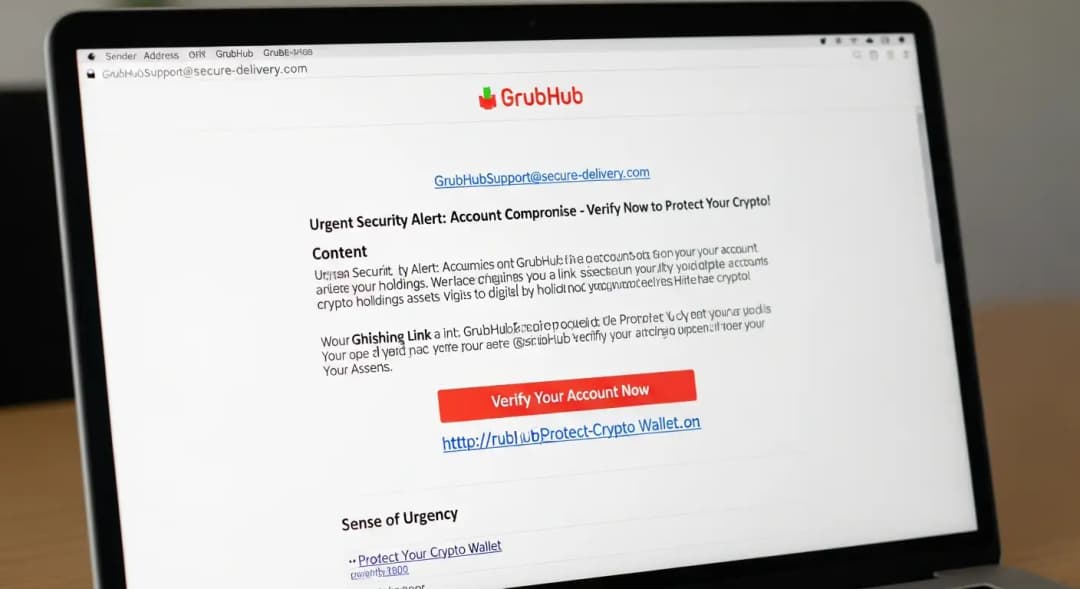
How the Tenfold Crypto Scam Really Works
The First Step: A Persuasive Email
The scam starts quietly. The subject line could say "Your GrubHub Reward Is Ready" or "Exclusive GrubHub Giveaway."
The email's tone is friendly and promotional, not threatening. That is on purpose. This scam doesn't use fear as account warning scams do; it uses excitement instead.
Scammers know that people are more likely to do what they want when they think they are getting something.
The email usually doesn't have any obvious spelling mistakes. The logos look neat. The tone sounds professional. This makes it hard to see the fake GrubHub reward email at first glance.
The Second Step: Asking for Crypto
The email says that you need to send cryptocurrency to a wallet address to get the reward. Most people choose Bitcoin or Ethereum.
This is where logic should come into play. Companies that are real don't ask customers to send them money to get rewards. Forever.
But a lot of people say that crypto feels different. It feels like an experiment. New. Not as strict. That uncertainty is what scammers use to their advantage.
This is the main part of the tenfold crypto return scam. You can't change your mind once you send the crypto.
The Last Step: Vanishing
One of two things happens after the transfer.
Most of the time, there is no sound at all. No confirmation. No prize. No answer.
Scammers sometimes send a second message asking for a second payment, saying there was a delay, a tax problem, or a problem with verification. This is a common trick used in email campaigns for crypto-doubling scams.
The money is gone, no matter what.
Why GrubHub Is the Best Brand for Scammers
Grubhubb is not a random pick
Scammers like brands that people trust without having to think about it too much. You can trust food delivery apps. Known. Every day. That makes defenses weaker.
Another reason is size. Grubhub is used by millions of people in the US. Even if only a small number of people fall for the scam, it is still worth it.
Email spoofing is also a part of it. Attackers change technical details to make emails look real. Even though most of these fake GrubHub emails are caught by modern filters, some still get through.
This isn't just a problem with GrubHub emails. Fake Uber Eats crypto email themes and DoorDash phishing scam branding have been used in other campaigns like this one. The pattern stays the same. The logo is the only thing that changes.
Most Victims Miss Warning Signs
There are clear warning signs, but it's easy to ignore them when you're upset.
First, GrubHub has never said anything about giving out crypto rewards. Not on the website. Not on any social media. Not in press releases. That alone should stop the process.
Second, urgency can be used to control people. Stop when an email tells you to act quickly. Real promotions don't go away in a few hours.
Third, the addresses of wallets are private. It's a big red flag if an email tells you to send crypto directly to a wallet.
Finally, ask yourself a simple question. Why would a business give you ten times what you paid for? That promise doesn't make sense for a business that will last.
That one question alone reveals most fake crypto reward scams.
What to Do If You Already Sent Crypto
Take a deep breath if you sent crypto after getting an email from GrubHub asking for it. Don't panic; just do something.
First, face the truth. You can't undo crypto transactions. If someone says they can guarantee recovery, they are probably running another scam.
Second, gather proof. Keep the email, wallet address, transaction ID, and timestamps. This information is important.
Third, tell someone about what happened. Use official channels to get in touch with GrubHub and tell them about the phishing attempt. Contact the FTC or your local cybercrime agency and file a report.
Sometimes, blockchain analysis can help find crypto scams, but finding them doesn't always mean getting the money back. It does help find patterns and stop future attacks.
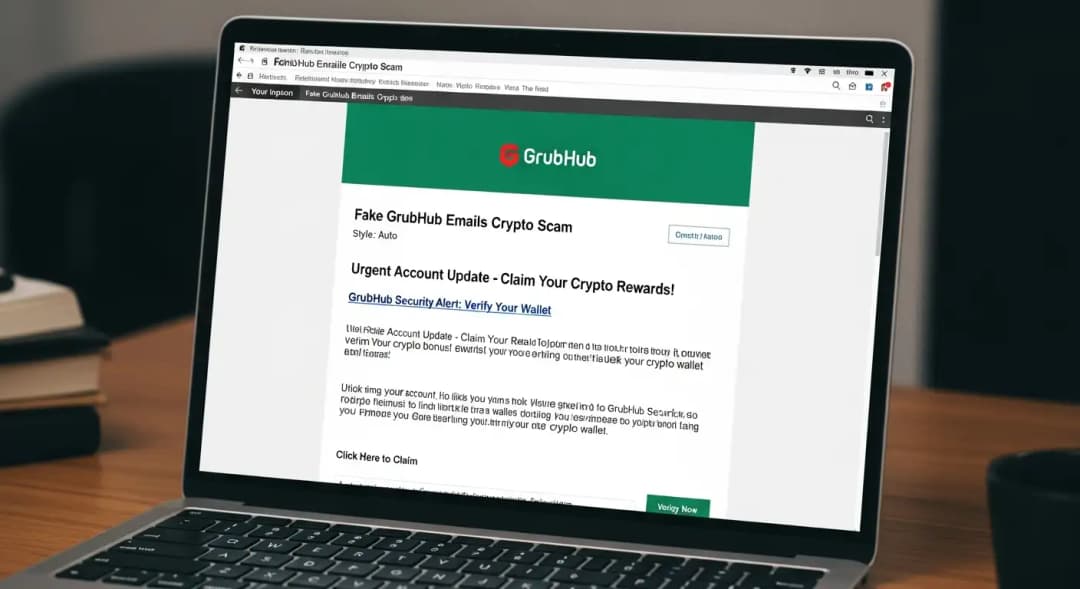
How to Keep Yourself Safe in the Future
Not technical skill, but skepticism is the best defense
Take your time if an email surprises you. Scammers depend on quickness and feelings.
Don't ever click on links in messages you didn't expect. Instead, open a new tab and go to the official website.
Learn how cryptocurrency works. When you know that transactions are permanent, crypto return scam emails lose their power.
Talk about scams, too. A lot of people get hurt because they are too embarrassed to speak up. Telling others about your mistakes can help them not make the same ones.
How the Scam Works
Email inbox
↓
Fake GrubHub reward email
↓
Ten times the return on crypto
Sent crypto
Money gone
Not complicated. Not a mystery. Just manipulation.
A Realistic Example Based on Patterns That Have Been Seen
One victim said they got the fake GrubHub giveaway email soon after they ordered food. It felt real because of when it happened.
They sent a small amount of cryptocurrency because they thought it was safe. They looked online when nothing happened and found dozens of stories that were the same.
A lot of people have had that moment of realization. People have already done the damage by the time they start looking for answers.
This is why awareness is more important than tools for recovery.
What Businesses and Security Teams Are Doing
GrubHub has made it clear that it does not offer promotions for cryptocurrencies. Security teams keep an eye on people who try to impersonate others and work with email providers to stop campaigns.
Researchers in the blockchain space keep an eye on scam wallets and group them with other known fraud operations. This helps law enforcement in the long run, even if individual victims don't get their money back.
Scams change over time. As cryptocurrency becomes more popular, hackers will keep using well-known brands to tell new fraud stories.
Questions and Answers
Is GrubHub giving out crypto rewards?
No. There are no crypto rewards from GrubHub. If you get an email that says something else, it's a scam.
Is it possible to find out who is behind a crypto scam?
Sometimes. Blockchain records are open to the public, but it's hard to tell who owns a wallet, and getting it back is rare.
What happens when you click on links in scam emails?
Even if you don't send money, you could still be at risk of malware, fake login pages, or more phishing attempts.
How do I tell someone about a phishing email?
Tell the company that was impersonated, your email provider, and government agencies that protect consumers.
Last Thoughts
The fake GrubHub crypto scam works because it seems normal. It feels nice. It seems easy.
But you don't have to send money first to get real rewards. Always.
You can also read these importantcybersecurityy news articles on our website.
· Apple Update,
· Windows Fix,