-20260727074947.webp&w=3840&q=75)
Latest Cybersecurity Incidents Summary of the Week
This week's most recent cybersecurity events affected almost every part of the digital stack. Attackers didn't use brute force; instead, they focused on trust boundaries. They went after AI assistants, browsers, SIEM tools, and cloud workloads.
Some incidents stood out because they didn't use rare zero-day exploits. Instead, they took advantage of features that businesses already rely on. That pattern is becoming more common and more dangerous.
Some reports are still changing. Some claims are still only partially verified, especially when there isn't an official CVE yet. The following list makes those uncertainties very clear.
What Made This Week Different
If you pay close attention to security news, you might have noticed a small change this week. These most recent cybersecurity problems were not just one-time mistakes or misconfigurations. They were part of a larger trend in which attackers move quietly through tools that are meant to help with productivity, visibility, or automation.
During internal breach reviews, I've seen similar patterns. The first compromise often doesn't seem dangerous. An add-on for your browser. A workload in the cloud. A platform for keeping an eye on things. The damage is already done by the time the alarms go off.
-20260727075120.webp&w=1080&q=75)
Microsoft Copilot Reprompt Risk and Abuse of AI Sessions
One of the most talked-about recent cybersecurity events was a reported threat involving Microsoft Copilot sessions and so-called "reprompt style" attacks.
Researchers looked at publicly available data and found that hidden or chained prompts could change how AI sessions behave in certain situations. If session isolation doesn't work, this could make sensitive business data available.
Microsoft has admitted that AI security risks exist in general, but some specific claims about how they were used are still not fully proven. There is no public record of a confirmed CVE.
AI assistants are quickly becoming a normal part of how businesses work. A small mistake in logic can lead to a lot of data being exposed.
What companies should do: Limit AI's access to sensitive datasets. Keep an eye on prompt inputs. Use Microsoft's security advice as it changes.
Microsoft SQL Server Privilege Escalation Risk
Impact: Companies that use SQL Server for authentication or backend operations could be at risk of internal breaches.
Mitigation:
Look over the roles in SQL Server. Limit service accounts. Keep an eye on strange patterns of authentication.
Risks of Chrome 144 and the V8 Engine
Google released updates to fix a number of vulnerabilities in Chrome 144, some of which were related to the V8 JavaScript engine.
Google's security bulletins said that some of the vulnerabilities were very serious. As with many Chrome updates, the details of how to exploit them were kept secret on purpose to keep users safe.
What we know is that attackers have historically gone after memory problems in V8.
What is still not clear is whether any of these flaws were used in the wild before they were fixed.
Action: Update Chrome on all of your devices right away.
Read more
Concerns about FortiSIEM Remote Code Execution
Reports this week said that there might be a flaw in FortiSIEM that could let remote code execution happen under certain conditions.
Fortinet products have been the target of a lot of attacks in the past few years. Fortinet advisories usually come out quickly, but full technical breakdowns can take longer.
Not all of the details about the exploitation were confirmed by the time this was written.
Why this is important:
SIEM platforms are the most important part of security operations. Compromise here means losing sight.
Suggestion:
Put on patches. Limit access to management interfaces. Keep an eye on outgoing connections.
Read more
A bad Chrome extension is stealing your wallet credentials.
One of the most obvious recent cybersecurity incidents was a bad Chrome extension that was made to steal cryptocurrency wallet credentials.
Researchers saw the extension pretending to be a useful tool while quietly collecting private information.
This tactic is well-known and fits with other campaigns that have abused browser extensions in the past.
Impact on the real world: People lost money. Companies risk having their credentials reused.
Lesson: Extensions are programs. Look at them with the same level of care as applications.
Read more
VoidLink Malware Affects Linux Cloud Environments
Defenders were worried about VoidLink malware activity that targeted Linux-based cloud-native workloads.
According to reports, VoidLink seems to take advantage of weak credentials and services that are open in containerized environments.
Some of the details about who is responsible are still unclear, but the way they act is typical of cloud-focused threat actors.
Why this is important:
Linux servers don't always have endpoint monitoring.
Protection: Make containers stronger. Use the least amount of power. Keep an eye on how things work at runtime.
Read more
Suspensions of X Platform accounts and enforcement of rules
There was a lot of talk about the suspension of well-known X accounts this week. Even though they aren't real cyberattacks, platform enforcement incidents hurt trust and information security.
X said there were rule violations. There was no public confirmation of a technical breach.
Why put this here?
Digital security includes systems for controlling and moderating accounts.
Uncertainty: The full criteria for enforcement were not made public.
Read more
Malware that steals MacSync Getting around macOS Gatekeeper
Researchers said that the MacSync stealer malware could get around Gatekeeper protections.
Apple has admitted that people who make malware are still coming up with new ways to get around defenses, especially by getting users to do things.
This fits with what we already know about trends in macOS malware.
Effect: stealing credentials. Getting data out of a system.
Advice: Don't use apps that aren't signed. Make sure macOS is up to date. Teach users.
Read more
Vulnerabilities in Trend Micro Apex Central
Trend Micro revealed weaknesses in the Apex Central management parts.
Based on the warnings, attackers might be able to get to management functions if systems were open.
Trend Micro quickly released patches and instructions.
Why this is important:
Security tools themselves are still a target.
Read more
Patterns That Are Common in These Events
There are a few patterns that stand out when you look at all the latest cybersecurity incidents this week.
Attackers are no longer breaking in. They are going through doors they trust. They go after the tools that administrators trust the most.
This is in line with what I've seen during reviews of incident responses. The breach often starts where teams feel safe.
What Groups Should Know
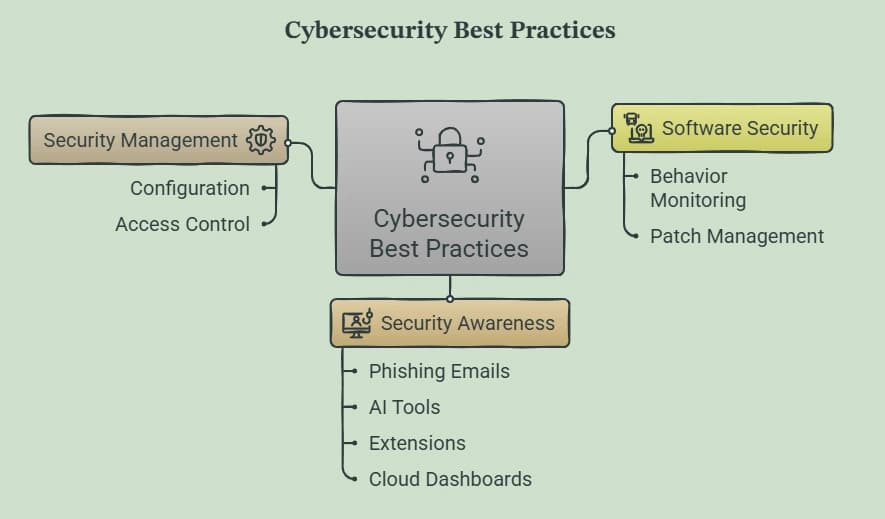
Don't think that trusted software is safe by default. Watch behavior, not just alerts.
Patch management is still important, but so are configuration and access control.
You should be aware of security issues beyond just phishing emails. It works with AI tools, extensions, and cloud dashboards.
Questions that are often asked
What were the most serious cybersecurity problems that happened this week?
The risks of browser vulnerabilities, SIEM platforms, and malware that steals credentials had the most potential to cause damage.
Were any of these attacks confirmed to have zero days?
Some flaws were fixed, but in all cases, it was not publicly confirmed that they were being used on the same day they were discovered.
Are AI tools becoming a danger to security?
Yes. If controls fail, AI assistants that aren't properly secured can leak private information.
What should small businesses do first?
Updates for browsers, access control, and monitoring tools for cloud services and browser extensions.
Final Thoughts
The most recent cybersecurity incidents this week didn't use shock value exploits. They had to trust each other. Have faith in software. Have faith in automation. Have faith in the platforms we use every day.
That is the hard truth. Security breaches now happen quietly, inside tools we already know how to use.
The best defense is being aware, checking, and reviewing all the time. Don't worry. Not a lot of hype. Just steady, smart action.
Related Articles:
- Cybersecurity News and Emerging Threats
- Weekly Cybersecurity Recap
- Vulnerability Management
- AI Agent Security Assessment
- n8n Remote Code Execution Vulnerability
- Chrome Security Update
- Chrome 148 Security Vulnerabilities
- Browser Password and Credential-Stealing Malware
- macOS Security Threats
- macOS Infostealer Attacks
- Microsoft and Apple Security Vulnerabilities
- Microsoft Vulnerabilities and Privilege Escalation
- Cloud Security and Data Exposure
- Cyber Threat Monitoring