Criminals are using AI tools to make "smarter" holiday scams: Holiday scams 2025
Are holiday scams getting smarter because criminals are using generative tools to fool families and shoppers?
Yes. According to law enforcement and industry alerts from December 12, 2025, holiday scams are becoming more believable, easier to make, and more emotionally targeted than they were in previous years. Trusted investigations and agency warnings show that cloned-voice family emergencies, fake delivery texts, and well-made fake stores are some of the most common ways that scammers get money.
To make this guide, I looked at news reports, consumer protection agencies, industry threat reports, and local investigative pieces. Sources include big news organizations and consumer officials who kept an eye on holiday scams in 2025 and gave examples.
A short hook and an explanation of why holiday scams 2025 are important
Every year, the holidays are busy and full of deals. This year, criminals have new tools that let them make fake voices, copy websites, and send out a lot of convincing phishing messages. That mix makes holiday scams in 2025 seem personal, urgent, and strangely familiar, which is exactly what the scammers want.
The risk is real if you're shopping, helping an older relative, or clicking on a package link. The next sections will show you how these scams work, give you real examples to look out for, and give you clear steps to take right away.
How these scams work and why they seem so real
Scammers are using both old tricks and new technology to make their fraud seem real. They still use emotional hooks like "your package didn't arrive" or "your loved one needs money," but the messages and landing pages now look nice enough not to need to be read closely. This makes it easier for scammers to start holiday scams in 2025 and harder for regular people to spot them.

The criminal workflow is quick and easy. First, a scammer sends an urgent message through social media or an ad, or they send a smishing message. Then, they use generative tools to make sites that are almost exactly the same, copy logos and terms, and make messages or voice clips that sound natural and pressure victims to act without checking. The result is an experience that feels almost real and takes advantage of our holiday rush.
Scammers also take advantage of seasonal search trends and the craziness of sales. During busy sale times, people search a lot, click quickly, and trust what they think is social proof. That kind of behavior makes it easy for cloned stores and fake ads that send real-looking traffic to scam pages to hide.
Scams involving delivery and packages
One of the most common holiday scams that victims report is getting fake delivery texts and emails. Messages that look like they come from major carriers ask you to click a link to "reschedule" or "pay a fee." Clicking on links often takes you to pages that steal your credentials or install malware. These scams work because they fit with what people expect during busy holiday shipping times.
Always use the tracking number you already have to check the tracking information on the carrier's official website, not the link in a message. If you get a message saying you have to pay a fee or you won't get your package, log into your account separately or call the carrier directly. Consumer groups have repeatedly said that delivery-style phishing is one of the most dangerous threats of the season.
Fake deals and cloned stores
Another common type of holiday scam in 2025 is fake storefronts that promise huge discounts. These sites take real pictures of products and use the same styles as real brands to trick people into giving them their credit card information. The storefront often goes away after a few purchases, or it takes the money and never ships.
Check for small changes in the domain name, endings that are not familiar, or social media profiles with few followers and bad reviews. Before you buy, type in the name of the store and the word "scam" or "review." If a price seems too good to be true, that's a warning sign. Scammers know that good deals make people less cautious and help them make decisions faster.
How to Spot Voice Cloning and Deepfake Scams
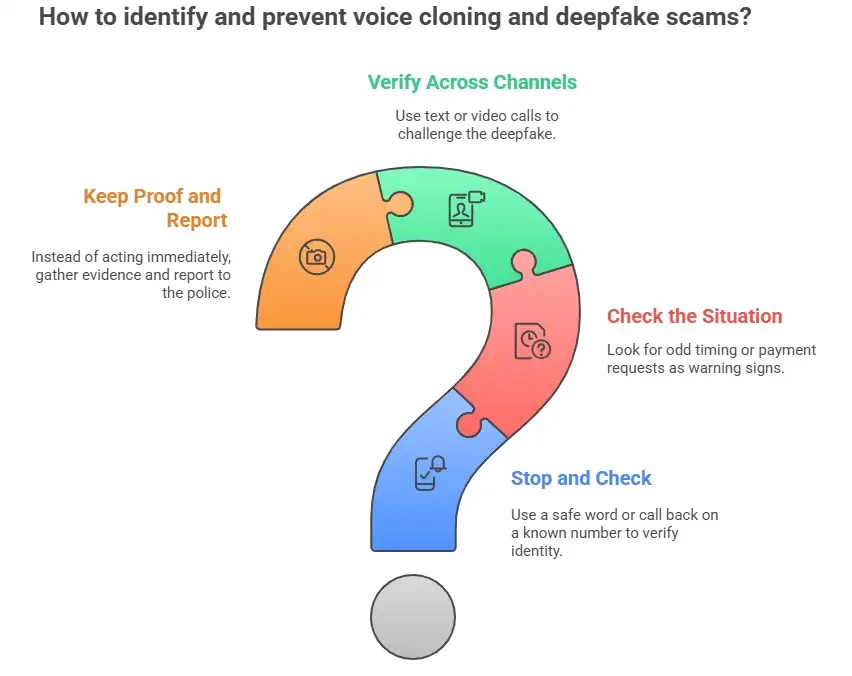
Voice cloning and fake media are two types of scams that will be around in 2025. Criminals can make a short audio clip that sounds like a family member asking for help. This is a short, useful list of things to look for and do to stop these attacks:
Stop and check: before sending money, ask for a safe word that you both agreed on, or call the person back on a number you know.
Check the situation: Does the call come at an odd time or ask for a strange way to pay, like gift cards or cryptocurrency? That's a big warning sign.
Use multiple channels to verify: send a text or video call request. Most scammers can't keep up a convincing deepfake across different formats.
If someone says they recorded a message, keep proof and report it to the police instead of acting right away.
These steps are easy to follow and work because cloned voices and deepfakes still have limits, especially when they are under stress or asked to do something strange on the spot. Experts say that having safety words set up ahead of time makes it much harder for someone to pretend to be someone else.
What to do right now
If you think you might be a victim of holiday scams in 2025, stay calm and follow a short list of steps that put reporting and containment first.
First, don't respond to the message or visit the site. Don't click on links, download attachments, or give out more information. Second, keep the evidence. Screenshots, email headers, and phone numbers are all useful for investigations and reporting. Third, if you gave your payment information, let your bank know right away. Many banks let you charge back transactions and may even be able to freeze or reverse them.
If you sent money, call your bank and the service you used to pay. If you get a gift card scam, tell the store and the card issuer. Change your passwords and turn on multi-factor authentication for any accounts that you think may have been hacked. Lastly, tell the right people and platforms about the scam. Big search engines and platforms have forms that let people report fake sites and ads, and consumer groups have tools that guide people through the reporting process.
The case that is not required
A woman in her 40s got a panicked call from someone who sounded like her daughter asking for money for a hotel after her flight was canceled. The woman was about to send money through a payment app, but she stopped and called her daughter on a number she had saved. The daughter answered and was confused. The person who called had used public social media clips and a synthetic voice tool to make a fake voice. The break helped her save money and stress.
Reports about holiday scams in 2025 are starting to include more stories like this. They show that a small check or a single question can stop a scam. These examples show that your best defense is still your instincts, along with careful planning.
FAQs
What do AI holiday scams do?
They use automated content creation, cloned voices, and channels for mass distribution to make believable lures that make victims act quickly. Check with other sources before answering.
Can voice cloning be stopped?
You can't completely get rid of the risk, but verification rules, safe words, and platform detection tools can help. Make family members and caregivers more aware.
Will banks give back money lost to an AI scam?
It depends. When someone makes an unauthorized transaction, banks may offer chargebacks or fraud protections, but they can't promise that you'll get your money back. Quickly report incidents and give proof to increase the chances of getting better.
How do I tell someone about a fake store on the internet?
Tell the marketplace, the payment processor, and search engines or advertising platforms. For faster visibility, file a complaint with consumer protection agencies. Report bad domains on official reporting pages.
A useful takeaway
Holidays should be about having fun, not cleaning up after fraud. Holiday scams in 2025 are more believable, but they can still be stopped. The best defense is to combine simple habits with a moment of pause: check, don't rush, and use secure methods for payments and tracking. If something doesn't seem right, take a break and look into it. If you see a scam, tell someone about it. Your report could help someone else avoid the same mistake.
You can also read these important cybersecurity news articles on our website.
· Apple Update,
For more, please visit our Homepage and follow us on X (Twitter) and LinkedIn for more cybersecurity news and updates. Stay connected on YouTube, Facebook, and Instagram as well.

-20260925120840.webp&w=3840&q=75)