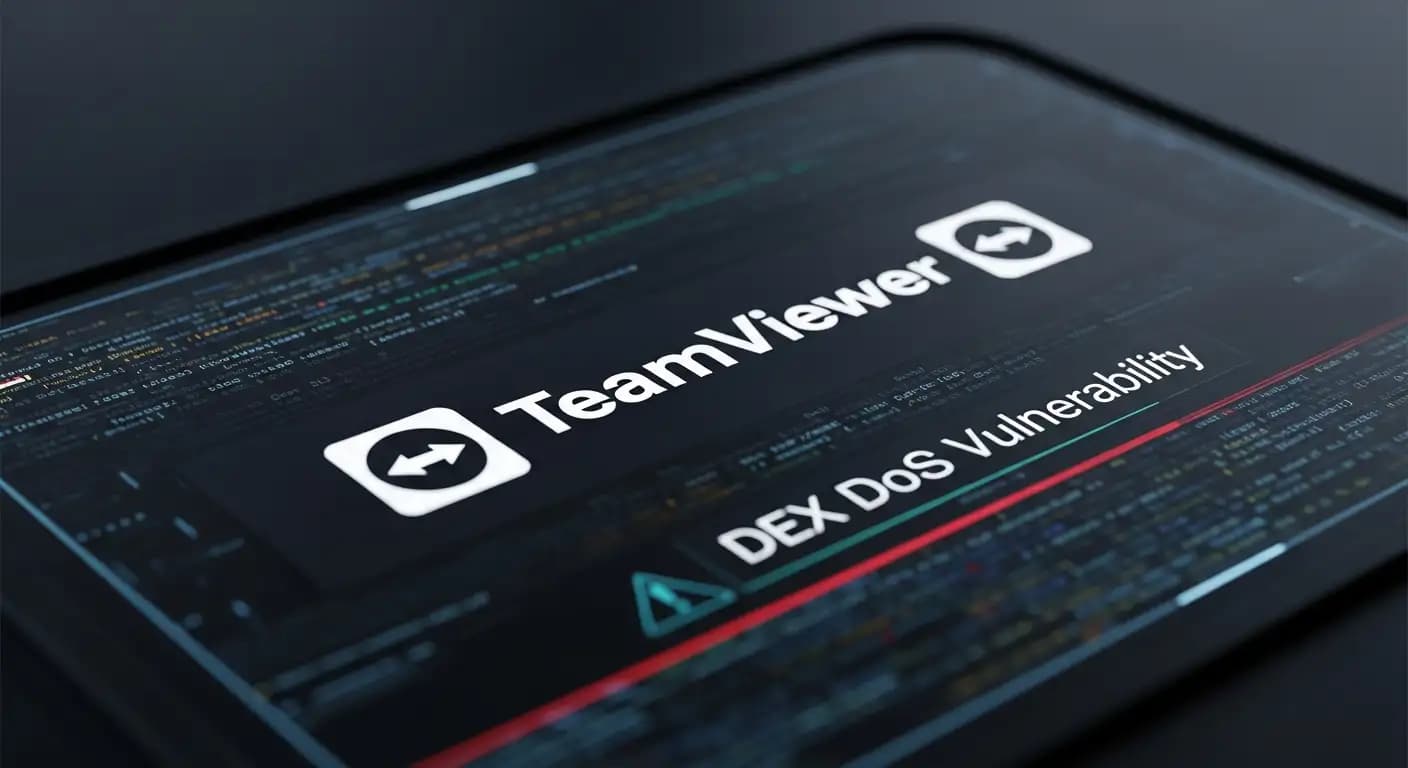
Should businesses really be worried about the TeamViewer DEX DoS vulnerability right now?
Yes, as of December 2025, especially for companies that depend on endpoint visibility tools but don't often think about how those tools are secured. Security researchers and vendor warnings have pointed out flaws in TeamViewer DEX that could let attackers stop services or get to sensitive endpoint telemetry. These results come from research that was made public and conversations on trusted cybersecurity reporting sites.
People in business IT have known for a long time that TeamViewer is a safe and well-known name. A lot of teams trust it almost without thinking. The goal was simple when Digital Employee Experience tools were added. Before users complain, show them endpoint problems.
But being seen always costs something.
The TeamViewer DEX DoS flaw shows that even tools made to help defenders can make the attack surface bigger without anyone knowing. In a lot of businesses, DEX runs in the background without anyone knowing about it and gathers data that few people question.
The fact that no one is talking about it is what makes it worth talking about.

What the TeamViewer DEX DoS vulnerability really means in real life
The TeamViewer DEX DoS vulnerability looks like a technical footnote on paper. In reality, it changes how well IT teams can see and fix problems on all of their endpoints.
The main problem is how TeamViewer DEX handles telemetry and remote requests. Attackers may be able to overload these processes in some cases, which could cause denial of service or data exposure that wasn't meant to happen.
This isn't about being scared. It's about knowing how small flaws can have big effects.
How TeamViewer DEX fits into the daily work of a business
TeamViewer DEX is made to get constant feedback from endpoints. The data stream includes CPU load, memory pressure, application crashes, system responsiveness, and user experience signals.
This information doesn't seem like a big deal to busy IT teams. It is functional, not private. But that idea is changing. Telemetry at the endpoint can show patterns in infrastructure, usage habits, and system stress points.
A vulnerability in TeamViewer's endpoint monitoring turns that background noise into a map that hackers can use to plan their attacks.
Why denial of service attacks are so bad here
People think of websites going down when they hear "denial of service." When you monitor endpoints, the damage is less noticeable. Dashboards are slow. Alerts come too late. Data disappears.
A denial-of-service attack on TeamViewer DEX doesn't have to take systems offline to work. It only needs to make things harder to see or slower for a little while to confuse.
Security teams often see the symptom but not the cause. Attackers can take advantage of that delay.
Why this TeamViewer DEX security flaw is worse for businesses than you might think
Vulnerabilities in remote monitoring tools show up all the time. Trust and reach are what set this one apart. TeamViewer is deeply integrated into business settings, where it often has wide permissions and long uptime.
This is where the real effect shows up.
• Not being aware of what's going on
IT teams lose their early warning system when DEX dashboards stop working. Issues only come up after users complain.
• Making endpoint telemetry available
TeamViewer DEX data exposure can show what software is installed, how devices are named, and how performance changes over time.
• Larger area for remote access attacks
Monitoring components are often less secure than production systems, which makes them good targets.
• Pressure from audits and compliance
Auditors are paying more and more attention to endpoint monitoring controls like ISO 27001 endpoint security, SOC 2 endpoint risk, and NIST endpoint monitoring.
These aren't just ideas about risks. They come up during real audits and reviews of incidents.
The bigger problem with the TeamViewer DEX exploit risk
The main problem is not one flaw. Companies think that monitoring tools are safe by nature. Endpoint protection gets a lot more attention than endpoint telemetry security.
Telemetry data may appear to have minimal value; however, attackers perceive it differently. It helps them learn about timing, load, and behavior. In coordinated attacks, that context is important.
Not all deployments have the same level of exposure. There are differences between cloud-managed and on-premises setups. Some things are still not clear, so businesses should check the official TeamViewer security advisories for the full story. Still, the security problems with endpoint management that are brought up here are in line with trends in the industry as a whole.
What this means in real life
Think of a business in your area that manages thousands of laptops with TeamViewer DEX. One morning, the help desk sees that the performance metrics are no longer updating. They think it's a temporary problem.
At the same time, an attacker is flooding telemetry endpoints. Monitoring slows down and then stops working completely. During that time, credential phishing works. Alerts for endpoints come too late. The response team has to work with data that isn't complete.
On the first day, nothing big happens. But the damage keeps getting worse.
That's how enterprise remote access attacks often work.
What really lowers the risk?
It's not just about patches to fix the TeamViewer DEX DoS hole. It means changing how people use monitoring tools.
Reassess access and exposure.
To begin, do a proper security check on TeamViewer. Find out which parts of the DEX can be reached from the outside and who can get to them.
Don't think of monitoring systems as extras; think of them as part of the production infrastructure.
Run audits of endpoint security that are specific to your needs.
A lot of the time, endpoint security audit services find things that internal teams miss. Pay attention to telemetry flows, API access, authentication controls, and rate limiting.
Scanning for vulnerabilities in remote tools should be a regular part of business, not just once a year.
Make sure that monitoring is in line with compliance goals.
More and more, ISO 27001 endpoint security and SOC 2 endpoint risk reviews focus on availability and resilience. If monitoring tools don't work under stress, compliance claims lose their strength.
NIST endpoint monitoring controls also put a lot of emphasis on reliability, not just detection.
Think about managed detection and response.
Managed detection and response for endpoints gives independent oversight. MDR teams can connect monitoring outages to strange behavior.
Global MSSP endpoint security providers often notice things that individual businesses don't.
Questions and Answers
What does TeamViewer DEX do?
TeamViewer DEX keeps an eye on the performance of endpoints and the experience of users to help IT teams find problems early and boost productivity.
Can TeamViewer be used for bad things?
Yes, but only in certain situations. Like all complicated software, there can be bugs, including ones that affect monitoring parts.
How bad is a DoS attack on endpoint tools?
A denial-of-service attack might not damage systems, but it can make it harder to find and fix problems, which raises the overall risk.
How can businesses protect TeamViewer DEX?
Patching, access reviews, endpoint vulnerability assessments, and continuous monitoring are all part of a secure TeamViewer DEX deployment.
Final Thoughts
It's not about blaming a vendor when it comes to the TeamViewer DEX DoS vulnerability. It's about seeing a pattern. People often don't check out trusted tools until something goes wrong.
If your business relies on TeamViewer DEX, you should look into it more. Find out where it is exposed. Inquire about the data it gathers. Find out how it acts when it's stressed.
A careful enterprise endpoint risk analysis or TeamViewer security assessment can find problems before attackers do. In today's world, being able to see things without being able to bounce back is not safe. It is a risk that is waiting to be found.
You can also read these important cybersecurity news articles on our website.
· Apple Update,
· Windows Fix,