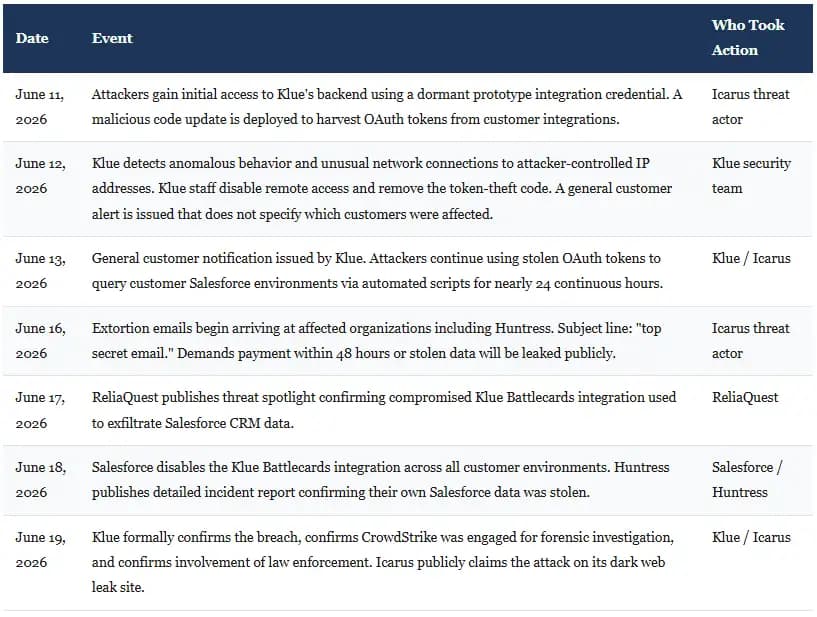
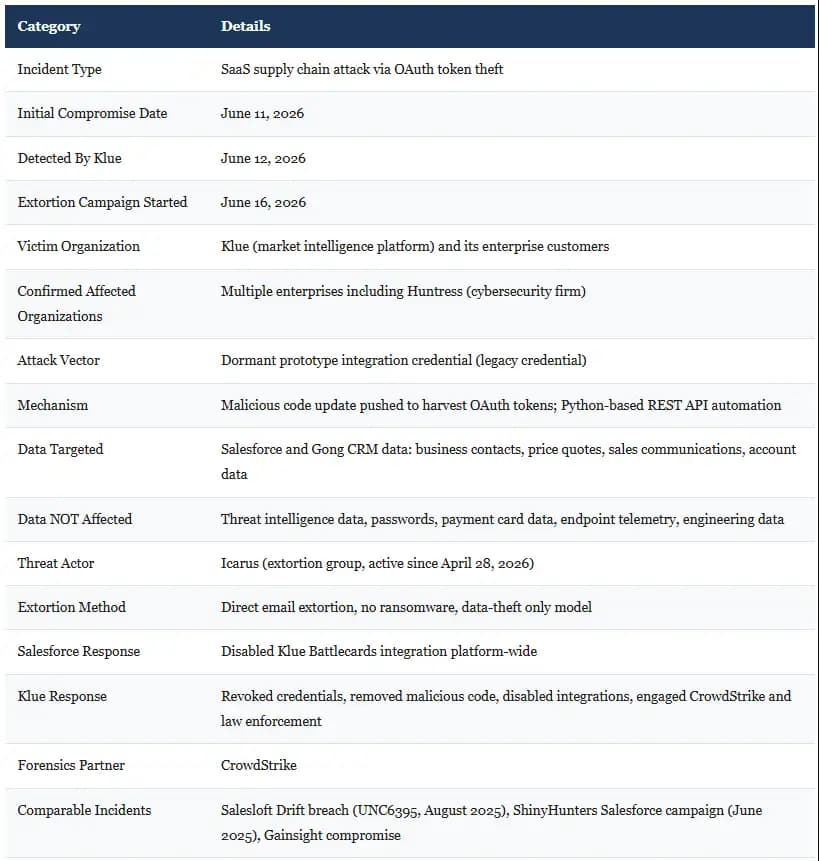
On June 11, 2026, attackers broke into Klue's backend using a forgotten, abandoned integration credential nobody had bothered to delete.
They pushed a malicious code update that silently harvested OAuth tokens connecting Klue to customers' Salesforce, Gong, HubSpot, Slack, and other platforms.
Using those stolen tokens, automated Python scripts queried Salesforce REST APIs at nearly 1,000 calls per 15 minutes for almost 24 continuous hours.
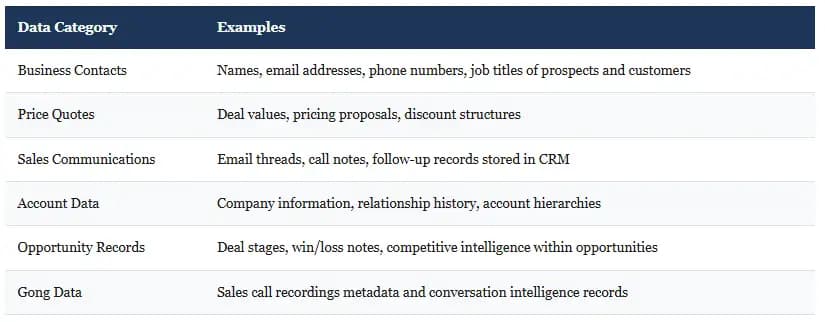
Business contacts, price quotes, sales communications, and CRM account data were stolen from multiple enterprise organizations, including Huntress, a cybersecurity firm.
On June 16, extortion emails began arriving with the subject line "top secret email" signed by a threat actor calling itself "Icarus," demanding payment or the data would be leaked.
Salesforce disabled the Klue Battlecards integration entirely across all customer environments. CrowdStrike was brought in for forensics.
This article breaks down every stage of the attack, the security failures that made it possible, and exactly what enterprise security teams should do right now.
What Actually Happened: The Story Behind the Breach
Picture this: somewhere inside Klue's infrastructure, there is a credential that nobody is paying attention to. It was created months ago when a developer was prototyping an integration with a third-party service. The prototype went nowhere. The integration was abandoned. But the credential? Nobody ever cleaned it up. It just sat there, quietly valid, with full access, and waited.
That forgotten key is how the Klue Salesforce data breach of 2026 began.
Klue is a competitive intelligence platform used by enterprise sales teams to track competitor activity, manage battlecards, and sync intelligence into CRM systems like Salesforce. It integrates deeply with the tools modern sales organizations live in every day. That deep integration, built to make salespeople's lives easier, became the exact pathway attackers needed.
In June 2026, a threat actor found that dormant credential. They used it to walk into Klue's backend infrastructure as if they had every right to be there. Once inside, they did not look for passwords or try to hack Salesforce directly. They did something far more elegant and far more dangerous: they planted a small code update that harvested OAuth tokens, the digital keys that customers had authorized Klue to use when connecting to their Salesforce environments.
With those tokens in hand, the attacker did not need to trick anyone. They did not need to send a single phishing email to any Salesforce customer. They simply authenticated as Klue, a trusted, authorized application, and started pulling data. Automated Python scripts queried Salesforce REST APIs for nearly 24 straight hours. The attackers accessed business contacts, price quotes, sales communications, account histories, and strategic CRM records. All of it went out the door quietly, disguised as normal integration traffic.
Five days later, extortion emails started landing in the inboxes of employees at affected companies, including those at cybersecurity firm Huntress. The subject line read "top secret email." The message was blunt: your Salesforce data has been downloaded. You have 48 hours to contact us. The sender signed off as "Mr. Bean"; a contact method pointed to a dark web leak site belonging to an extortion group calling itself Icarus.
This story goes beyond the hacking of a single company. It is a story about how the entire SaaS integration ecosystem carries a risk most organizations have not thought seriously about and how attackers have figured that out.
Attack Timeline: Day by Day
Quick Incident Overview Table
Understanding Klue and Its Salesforce Integration
Klue markets itself as a competitive intelligence platform. Enterprise sales organizations use it to track competitor moves, build battlecards that help reps handle objections in real time, and analyze win/loss data from deals. The value proposition is straightforward: give your sales team better information about competitors than your competitors have about you.
To deliver on that value proposition, Klue integrates with nearly every tool a modern sales organization uses. It connects to Salesforce to pull in deal data and push competitive insights directly into CRM records. It connects to Gong and Chorus to analyze sales call recordings. It links with HubSpot, SharePoint, Zoom, Clari, Google Drive, and Slack. This wide integration footprint is exactly what makes the platform useful and exactly what made it dangerous in the context of this breach.
The Klue Battlecards app, the specific integration component at the center of this incident, was listed on the Salesforce AppExchange. Customers installed it themselves, authorized it with OAuth tokens, and trusted it to sync intelligence data between their Klue account and their Salesforce environment. That trust, technically formalized through OAuth permissions, is what the attackers stole and abused.
Key Point: Klue itself was not the target. The attackers wanted access to Klue's customers' Salesforce environments. Klue was the bridge, and breaking into the bridge gave access to everything on the other side.
OAuth Explained
If you have ever clicked "Sign in with Google" on a website, you have used OAuth. It is an authorization protocol that lets one application access another application's resources on your behalf, without ever needing your actual username and password.
Here is how the Klue-Salesforce version worked in normal operation. When a Salesforce admin installed the Klue Battlecards app, they clicked through an authorization screen that said something like "Klue is requesting permission to read your Salesforce contacts, accounts, and opportunities." The admin clicked "Allow." Salesforce issued an OAuth access token to Klue. From that moment on, Klue could make API calls to that customer's Salesforce environment using that token, with no further action required from the customer.
This is actually more secure than sharing passwords in most respects. The token can be scoped to specific permissions. It can be revoked without changing the user's password. But it also introduces a specific risk: if that token is stolen, whoever holds it inherits all the permissions the legitimate application was granted. They do not need credentials. They do not need to fool anyone. They simply present the token and Salesforce trusts them.
Why OAuth Tokens Are So Valuable to Attackers
The answer comes down to three things: trust, scope, and longevity. OAuth tokens issued to enterprise integrations often carry broad permissions because the applications need them to function. They are long-lived because nobody wants the integration to stop working every few hours. And they inherit the full trust relationship between the application and the platform. When Icarus used stolen Klue tokens to query Salesforce, every API call looked exactly like a legitimate Klue request, because technically, it was.
This is why attack surface management that ignores third-party application tokens is dangerously incomplete. The token layer is a massive, often unmonitored attack surface.
Attack Chain Breakdown: All 8 Stages
Stage 1: Compromise of a Legacy Credential
The entry point was not a sophisticated exploit. It was a cleanup failure. According to Huntress's investigation, the attacker used a credential that Klue had originally created for a prototype integration they later abandoned. The integration never shipped. But the credential was never deleted or rotated. It sat quietly valid, with access to Klue's backend infrastructure, for an unknown period of time until someone found it and used it.
This is one of the most common and preventable failure modes in enterprise security. Dormant credentials, sometimes called ghost credentials or legacy service accounts, accumulate over time as organizations build, test, and abandon integrations. Most are never reviewed.
Stage 2: Initial Access into Klue Infrastructure
With that credential, the attacker authenticated into Klue's backend systems and established remote access. Klue's investigation later revealed unusual network connections to IP addresses that were subsequently identified as belonging to the attacker. The attacker now had the ability to execute commands inside Klue's environment and had the time to look around before anyone noticed.
Stage 3: Unauthorized Code Deployment
Rather than trying to extract the OAuth tokens that were already stored, the attacker pushed a malicious code update to the system that handles Klue's integrations with third-party platforms. This was clever: instead of finding where tokens were stored and stealing them in bulk, the attacker modified the code so that as tokens were used in normal operations, copies were sent to attacker-controlled infrastructure. This approach may have made the theft harder to detect in real time because the volume of traffic looked normal.
Stage 4: OAuth Token Harvesting
The malicious code silently collected OAuth tokens that Klue customers had authorized for connecting to Salesforce, HubSpot, SharePoint, Zoom, Gong, Chorus, Clari, Google Drive, and Slack. Each token represented an authorized channel into a customer's environment. The attacker now held keys to dozens of enterprise systems without having touched any of them directly.
With valid OAuth tokens in hand, the attacker authenticated to customer Salesforce environments directly through the API. From Salesforce's perspective, these were legitimate requests from the Klue Battlecards application. There was no brute force, no phishing, no malware on a Salesforce server. Just a trusted app making API calls, which is exactly what it was supposed to do.
Stage 6: Data Enumeration and Discovery
Before extracting data in bulk, the attacker performed reconnaissance inside the Salesforce environments. According to ReliaQuest's technical analysis, this began with GET requests to the /services/data/v59.0/sobjects endpoint, which returns a catalog of all the data objects in a Salesforce org. This gave the attacker a complete map of what was available: which objects existed, what fields they contained, and how much data was there.
Stage 7: Large-Scale Data Extraction
The extraction phase was automated and relentless. Python scripts using urllib user-agent strings executed looped REST API queries against the /services/data/v59.0/query endpoint. Results were paginated through Salesforce's QueryMore cursor to pull data beyond the initial result set. In at least one documented case, the attacker fired nearly 1,000 API queries in a 15-minute window. This continued for almost 24 hours before being cut off.
Stage 8: Extortion and Monetization
There was no ransomware. No systems were encrypted. No operations were disrupted at the time of compromise. The monetization strategy was pure extortion: steal the data, then email the victims and demand payment. Extortion emails with the subject "top secret email" began arriving on June 16, five days after the initial compromise. The emails warned recipients that their Salesforce data had been downloaded and gave them 48 hours to make contact. The sender signed as "Mr. Bean" and provided a Session Messenger ID that matched the Icarus dark web leak site.
Technical Analysis of the Salesforce Data Theft
Salesforce REST API Abuse
The Salesforce REST API is a legitimate, documented, and fully supported way to interact with CRM data programmatically. It powers thousands of integrations that businesses depend on every day. In this attack, it was used exactly as designed, except the entity making the calls had stolen the credentials used to authenticate.
The attack chain documented by ReliaQuest followed a structured pattern: first enumerate available objects to understand the data landscape, then execute targeted queries to pull records, then use pagination to exhaust the full dataset. This is not unusual behavior for a legitimate integration. It is exactly how a well-written integration would operate. That is precisely what made it so hard to detect using rule-based controls.
Python-Based Automation
The attacker used Python scripts with urllib user-agent strings, which differentiated this attack slightly from earlier campaigns attributed to ShinyHunters and UNC6395 that used the python-requests library. ReliaQuest noted that the tooling and infrastructure, including data center-hosted IP addresses rather than Tor routing, differed from those earlier campaigns, which contributed to initial uncertainty around attribution.
The automation allowed the attacker to hit nearly 1,000 queries in 15 minutes at peak intensity. This kind of volume, sustained over a full day, extracted an enormous amount of structured CRM data efficiently and systematically.
Why Traditional Security Controls Failed
The attack bypassed most traditional security controls because it abused legitimacy rather than exploiting vulnerabilities.
Perimeter defenses could not flag the traffic because it came from Klue, a known trusted source. Endpoint detection tools were irrelevant because no malware touched a Salesforce customer's endpoints. Identity-based controls at the Salesforce level could not distinguish the attacker's queries from legitimate Klue queries because they used valid tokens. The only real signal was behavioral: query volumes that exceeded what a normal integration would generate, and query patterns that differed from historical baselines. Organizations without API behavioral monitoring had no visibility at all.
Critical Insight: When attackers abuse trusted integrations, the authentication is valid, the application is recognized, and the traffic looks normal. Detection requires behavioral analytics and API monitoring that most organizations don't have in place for SaaS integrations.
What Data Was Exposed and What Wasn't
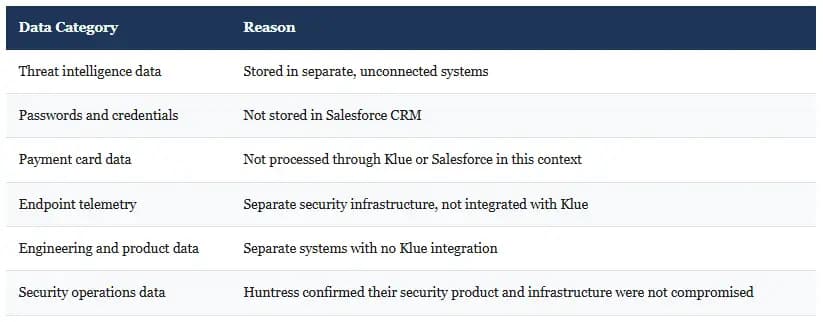
Data That Was NOT Affected
Who is the Icarus Threat Group?
Icarus is a relatively new extortion group that first appeared in late April 2026. As of the time of writing, they have claimed two victims on their dark web leak site, with at least one of those claims directly connected to the Klue campaign. Their operational style matches what security researchers call "data extortion without encryption," a model that has been gaining popularity among criminal threat actors precisely because it avoids the operational complexity of deploying and managing ransomware.
The group communicates through Session Messenger, a privacy-focused messaging application, and maintains a leak site with a threatening tone. Their first public post was titled "Get Ready" and stated simply, "Big corps are getting listed." Be ready." This framing suggests the group intends to target large enterprise organizations and use the threat of public exposure as its primary leverage.
The alias "Mr. Bean" used in extortion emails carries a deliberately casual, almost mocking tone, which may be a deliberate psychological choice to unsettle recipients. The extortion demands did not publicly specify a dollar amount in communications shared with researchers but indicated that Klue should pay or individual customer victims would continue to be targeted directly.
Attribution Note: Initial speculation connected this attack to ShinyHunters based on similar tactics. BleepingComputer confirmed that attribution is incorrect. Icarus is a distinct group. ReliaQuest noted that while the overall OAuth-abuse playbook is similar to previous campaigns, technical differences in tooling and infrastructure differentiate Icarus from ShinyHunters and UNC6395.
How This Compares to ShinyHunters and UNC6395
The common thread across all three incidents is the abuse of OAuth tokens or credentials from trusted third-party vendors to authenticate into Salesforce environments without triggering standard identity-based controls. This is not coincidence. It reflects a deliberate strategic choice by attackers: the integration layer is trusted, monitored less carefully, and provides access to high-value business data without requiring any interaction with target organization employees.
As ReliaQuest noted, the OAuth-abuse playbook is "repeatable, effective, and now widely adopted." "Any organization using Salesforce-connected third-party integrations needs to treat this as an active, ongoing threat category, not an isolated incident.
The Growing Threat of SaaS Supply Chain Attacks
The term "supply chain attack" used to conjure images of compromised software updates like the SolarWinds attack, where malicious code was inserted into a legitimate product update and distributed to thousands of customers at once. The Klue incident is a different animal, but it operates on the same fundamental principle: trust the vendor, get exploited through the vendor.
In a SaaS supply chain attack, the attacker does not need to compromise the software itself. They need to compromise the credentials or tokens that the software uses to access customer environments. Because SaaS integrations are authorized by customers and operate with broad permissions, they represent a high-value, low-visibility attack path.
The scale of this problem is staggering. The average enterprise organization has hundreds of SaaS applications deployed. Each one may have multiple integration connections to other platforms. Each connection has associated credentials, tokens, and service accounts. The number of non-human identities in a typical enterprise now dramatically exceeds the number of human users, and most organizations have far less visibility into and control over the non-human identity layer than they do over user accounts.
A proper attack surface management program cannot ignore SaaS integration credentials any longer. They are an attack surface, full stop.
Third-Party Risk Management Failures This Incident Exposed
The Non-Human Identity Problem Nobody Talks About
Security conversations in most organizations revolve around human identities: employees, contractors, administrators, users. Access reviews cover user accounts. Privileged access management focuses on human privileged users. MFA rollouts target human logins. But in modern enterprise environments, the majority of authentication events are not performed by humans at all. They are performed by service accounts, API accounts, integration accounts, and machine identities, collectively called non-human identities.
Non-human identities are attractive targets for attackers for several reasons. They typically do not have MFA. They often have broad permissions because they need them to function across systems. They rarely change passwords or rotate credentials unless someone specifically manages that process. They almost never log off. And they are far less likely to be noticed when they are behaving abnormally, because most organizations do not have behavioral baselines for what normal non-human identity activity looks like.
The Klue breach is a textbook case of non-human identity exploitation. The initial access was through a non-human credential, the prototype integration credential. The data theft was performed by stolen non-human credentials, the OAuth tokens. Neither attack step required compromising a single human employee at a target organization.
This is why vulnerability management programs that only scan for software flaws miss an entire category of critical risk. The credential and token layer needs the same rigorous treatment as software vulnerabilities.
Indicators of Compromise (IOCs)
Threat Hunting Guide for Security Teams
Salesforce Logs to Review Immediately
Your first priority is Salesforce's own logging infrastructure. Navigate to the Event Monitoring section and pull the following log types.
API Event Logs will show you every API call made to your Salesforce org, including the user, the endpoint, the method, the IP address, and the user-agent string. Filter for calls made by connected app service accounts, particularly the Klue integration. Look for calls to subject enumeration endpoints, sustained query activity, and python-urllib user-agent strings.
Login History logs show every authentication event. Filter for logins from the Klue connected app and check the IP addresses. Compare them to Klue's published IP ranges if available. Flag any IP that does not match.
Connected App Usage logs show which connected apps are making API calls, how many, and when. An abnormal spike in Klue-originated calls between June 11 and June 13 is a strong indicator of compromise.
Questions to Answer During Your Hunt
Did the Klue BattleCards connected app make API calls to your Salesforce environment between June 11 and June 13, 2026? If yes, what was the volume compared to your baseline? What endpoints were called? What IP addresses were used? What data objects were queried? If the answers reveal bulk enumeration, high query volumes, or calls from unusual IP addresses, treat your environment as compromised and initiate full incident response procedures.
For teams that want to strengthen their ongoing detection capabilities, extended detection and response (XDR) platforms that ingest Salesforce event logs can be configured to alert on behavioral anomalies in integration traffic.
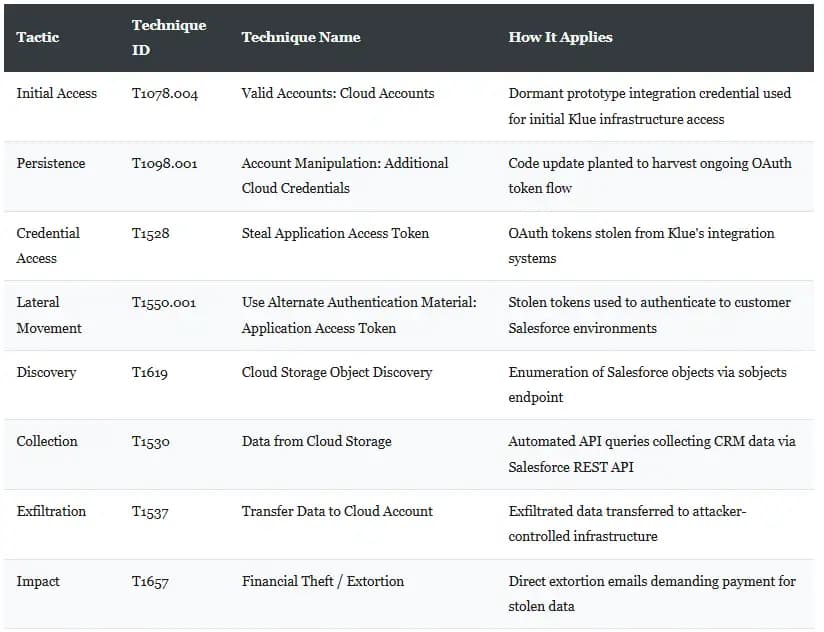
MITRE ATT&CK Mapping
Incident Response Playbook for Organizations Using Klue
Immediate Containment (Do This Now)
Revoke all OAuth tokens associated with the Klue Battlecards connected app in your Salesforce environment immediately.
Navigate to Salesforce Setup, search Connected Apps, find Klue Battlecards, and disable it if Salesforce has not already done so.
Revoke and rotate any other credentials your organization issued to Klue or any third-party integration platforms.
Terminate all active sessions originating from Klue service accounts.
Notify your legal team and data protection officer if your organization is subject to GDPR, CCPA, or other breach notification requirements.
Investigation Phase
Collect Salesforce API event logs, login history, and connected app usage data for the period from June 11 through June 19, 2026. Pull logs from Gong and any other platforms that Klue was authorized to access. Engage your digital forensic investigation team or an external forensics partner to scope the extent of data access. Determine what Salesforce objects were queried, what records were accessed, and whether the query patterns match bulk exfiltration or normal integration activity.
Recovery Phase
Before reconnecting any Klue or similar integrations, obtain written confirmation from the vendor that the security incident has been fully remediated and that credential hygiene has been verified. Reconfigure the integration with minimum necessary permissions rather than the broad access previously granted. Establish behavioral baselines and alerting thresholds for integration API activity before going live. Consider engaging incident response and recovery specialists if the scope of impact is significant.
Communication Strategy
Internal communication should be factual and timely, coordinated between security, legal, HR, and executive leadership. Customer-facing communication, if your organization's data were exposed, requires legal review before delivery. Regulatory notification timelines vary by jurisdiction, but GDPR's 72-hour window for notifying supervisory authorities requires prompt action. If you receive an extortion demand from Icarus or any other actor, do not pay without consulting legal counsel and law enforcement.
How to Protect Your Salesforce Environment
Least Privilege for Every Integration
Review every connected app in your Salesforce environment and audit the permissions granted to each one. Most integrations are granted far more access than they actually need, often because it is easier to grant broad permissions once than to carefully scope them. Reduce each integration's permissions to the minimum set required for its stated function. A competitive intelligence platform syncing win/loss data does not need access to your entire contact database, pricing records, and email thread history.
Token Lifecycle Management
Implement formal processes for managing OAuth token lifecycles. Access tokens should expire after short windows. Refresh tokens should be rotated regularly. Any token associated with an integration that is no longer active should be revoked immediately. Build this into your offboarding process for SaaS vendors the same way you build user offboarding into your HR processes.
Integration Inventory and Governance
Maintain a complete, up-to-date inventory of every integration connected to your Salesforce environment. Include the permissions each integration holds, the last date the integration was actively used, and the owner responsible for each integration. Review this inventory quarterly. Revoke access for any integration that has not been used in 90 days unless there is a specific documented reason for the dormant connection.
Continuous Monitoring and API Behavioral Analytics
The only way to detect an attack that uses valid credentials is behavioral analysis. Establish baselines for what normal integration traffic looks like, how many API calls per hour, which endpoints are accessed, at what times, and from what IP ranges. Configure alerts for deviations from those baselines. Online threat exposure monitoring platforms that include SaaS coverage can help provide this visibility.
Vendor Security Assessments
Before granting a third-party application access to your Salesforce environment, conduct a security assessment that includes questions about credential hygiene, code security practices, integration decommission processes, and incident response capabilities. Use cyber resilience assessments to evaluate not just whether a vendor claims to be secure but also how they would respond if they were not. The Klue incident demonstrates that vendor security posture directly affects your security posture.
SaaS Security Posture Management (SSPM)
SaaS Security Posture Management is a category of security tooling specifically designed to address the visibility and control problems that traditional security tools miss in SaaS environments. An SSPM platform continuously discovers and monitors all connected SaaS applications, their configurations, their integration relationships, and the permissions held by both human and non-human identities within each application.
For a Salesforce environment specifically, a mature SSPM implementation would have flagged several of the risk conditions that preceded this breach: the broad permissions granted to the Klue-connected app, the absence of behavioral monitoring for integration API traffic, the lack of defined token rotation policies, and the presence of other connected apps whose permissions had not been reviewed in extended periods.
SSPM is increasingly considered a foundational control for enterprises with significant SaaS footprints, sitting alongside endpoint security and identity security as a core pillar of the modern security program.
CISO, SOC, and Admin Checklists
CISO Action Checklist
Brief executive leadership and legal counsel on the Klue incident and its potential applicability to your organization
Initiate a formal review of all third-party SaaS integrations connected to Salesforce and other core platforms
Commission a vendor risk assessment for any SaaS vendor with access to sensitive business data
Review whether your cyber insurance coverage includes SaaS supply chain incidents.
Evaluate whether your incident response plan addresses third-party SaaS compromise scenarios.
Establish or update your SaaS governance policy to include integration approval, permission scoping, and lifecycle management requirements.
Consider engaging virtual CISO services if your organization lacks dedicated security leadership for this level of strategic review.
SOC Team Investigation Checklist
Pull Salesforce API event logs for June 11 to June 19, 2026, and filter for Klue-connected app activity.
Identify all IP addresses that authenticated via the Klue integration and compare them to known Klue infrastructure ranges.
Check for python-urllib user-agent strings in Salesforce API logs
Review query volume patterns and flag any windows of abnormally high API call frequency
Check for requests to the subject enumeration endpoint from integration service accounts
Review Gong and other integrated platform logs for similar anomalous patterns during the same period
Document findings and prepare a scope determination report for leadership
If compromise is confirmed, activate the incident response playbook and engage incident response and recovery procedures.
Salesforce Admin Hardening Checklist
Audit all connected apps in Setup and document permissions granted to each
Revoke access for any connected app that is no longer actively used
Enable IP restriction for connected apps where the vendor's IP ranges are known and stable
Review OAuth token expiration settings for all connected apps and enforce short expiration windows
Enable and configure API event monitoring through Salesforce Shield if available
Set up anomaly detection alerts for unusual API call volumes from connected apps
Document the business owner and purpose for each connected app and establish a quarterly review process.
Restrict the objects and fields each connected app can access to the minimum required for its function.
Regulatory and Compliance Implications
GDPR
If your organization processes personal data of EU residents and the Klue integration had access to Salesforce records containing that data, you have a potential GDPR breach notification obligation. Under Article 33, controllers must notify their supervisory authority within 72 hours of becoming aware of a breach where personal data was compromised. If the breach is likely to result in a high risk to the rights and freedoms of individuals, Article 34 also requires notification of the affected individuals.
CCPA
California Consumer Privacy Act obligations apply if you handle California residents' personal information and that information was accessible through the compromised Salesforce integration. The exposure of business contact information, which commonly includes names and email addresses that qualify as personal information under CCPA, may trigger disclosure requirements.
Third-Party Risk Regulations
Regulated industries including financial services, healthcare, and defense contractors face specific third-party risk management requirements that this incident speaks directly to. FFIEC guidance for financial institutions, HIPAA business associate requirements for healthcare organizations, and CMMC requirements for defense contractors all include provisions for managing security risks introduced by third-party service providers. Demonstrating that your organization had adequate vendor oversight controls in place before an incident like this is critical to regulatory defense. CMMC compliance auditing and SOC 2 compliance audits for your SaaS vendors are tools that belong in your vendor risk management program.
Future Outlook: Why OAuth Attacks Are Just Getting Started
The Klue incident did not happen in isolation. It is the third major Salesforce-connected OAuth abuse campaign in approximately one year. ShinyHunters used vishing to authorize malicious connected apps in June 2025. UNC6395 exploited the Salesloft Drift integration in August 2025. Icarus used the Klue integration in June 2026. Each attack refined and evolved the approach. The sophistication required to execute each successive campaign has not gone up; it has stayed relatively accessible. But the scale of potential impact has grown as attackers have realized how many enterprise organizations have unmonitored, over-permissioned SaaS integrations.
Artificial intelligence is making automated API-based attacks cheaper and faster to develop. What required a skilled Python developer to write in 2025 can increasingly be generated by AI tooling in 2026. The barrier to entry for API abuse attacks is falling, and the number of SaaS integrations in enterprise environments continues to grow. This is a compounding risk equation.
Security teams that implement AI-driven automated red teaming against their own SaaS integration surfaces can get ahead of this curve by discovering exploitable trust relationships before attackers do. Dark web monitoring should also cover threat actor communications related to SaaS platforms your organization uses, providing early warning when your vendors or their credentials appear in criminal forums.
"The OAuth-abuse playbook is repeatable, effective, and now widely adopted." -- ReliaQuest, June 2026
Frequently Asked Questions
What happened in the Klue Salesforce data breach?
Attackers compromised Klue's backend infrastructure through an abandoned integration credential, deployed a code update to harvest OAuth tokens from customer integrations, then used those tokens to query and exfiltrate data from customer Salesforce environments. The Icarus extortion group subsequently sent extortion demands to affected organizations.
Was Salesforce itself hacked?
No. Salesforce's own systems were not compromised. The breach originated at Klue, a third-party application. Attackers used stolen OAuth tokens to make API calls to customer Salesforce environments through the legitimate Klue integration channel. Salesforce responded by disabling the Klue Battlecards integration platform-wide.
What is an OAuth token and why does stealing one matter?
An OAuth token is a digital credential that authorizes one application to act on behalf of another within a defined scope of permissions. Stealing an OAuth token gives an attacker the ability to make API calls to a platform as if they were the authorized application, without needing a username or password. The platform cannot distinguish the attacker's requests from the legitimate application's requests based on the token alone.
Who is the Icarus threat group?
Icarus is a relatively new extortion group that appeared in late April 2026. They operate a data extortion model without ransomware: steal data, then demand payment with the threat of public leakage. They communicate through Session Messenger and maintain a dark web leak site. They have claimed responsibility for the Klue campaign.
How can organizations detect similar attacks?
The primary detection mechanism is behavioral analysis of API traffic. Organizations should establish baselines for normal integration API activity, including query volume, endpoints accessed, timing patterns, and IP address ranges. Deviations from those baselines, especially sustained high-volume queries or access from unexpected IP addresses, should trigger investigation. Salesforce's API Event Monitoring logs are the key data source.
What is a SaaS supply chain attack?
A SaaS supply chain attack targets the trust relationship between a third-party SaaS application and the enterprise environments it integrates with. Instead of attacking an enterprise directly, the attacker compromises a SaaS vendor that has authorized access to the enterprise's systems. The attacker then uses that authorized access to reach the enterprise's data without triggering standard security controls.
How can companies secure third-party integrations?
Key measures include applying least privilege permissions to every integration, implementing token rotation and expiration policies, maintaining a formal integration inventory with regular reviews, enabling behavioral monitoring for API traffic, conducting vendor security assessments before granting access, and using cyber threat intelligence to stay informed about threats targeting platforms you use.
Conclusion and Final Recommendations
The Klue Salesforce data breach is exactly the kind of attack that organizations spend years building controls to prevent and almost no time preparing to detect. It did not involve a software vulnerability. It did not require phishing for employees. It did not trigger endpoint detection alerts. It was a patient, methodical abuse of legitimacy: legitimate credentials, legitimate tokens, and legitimate API calls producing illegitimate outcomes.
The organizations that will emerge from this incident having learned the most are not the ones asking, "Could this happen to us through Klue?" The right question is "How many Klue-like integrations do we have, and are any of them already in this position?"
Most enterprises will find, if they look honestly, that the answer is sobering. They have dozens or hundreds of third-party integrations. Most were approved once and never reviewed again. Many carry permissions far broader than necessary. Some are connected to abandoned projects that nobody remembered to shut down. And almost none are monitored at the behavioral level that would be required to detect this style of attack.
The good news is that the mitigations are not exotic. They are operational disciplines applied to a domain that has historically been overlooked. Integration inventories, permission audits, token lifecycle management, and API behavioral monitoring are known practices. They are not implemented consistently because they require effort and organizational focus. The Klue incident is a compelling argument that the effort is worth it.
If you want to understand how exposed your organization's SaaS integration surface is right now, a gap assessment that includes SaaS integration security is the right starting point. If you want to know whether your security controls would actually detect this style of attack, penetration testing that includes SaaS and API attack scenarios will tell you. And if you want ongoing visibility into threats targeting the platforms you rely on, cyber threat intelligence tuned to your SaaS vendor landscape is now an operational necessity, not a nice-to-have.
The attackers have learned that the most reliable way into enterprise data is not through the front door. It is through the service entrance that everyone trusted and nobody watched. Closing that gap starts today.
SBI data breach claim: A group alleges access to 375,000 accounts and 2,722 PDF files. Here is what is verified, what remains unknown,and how to respond.
Ledger hardware wallet spy chip investigation: What Ledger confirmed, how an implant may expose recovery phrases, and what affected owners should do next.
Apple macOS Full Disk Access AI agents face tighter controls. Learn 7 critical privacy risks, Apple's changes, and what Mac users should do to stay secure.
Microsoft X account hacked in a Clippy crypto scam. Learn what happened, what Microsoft confirmed, the risks involved, and how users can stay protected.

-20260620101249.webp&w=1080&q=75 "Indicators of Compromise (IOCs)")