iOS 27 SecureROM iPhone Jailbreak: What is usbliter8?
This article covers a research proof of concept. It is reported to erase device data and break core functions like cellular, Wi-Fi, and Face ID, and is not intended for use on a primary or daily driver phone. This is a news explainer, not a how-to guide, and no technical steps are included.
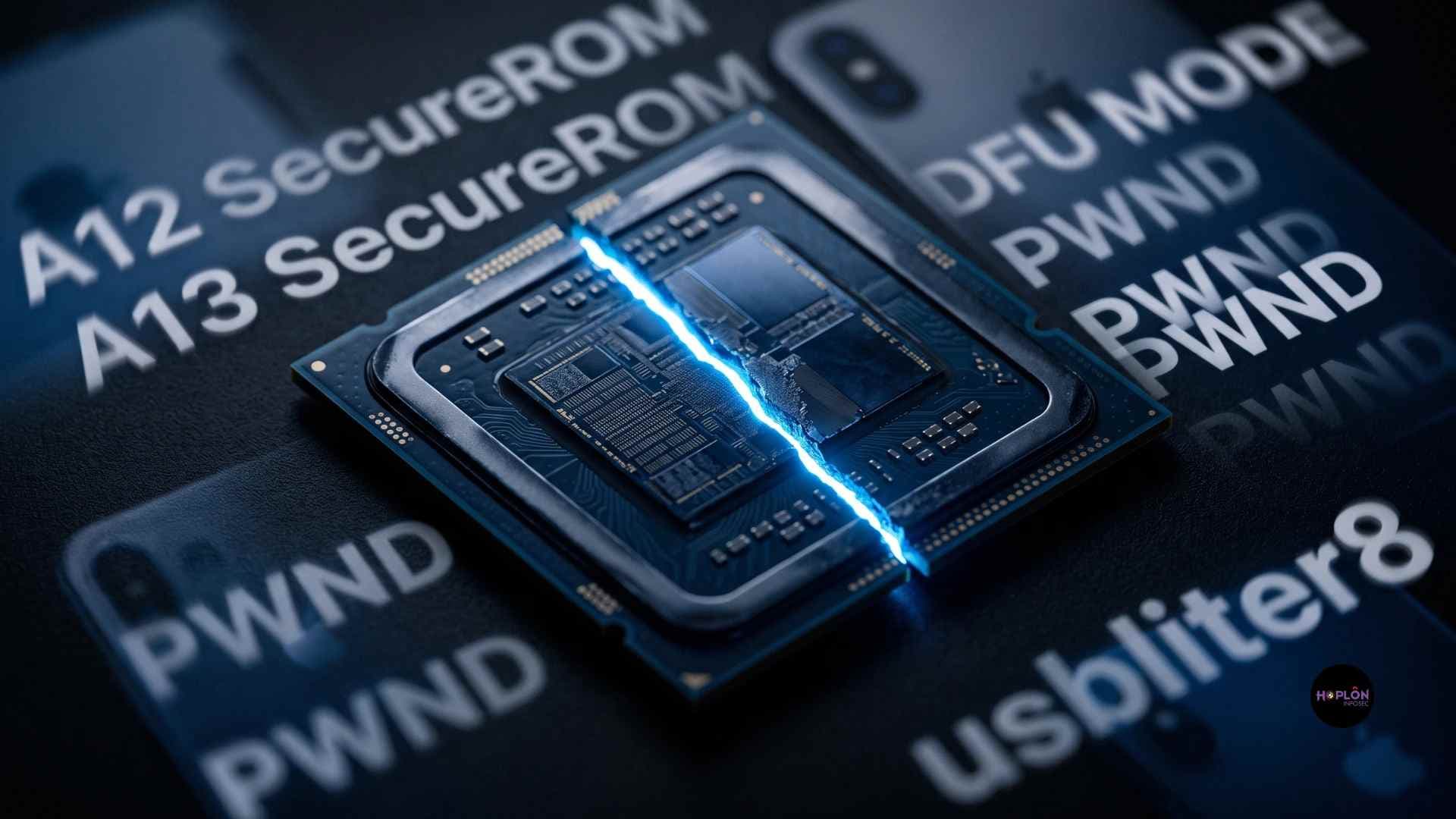
Usbliter8 is a reported SecureROM level exploit affecting Apple's A12 and A13 Bionic chips. Researchers used it to boot a heavily modified, jailbroken build of iOS 27 beta 2 on an iPhone 11 Pro. Because the flaw sits in code that is physically etched into the chip, Apple cannot remove it with a normal software update. The process requires physical access to the device in DFU mode, so it is not something that can happen remotely.
Quick Facts
| Question | Answer |
|---|---|
| What is usbliter8? | A SecureROM level exploit reported for Apple A12 and A13 chips |
| Who reported it? | Paradigm Shift, building on earlier work by wh1te4ever, with iOS 27 patches by Huy Nguyen |
| Which device was demonstrated? | iPhone 11 Pro on iOS 27.0 beta 2 (build 24A5370h) |
| Can it be fixed with a software update? | No |
| Does it work remotely? | No, it requires physical access and DFU mode |
| What hardware does it need? | A Raspberry Pi Pico 2 board (RP2350) plus a USB connection |
| Does Wi-Fi, cellular, or Face ID still work afterward? | No, these are reported broken on the modified firmware |
| Has Apple issued a CVE or advisory? | Not at the time of disclosure |
Bootrom exploits are rare, and one showing up on a brand new A-series chip before the software has even left beta is worth a closer look. Here is what the research actually shows, and what it does not.
What Chips Does usbliter8 Affect?
Usbliter8 is reported to affect Apple's A12 and A13 Bionic chips, the processors used in devices from the iPhone XS generation through the iPhone 11 series. The demonstration specifically targeted an iPhone 11 Pro running iOS 27.0 beta 2.
Why Can't Apple Patch usbliter8 With an iOS Update?
Apple cannot patch usbliter8 because the flaw is reported to live in SecureROM, a small piece of code that is physically part of the chip rather than a file stored on the device. SecureROM runs before iOS loads, so nothing an iOS update changes ever touches it. A fix at this level requires a new chip design in future hardware, not a software patch on existing devices.
This is the single most important thing to understand about a story like this one. It is also the reason it draws so much more attention than a typical software bug. A flaw at this layer stays with every device built on that chip for the rest of that hardware's life.
Does usbliter8 Require Physical Access to the Device?
Yes. Usbliter8 requires the target iPhone to be physically connected to specialized exploit hardware while in DFU mode, a special recovery state. According to the research, a Raspberry Pi Pico 2 board built around the RP2350 microcontroller is used to complete the process, with success confirmed by a specific USB identifier string.
Nothing about this happens by clicking a link, opening a message, or connecting to a network. Someone needs the physical phone in hand, the right equipment, and real technical know-how to get through the process. That physical access requirement is the biggest factor separating research like this from any kind of mass, remote risk.

What Does the Modified iOS 27 Firmware Actually Change?
Once a device reaches the compromised DFU state, marked by the PWND:[usbliter8] identifier in its USB serial string, researchers report loading modified boot components to bring up a custom iOS 27 image rather than the standard signed one. Getting from there to a working jailbreak environment involves weakening several layers of iOS security controls that normally sit above SecureROM, including USB Restricted Mode, sandbox execution limits, and Apple Mobile File Integrity's trust-cache checks, which together are what normally stop unsigned or untrusted code from running.
Because the modified firmware also leaves the Secure Enclave Processor out of sync with the rest of the system, researchers report having to patch system services such as coreauthd and ctkd just to stop the phone from crashing or reboot-looping, along with changes intended to make the device appear activated despite the missing SEP support. None of this is a how-to walkthrough of that process. It reflects what the research reports changing, in the same way a USB exploit device used elsewhere in mobile security research is reported on without publishing the steps to build one.
What Breaks After the Custom Firmware is Installed?
Several core iPhone systems reportedly stop working once the modified iOS 27 firmware is running. The Secure Enclave Processor becomes desynchronized, which breaks Face ID, Touch ID, and passcode functionality. Cellular service, Wi-Fi, and Bluetooth are also reported as non-functional, to the point where researchers describe routing internet access through a wired connection to a Mac instead.
What comes out the other end of this process is not a fully working iPhone with extra freedom bolted on. It is a stripped down, partially broken research device that happens to run unsigned code. The project documentation reportedly warns people directly against attempting this on a phone they actually rely on.
How Does usbliter8 Compare to Checkm8?
Usbliter8 is described as the same category of flaw as checkm8, a well known SecureROM exploit from 2019, but targeting newer hardware. Checkm8 affected the A5 through A11 chips and could never be patched by software update, only made irrelevant when Apple redesigned this part of the chip starting with the A12.
If usbliter8 holds up under scrutiny as a genuine SecureROM flaw in the A12 and A13 chips, it represents that same kind of discovery landing on a newer generation, years after Apple's redesign was meant to close this door for good. That is a big part of why researchers are paying close attention.
-20260727091310.webp&w=1080&q=75)
Why Does This Research Matter Beyond Jailbreaking?
This kind of research matters to more than jailbreaking hobbyists. Security researchers use bootrom level access to test how well iOS protections actually hold up, independent of what Apple's documentation claims. Digital forensics work, including device analysis in legal contexts, depends on understanding exactly this kind of low level access, since it can affect what is technically possible when examining a locked device.
For organizations managing fleets of company owned iPhones, findings like this are also a reminder that older hardware carries risk a software update cannot close. That is part of why IT security teams periodically retire devices on older chip generations, even ones that still work fine day to day.
Has Apple Issued a CVE or Advisory for usbliter8?
No. At the time this research was published, there was no CVE identifier, no CVSS severity score, and no public Apple security advisory addressing usbliter8. Apple has not commented publicly on the exploit or its reported impact on A12 and A13 devices. That absence is not unusual for very early stage bootrom research, though it does mean the finer technical claims have not gone through independent verification yet.
What Happens Next?
The most likely long term outcome follows the same pattern as checkm8. Apple cannot patch this flaw out of chips that have already shipped. A real fix comes only in future chip designs, the same way the A12 quietly closed the door that checkm8 had walked through.
Frequently Asked Questions
Can Apple fix usbliter8 with a software update on the iPhone 11 Pro? No. SecureROM level flaws are physically part of the chip and cannot be reached by an iOS software update. A fix would require a new chip design in future hardware.
Does usbliter8 work without physical access to the device? No. The process requires the device to be in DFU mode and physically connected to specialized hardware, so it cannot happen remotely.
Will Wi-Fi, cellular, and Face ID work after this process? According to the research, no. Cellular, Wi-Fi, Bluetooth, and Secure Enclave dependent features like biometric authentication are reported as broken or unavailable on the modified firmware.
Is usbliter8 the same as the checkm8 exploit from 2019? No, though it is described as a similar category of flaw. Checkm8 affected the A5 through A11 chips, while usbliter8 is reported to affect the newer A12 and A13 Bionic chips.
Has Apple issued a CVE or security advisory for usbliter8? Not at the time this research was published. No CVE, CVSS score, or official Apple advisory had been disclosed.
Reference
Coverage of the demonstration references the 34306/usbliter8-fun project on GitHub, which documents the researchers' iOS 27 beta 2 build work on the iPhone 11 Pro.
Read More Articles:
- usbliter8 Exploit: Apple A12/A13 SecureROM Flaw Explained
- Attack Surface Management Digital Forensic Investigation
- Mobile Security and Threat Defense Solutions
- Vulnerability Management
- Incident Readiness & Response Recovery