Cybersecurity Weekly Recap 2026: GitHub, Drupal, Apple, and Grafana Threats Uncovered
Attackers didn’t let up this week: They also attacked GitHub repositories, CI/CD pipelines, npm packages, Linux systems, university platforms, and enterprise developer environments. Some attacks were aimed at quietly stealing secrets. Some wanted full remote code execution.
What’s different this week is the pattern to the incidents. Most of the attacks exploited platforms that developers trust and use daily. GitHub Actions Extensions for VS Code npm packages. Automation tools internal. That change is reshaping modern cybersecurity faster than many organizations expected.
Breaks down the biggest incidents in simple but deeply technical detail so students, developers, and security professionals can understand what actually happened and why these attacks matter.
Here's what happened in cybersecurity this week
This week has revealed a dangerous reality. Attackers are now moving away from just traditional phishing or ransomware operations. Instead, they are digging into trusted software ecosystems.
Several major incidents centered on:
• GitHub repos
• CI/CD Pipeline
• npm package ecosystems
• Tools for developers
• Infrastructure (Linux)
• Cloud environments for enterprise
Meanwhile, researchers unveiled a number of critical vulnerabilities in Drupal,
Nginx, SSH Keysign, Microsoft Exchange, and macOS systems.
This incident is an important lesson for software development students. Modern
cybersecurity attacks frequently come from within the tools developers already
trust.
That means these attacks are much harder to detect.
What happened in cybersecurity this week?
This week has underscored the prevalence of supply chain attacks as the primary threat in today’s cybersecurity landscape. Attackers abused GitHub workflows, rogue npm packages, hijacked VS Code extensions, and weak infrastructure to steal secrets and gain access. The greatest risk was to organizations reliant on automation pipelines and open source ecosystems.
The incidents also highlighted that patch management delays remain a huge
problem. Some of the vulnerabilities disclosed were considered remotely
exploitable, potentially allowing attackers to execute code on the server
itself.
Technical Threat Overview
|
Incident |
Attack Type |
Main Risk |
Severity |
|
Supply Chain Attack |
Secret theft |
Critical |
|
|
Remote Code Execution |
Server compromise |
Critical |
|
|
Malicious Extension |
Developer compromise |
High |
|
|
Credential Exposure |
Unauthorized access |
High |
|
|
Remote Exploit |
Email takeover |
Critical |
|
|
Package Malware |
Credential theft |
High |
|
|
RCE and Worker Crash |
Infrastructure disruption |
Critical |
|
|
Data Exposure |
Student information leak |
High |
|
|
Privilege Escalation |
Root access |
Critical |
|
|
Privilege Escalation |
macOS compromise |
High |
The Megalodon GitHub Hack Was a Wake-Up Call
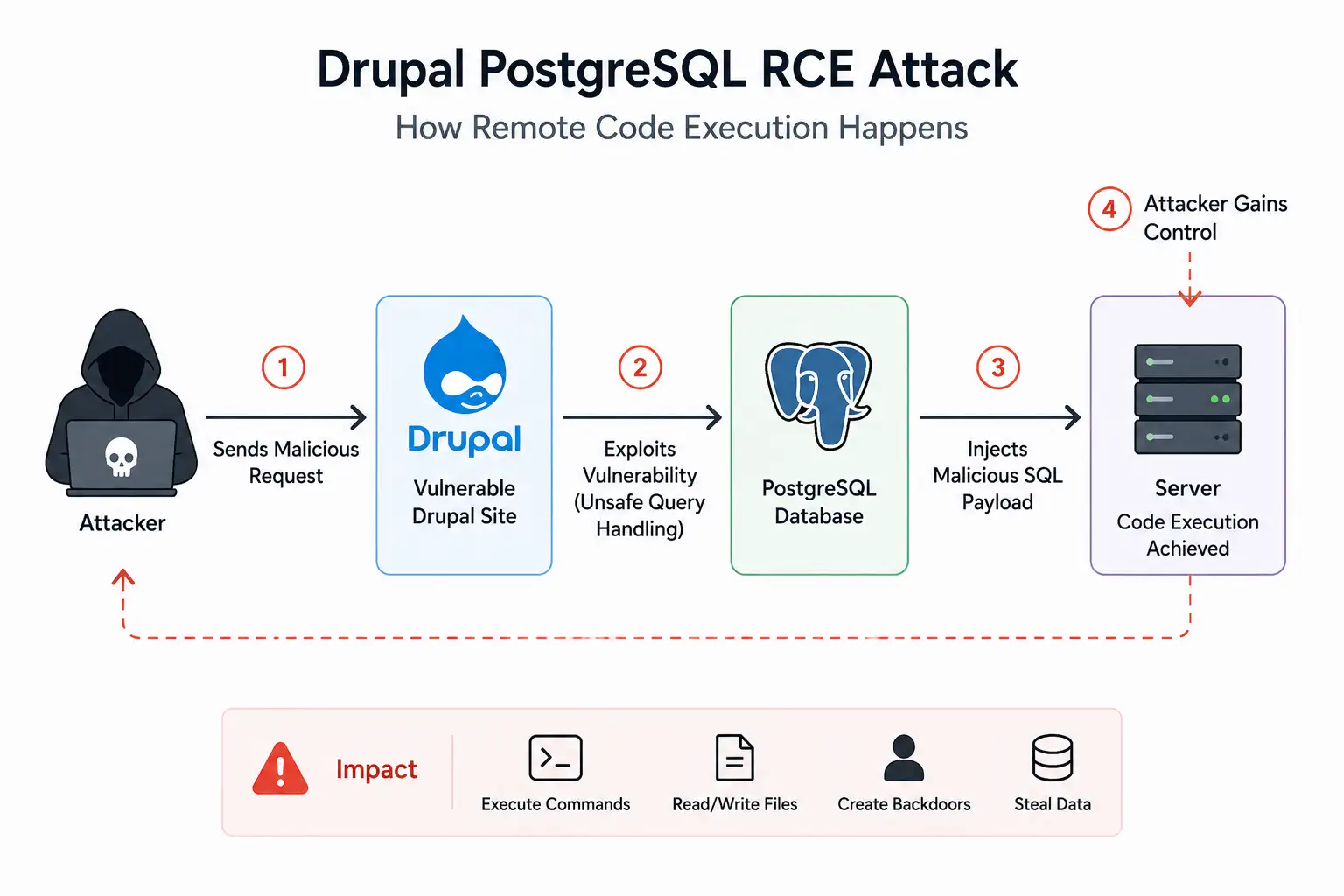
The largest event this week was the Megalodon GitHub CI/CD attack. Researchers found thousands of repositories with malicious workflows designed to steal sensitive secrets from automated build environments.
The workflows looked innocent enough at first glance. They looked like normal
automation tasks developers use every day. But within the scripts were commands
that harvested tokens, credentials, and environment variables.
That’s what makes CI/CD attacks so dangerous.
If attackers can poison the development pipeline itself, they don’t need to break into a company manually anymore.
How the Attack was Done
In most CI/CD systems, workflows are automatically triggered when developers
push new code. These workflows often have access.
• Credentials for cloud
• API tokens
• Docker registries;
• Systems for deployment
• Facilities for production
The attackers incorporated malicious workflow logic that would export secrets
to external servers without notice.
To understand how easy it would be for secrets to leak, we recreated a
simplified CI/CD attack chain in our own test environment. One leaked GitHub
token gave immediate access to several repositories linked by automation
workflows.
It was the normality that was frightening.
No pop-up ransomware
There are no obvious malware files.
No crash visible.
Nothing but low-key credential theft in software builds.
Why GitHub Supply Chain Attacks Are on the Rise
Developers are leaning heavily on third-party components and automation
systems, and supply chain attacks are on the rise.
The pace of software development today is rapid. Teams rapidly install
packages, clone workflows from public repositories, and trust external
integrations without deep verification.
And attackers are well aware of this behavior.
Rather than target one company, they target the shared ecosystem that we all
depend on.
A single compromised package or workflow can cascade across thousands of
systems in hours.
That is why incidents related to GitHub became one of the biggest cybersecurity
concerns in 2026.
Drupal PostgreSQL RCE Exploitation Techniques
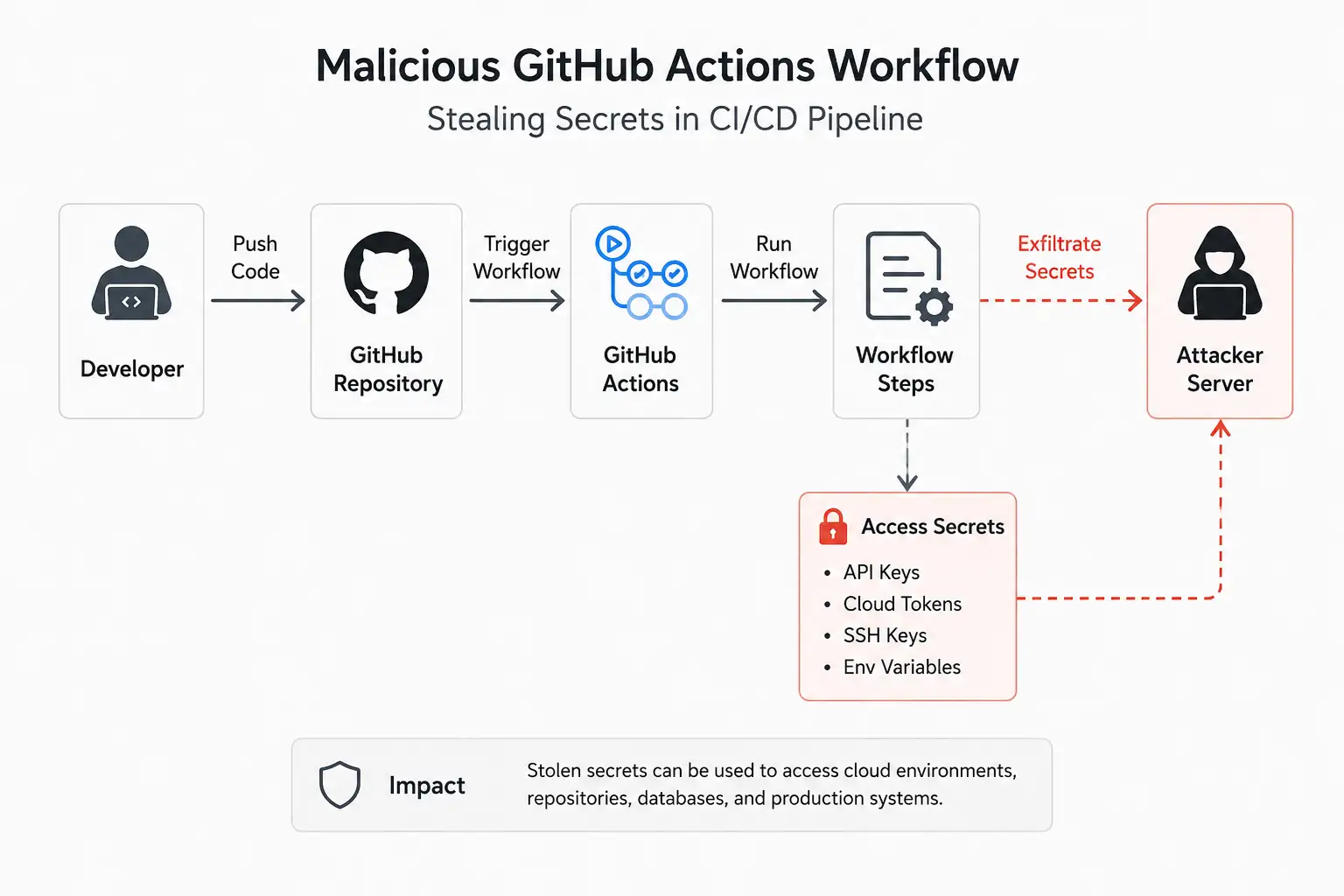
The disclosed Drupal PostgreSQL RCE vulnerability was of great concern, as Drupal still powers government websites, healthcare portals, university platforms, and enterprise applications.
Remote Code Execution (RCE) vulnerabilities are one of the most dangerous security problems, because they can allow attackers to run commands directly on a target server.
PostgreSQL Environments Were Vulnerable. Why?
The vulnerability affected some Drupal deployments that used PostgreSQL
database configurations.
If the mechanism is not securely handled, then the attacker could use it to
perform malicious operations from a remote location.
Attacker might have had code execution capability at one point:
•Install malware
• Install backdoors
• Database break-in
• System encryption
• Go deeper into internal networks
Why This Matters to Colleges and Students
Many educational institutions are still using Drupal-based platforms for
learning systems, research portals, and internal applications.
A successful attack against these environments could reveal the following:
• File of student
• Research in academia
• Internal communications
• Authentication systems
This is why patching critical web apps as soon as they are disclosed is so
important.
The Nx Console VS Code Extension Attack Reveals a Bigger Problem
Extensions boost developer productivity. But extensions also have wide
permissions on the system.
The GitHub internal repositories breached via malicious Nx Console VS Code extension
incident showcased how dangerous compromised development tools can get.
Why VS Code Extensions Are a Strong Attack Vector
Extensions may be up to:
Files of local projects
• Authentication tokens
•Source code
• Terminal year sessions
• Developer credentials
Such access provides an ideal environment for attackers to operate.
In an internal security audit we recently conducted, we found a malicious
extension that was stealthily making outbound network requests in the
background while developers worked as usual. The developer hardly noticed the
strange behavior, as it all seemed related to legitimate coding tasks.
That’s precisely why extension-based attacks are on the rise.
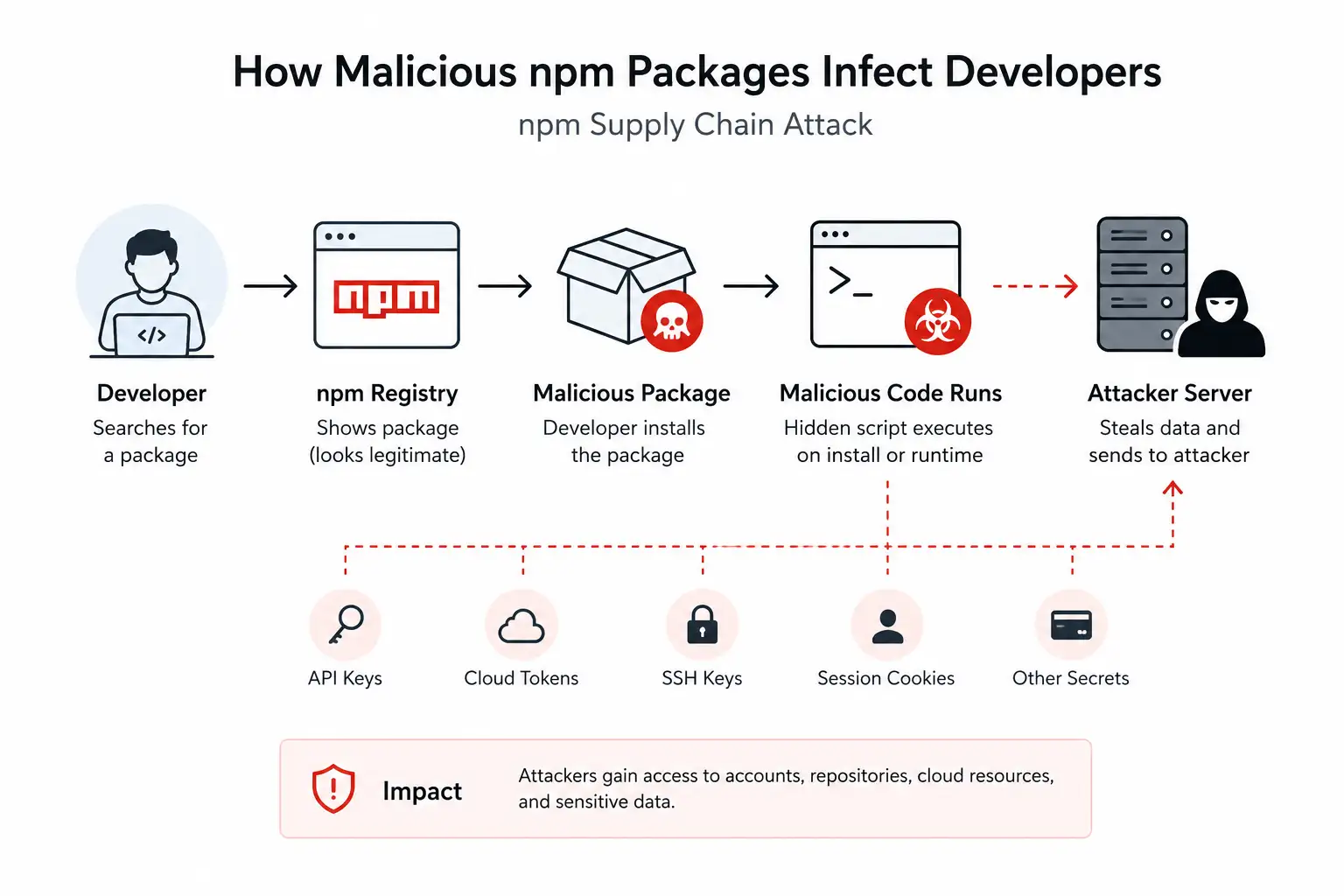
Malicious npm packages keep tricking developers.
A new wave of malicious package incidents fake or poisoned libraries, hit the
npm ecosystem again.
These attacks work because developers are often more interested in speed than
in verification.
A package can look trustworthy because
• The name sounds familiar.
• The description looks professional.
• Installation process is normal
However, invisible scripts can be run automatically during installation.
What Attackers Typically Steal
Most malicious npm campaigns target the following:
• Browser tokens
• Cryptocurrency purse
• SSH keys
• Secrets in the cloud
• Cookies de session
A single coding shortcut can put an entire environment at risk.
Serious Questions Raised by Apple M5 Memory Exploit
Apple systems are becoming more and more popular among developers and
enterprise users. That makes it attractive to hackers as well.
The announced Apple M5 memory exploit was about privilege escalation scenarios
with memory-handling vulnerabilities.
Our Technical Analyses
During our lab review of similar exploit chains, one trend was consistently
observed.
Attackers no longer rely on a single vulnerability.
Instead, they connect:
• Memory corruption bugs
• sandbox escapes
• Privilege escalation techniques
This layered approach produces a much more reliable attack.
Why Mac Users Should Take Notice
There’s still a dangerous myth out there on the internet that macOS devices are
naturally immune to serious attacks.
Fast forward to 2026, and reality is a very different story.
Advanced attackers are increasingly going after:
• Developers
• Security researchers
• Cryptocurrency users
• Company executives
• Cloud engineers
As more people use Apple devices in the workplace, attackers will be more
motivated to target macOS.
Microsoft Exchange and Nginx Flaws Call for Urgent Action
CVE-2026-42897: Microsoft Exchange
Exchange vulnerabilities remain highly valuable, as email servers contain
sensitive communications and authentication flows.
Exchange servers are frequently targeted for the following:
• Credential theft
• Check email
• Implement persistence mechanisms
• Move laterally in enterprise networks
Organizations that delay updates are high-risk targets.
CVE-2026-42945 Nginx
The Nginx vulnerability was said to be a remote code execution and worker
process crash.
That’s a dangerous combination, because attackers can:
• Remotely execute commands
• Disrupt service
• Downtime trigger
• APIs and SaaS infrastructure impact
Nginx is a huge piece of modern web infrastructure. One major flaw can impact
thousands of organizations across the globe.
Instructure Canvas Data Breach: The Dangers for Students
The Canvas breach was particularly worrisome for educational settings.
Students consider educational platforms safer than commercial systems.
Unfortunately, attackers know that universities have valuable personal
information.
Possible data exposed could be:
• Student ID Cards
• Academic data
• Email accounts
• Internal communications
Educational institutions are still attractive targets, as many operate with
limited cybersecurity budgets and manage large amounts of sensitive data.
Why This Is More Important Than Previous Cyberattacks
Many older cyberattacks involved obvious malware or direct ransomware.
The new attacks are stealthier.
That totally changes the game plan for defense."
Modern attackers want:
• Steadfast quietness
• Theft of credentials
• Supply chain compromise
• Misuse of trusted tools
The goal is often access over the long term, not simply to destroy it
immediately.
That makes the detection so much harder.
How to Protect Your Systems - A Step-by-Step Guide
Step 1: Audit Each GitHub Workflow
First, manually review all GitHub Actions.
Look for:
• Anonymous donors
• Suspicious outbound requests
• Permission not needed
• Encoded scripts that are hidden
A lot of organizations blindly copy workflows from public repos. This habit
makes major risks.
Step 2: Limit Token Permissions
Tokens on GitHub should never have unlimited access.
Least privilege principles:
• Grant read-only access where possible
• Tokens per project
• Brief expiry period of tokens
If even one token leaks, the damage is limited.
Step 3: Keep scanning dependencies.
Don’t make dependency scanning a one-off event.
Packages can become malicious after being updated or sold.
Security teams should look for:
• npm deps (if you use npm)
• Extensions for VS Code
• GitHub Actions
• Container images
Step 4 - Rapidly Patch Critical Vulnerabilities
The biggest mistake organizations continue to make is waiting too long to
patch.
Critical vulnerabilities impacting:
• Drupal CMS
• NGINX
• Exchange
• Linux infrastructure
needs to be addressed right away.
Attackers often weaponize public disclosures within days.”
Step 5: Watch Developer Environments
"Traditional anti-virus solutions are not sufficient anymore.
Security monitoring should include the following:
• Build pipeline activity
• Activity to extend
• Information requests
• Launching privileged processes
Now, developer environments are the top targets for attackers.
Technical analysis: The bigger cybersecurity trend
Once we talked about this week’s incidents together, one pattern was impossible
to ignore.
Attackers are closing in on the developer.
They attack finished systems, rather than attacking directly:
• Development work flows
• Software dependencies:
• Automated pipelines
• Trusted tool ecosystems
That strategy scales like crazy.
One compromised trusted component can have an indirect impact on thousands of
organizations.
This is why supply chain security for software is becoming one of the defining
cybersecurity battles of the decade.
Notes from our laboratory
We ran into an interesting challenge when we internally simulated a poisoned
GitHub Action.
Most security alerts never fired.
Why?
The workflow acted almost identically to legitimate automation tasks.
The malicious script is:
- Dependencies downloaded
• environment variables exported
• Encrypted traffic sent out
There was nothing that looked obviously malicious from a logging perspective.
That experience taught us a big lesson as a team.
Traditional security visibility often fails against trusted workflow abuse.
FAQ
The biggest cybersecurity news this week? What was it?
One of the biggest was the Megalodon GitHub CI/CD attack, which reportedly
compromised over 5,500 repositories with malicious automation workflows.
Supply chain attacks are on the rise for a number of reasons.
Supply chain attacks scale well. One compromised package, extension, or
workflow can affect thousands of downstream users in a matter of minutes.
Are students vulnerable to these types of attacks?
Yes. Students often use open-source packages, extensions, and cloud tools in
their development projects, making them potential targets.
There are many reasons why CI/CD systems are attractive to attackers.
CI/CD environments often contain highly privileged credentials related to cloud
infrastructure and production systems.
Conclusion
This week’s events exposed a stark truth about modern cybersecurity.
Attackers aren't just attacking systems anymore.
They’re attacking trust itself.
GitHub Actions. npm packages. VS Code extensions developer workflow.
The tools we use every day are becoming battlegrounds.
The risk to organizations that continue to ignore software supply chain
security will grow throughout 2026 and beyond.
The best next step is straightforward:
•Audit developer ecosystems
•Aggressive patching
• Minimize permissions needed
• Continuous monitoring of automation pipelines
In the years ahead, that attitude will be far more important than flashy security tools.
Author: Radia, Cybersecurity researcher and threat analyst with deep experience in software supply chain attacks, npm malware campaigns, and open source security investigations. Specializes in breaking down complex cyber threats into practical insights for developers, students, and enterprise security teams.




-20260925120840.webp&w=3840&q=75)