
Article Summary
This article covers every major Apple announcement in 2026 in one place. From the company's first-ever foldable phone to a completely rebuilt Siri powered by Google Gemini, from the security crisis that put 270 million iPhones at risk to the quiet end of Tim Cook's run as CEO, this is the full story of iPhone 2026. Whether you are deciding whether to upgrade, worried about malware, or just trying to keep up, you will find clear, actionable answers here.
iPhone 2026 at a Glance
|
Topic |
Key Detail |
Timeline |
|
WWDC 2026 Keynote |
iOS 27, rebuilt Siri AI (Gemini-powered), macOS 27 |
June 8, 2026 |
|
iPhone Fold / Ultra |
First foldable iPhone, $1,999 starting price, 7.8-inch inner display |
September 2026 (est.) |
|
iPhone 18 Pro & Pro Max |
A20 Pro chip, under-display Face ID, new colors |
September 2026 |
|
iPhone 18 / 18e |
Standard models delayed |
March 2027 |
|
iOS 26.5 |
RCS end-to-end encryption between iPhone and Android |
Released 2026 |
|
DarkSword Malware |
Full-chain exploit targeting iOS 18; emergency patch released |
March 2026 |
|
macOS 27 |
Apple Silicon only; Intel Macs no longer supported |
Fall 2026 |
|
New CEO |
John Ternus replaces Tim Cook |
September 1, 2026 |
The Year Apple Changed Everything
Let's be honest. Every year someone calls it "Apple's biggest year ever." Most of the time, that is a stretch. But 2026 is different. This time the claim actually holds up.
In a single calendar year, Apple shipped its first foldable phone, rebuilt Siri from the ground up using Google's AI, quietly sunsetted Intel Mac support, dealt with one of the most serious iPhone security crises in years, and watched its longest-serving CEO step down after 15 years. That is not a normal product cycle. That is a structural shift.
If you have been trying to keep track of it all, this guide pulls every thread together. We cover the iPhone 2026 lineup, the software changes, the security situation, and what it actually means for someone buying or using an iPhone right now. That includes readers in Bangladesh, where the question of availability and price hits differently than it does in California.
One more thing worth noting before we dive in: WWDC 2026 on June 8 was Tim Cook's last keynote as CEO. He hands the title to John Ternus on September 1. That detail alone makes this year feel like the closing of one chapter and the opening of another.
Section 1: WWDC 2026 - What Apple Actually Announced
Apple's annual developer conference opened at Apple Park on June 8 under the tagline "All systems glow." For once, the marketing was not empty. Nearly every announcement connected back to one theme: Apple Intelligence finally growing up.
1.1 The New Siri AI (Gemini-Powered)
For years, Siri was the running joke of the AI world. Even Apple fans quietly admitted it. Google Assistant answered follow-up questions. ChatGPT held actual conversations. Siri sometimes could not even set a timer without getting confused.
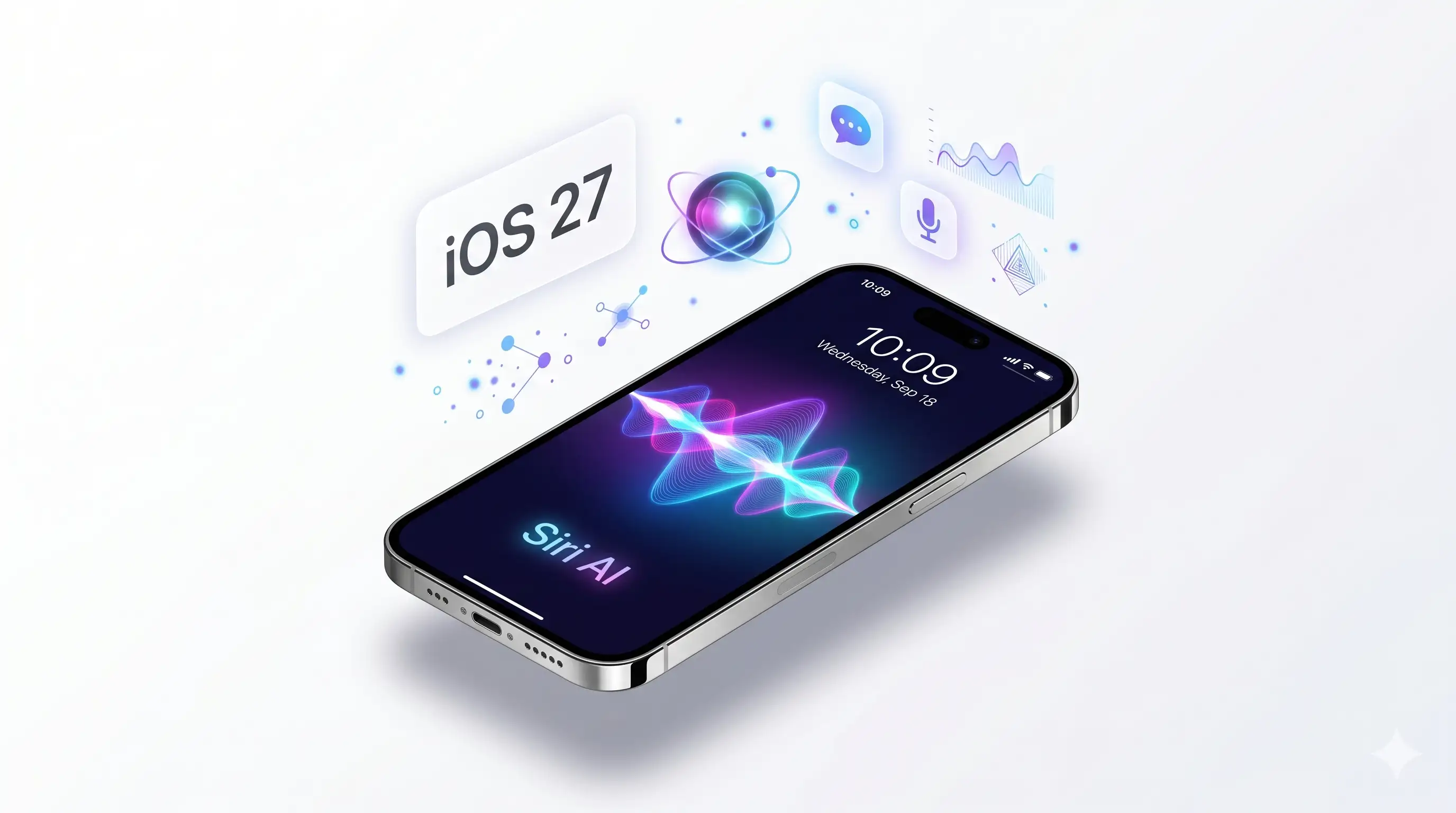
That version of Siri is gone. Apple has rebuilt it from scratch, using a custom Google Gemini model integrated into Apple's own foundation model framework. The deal is reportedly worth $1 billion per year, a significant number even by Apple standards, given their existing $20 billion annual arrangement with Google for default search placement.
The internal codename for the project was "Campo," and the result is a conversational, chatbot-style assistant that actually understands context across your apps, your files, and your history. Apple is also releasing a standalone Siri app for the first time, giving it a proper home on your Home Screen instead of hiding it behind a long-press.
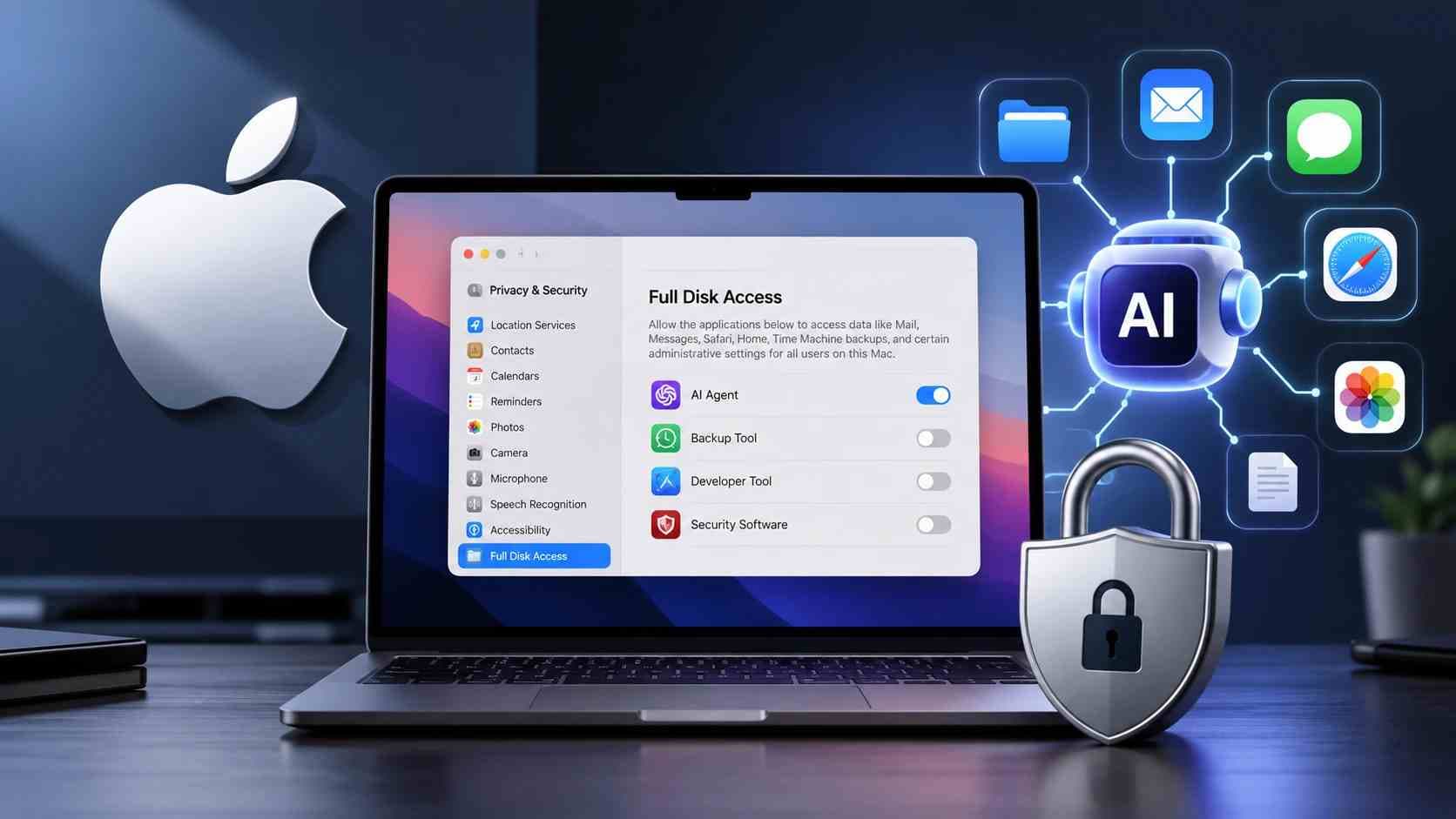
How does it compare to ChatGPT or Perplexity? Honestly, the gap has narrowed significantly. Siri now handles multi-step requests, can take action inside third-party apps through an updated App Intents framework, and brings a more natural back-and-forth feel. Whether it surpasses competitors or simply catches up depends on your use case, but for the average iPhone user, this is the biggest practical upgrade to Siri in its 14-year history. From a cybersecurity standpoint, AI assistants with deep app access create new mobile security considerations that are worth thinking about as this rolls out.
 WWDC 2026 Siri AI and iOS 27 feature illustration
1.2 iOS 27: What Is Actually New
iOS 27 is not a visual overhaul. Apple is keeping the Liquid Glass design language it introduced in iOS 26, with small refinements including a system-wide opacity slider so you can dial back how translucent everything looks if that style is not your thing. But the changes under the hood are more interesting.
The new CPU scheduler Apple built into iOS 27 is genuinely impressive on paper. Older iPhones are reportedly seeing apps open 30% faster, photos load 70% faster, and AirDrop transfers complete 80% faster. Those are not the kind of numbers marketing teams usually make up, because they are too specific to be vague.
The Password app is getting an AI-powered auto-fix feature. If one of your accounts has a weak or compromised password, iOS 27 can quietly log into that site through Safari in the background and update the password to something strong without you having to do anything. That is either convenient or alarming depending on how you feel about automation, but it is genuinely useful for most people. That kind of behavioral security automation connects closely to how vulnerability management thinking is evolving: finding and fixing weaknesses before attackers do.
For parents, "Ask to Browse" is a real addition. Children on a family sharing plan need to request permission before visiting any new website in Safari. That request pings the parent's device in real time. It is a small feature but one that fills a gap that parents have been asking about for years.
And embedded in iOS 27's code, developer Sam Henri Gold found references to "foldState," "angleDegrees," and "DeviceDisplayCount"—internal variables that have no purpose on a regular iPhone. They are clearly there for a phone with more than one display and a hinge. The iPhone Fold is coming, and iOS 27 is being built to support it.
1.3 macOS 27: Intel Mac Support Ends
If you are still using a Mac with an Intel processor, macOS 27 is not for you. Apple has officially moved to Apple Silicon-only support, which was expected but still stings for anyone holding onto a pre-2020 Mac.
For everyone else, macOS 27 brings the same Siri improvements, deeper Apple Intelligence integration, and Xcode 27 with on-device AI code completion built in a meaningful upgrade for developers who prefer not to send their code to a cloud server to get suggestions.
1.4 iOS 26.5: RCS Encryption Between iPhone and Android
This one is genuinely historic, even if it did not get the fanfare it deserved. With iOS 26.5, messages sent between iPhones and Android devices over RCS are now end-to-end encrypted by default. For years, cross-platform texting was a security weak point. Green bubbles were not just aesthetically different; they were less secure. That changes now.
For anyone who cares about digital privacy or who advises others on it, this matters. It is a significant step toward the kind of secure communications standards that security professionals have been pushing for across all channels.
Section 2: The iPhone Fold: Apple's Biggest Bet in Years
Samsung has owned the foldable smartphone market for seven years. In 2026, Apple is finally entering the arena, and as you would expect, it is not doing so quietly.
2.1 Why the iPhone Fold Is a Big Deal
The foldable phone market hit 27.6 million units in 2025, growing 25% year-over-year, and is projected to reach $38.68 billion in 2026. That is a fast-growing segment that Apple has left entirely to competitors until now. The Samsung Galaxy Z Fold series, the Motorola Razr Fold, and others have established real, loyal user bases. Apple entering means competition gets real.
But more importantly, the iPhone Fold is not just a hardware flex. It signals what Apple sees as the next computing paradigm: a device that gives you a phone-sized pocket experience and a near-tablet productivity workspace in the same package. When unfolded, you essentially have a 7.8-inch screen, close to the iPad mini. That changes how you think about which devices you carry.
2.2 Launch Date, Timeline, and What We Know
Bloomberg's Mark Gurman has confirmed that the iPhone Fold is on track for a September 2026 announcement alongside the iPhone 18 Pro lineup. Trial production began at Foxconn in April 2026. Mass production was originally targeted for June but was pushed to around July or early August.
Some analysts, including Barclays' Tim Long, project December 2026 as the more realistic date for widespread consumer availability. Nikkei Asia reported potential delays pushing into 2027, though Bloomberg disputed that. The most likely scenario: announcement in September, limited initial stock, broader availability by year's end.
Apple is expected to produce just 3 to 5 million units in the first year—a very limited run compared to the iPhone 18 Pro, which will likely ship in the tens of millions. If you want one early, pre-order alerts are going to matter.
2.3 Specifications (Based on Leaks and Supply Chain Reports)
The iPhone Fold is expected to feature a 5.49-inch outer OLED cover display and a 7.76 to 7.8-inch inner foldable OLED display with 120Hz ProMotion. The hinge is reported to be titanium, and Touch ID is expected to return, likely integrated into the power button, since under-display Face ID on a foldable creates engineering complexity Apple may want to avoid in the first generation.
Inside sits the A20 Pro chip, built on TSMC's 2nm process and shared with the iPhone 18 Pro. This chip uses new WMCM packaging that stacks 12GB of RAM directly onto the chip wafer, a structural change that is arguably a bigger story than the node shrink itself.
On the connectivity side, Apple is using its in-house C2 modem, the third generation of Apple's own baseband chip, following the C1 in the iPhone 16e and C1X in the iPhone Air. No Qualcomm silicon inside.
Storage options are expected to follow the usual Pro ladder: 256GB, 512GB, and 1TB.
One note of caution: Apple has not officially confirmed the existence of the iPhone Fold, let alone any specs or pricing. Everything above comes from supply chain sources, Bloomberg, Ming-Chi Kuo, and analyst research. Treat it as highly credible but not official.
From a security perspective, a foldable device with new form factors, dual displays, and new hinge-state APIs also expands the attack surface in ways that security researchers will want to monitor closely once it ships.
2.4 Expected Price and Bangladesh Availability
Analyst estimates converge on a starting price of $1,999 for the 256GB base model. The 512GB version is expected around $2,199 to $2,610, and a potential 1TB configuration could reach $2,399 to $2,900. These would make the iPhone Fold Apple's most expensive iPhone ever.
For buyers in Bangladesh, the picture is more complicated. Bangladesh is not in Apple's first-wave launch markets, which typically includes the US, UK, Europe, Japan, and Australia. Grey market imports are almost certain to follow within a few weeks of the global launch, but prices in the local market will likely carry a 15 to 25 percent premium over US retail due to import duties and middlemen. That puts the Bangladesh grey market price somewhere around BDT 250,000 to BDT 350,000 or more for the base model estimates only and subject to how exchange rates move by then.
Compared to the Samsung Galaxy Z Fold 8 (expected in July 2026) and the Motorola Razr Fold, the iPhone Fold will be priced at a clear premium. Whether that premium is worth it depends on how deeply you are invested in the Apple ecosystem.
Section 3: iPhone 18 Series: Apple Split the Launch
Here is something Apple has never done before: splitting the annual iPhone launch across two different calendar years for the same series.
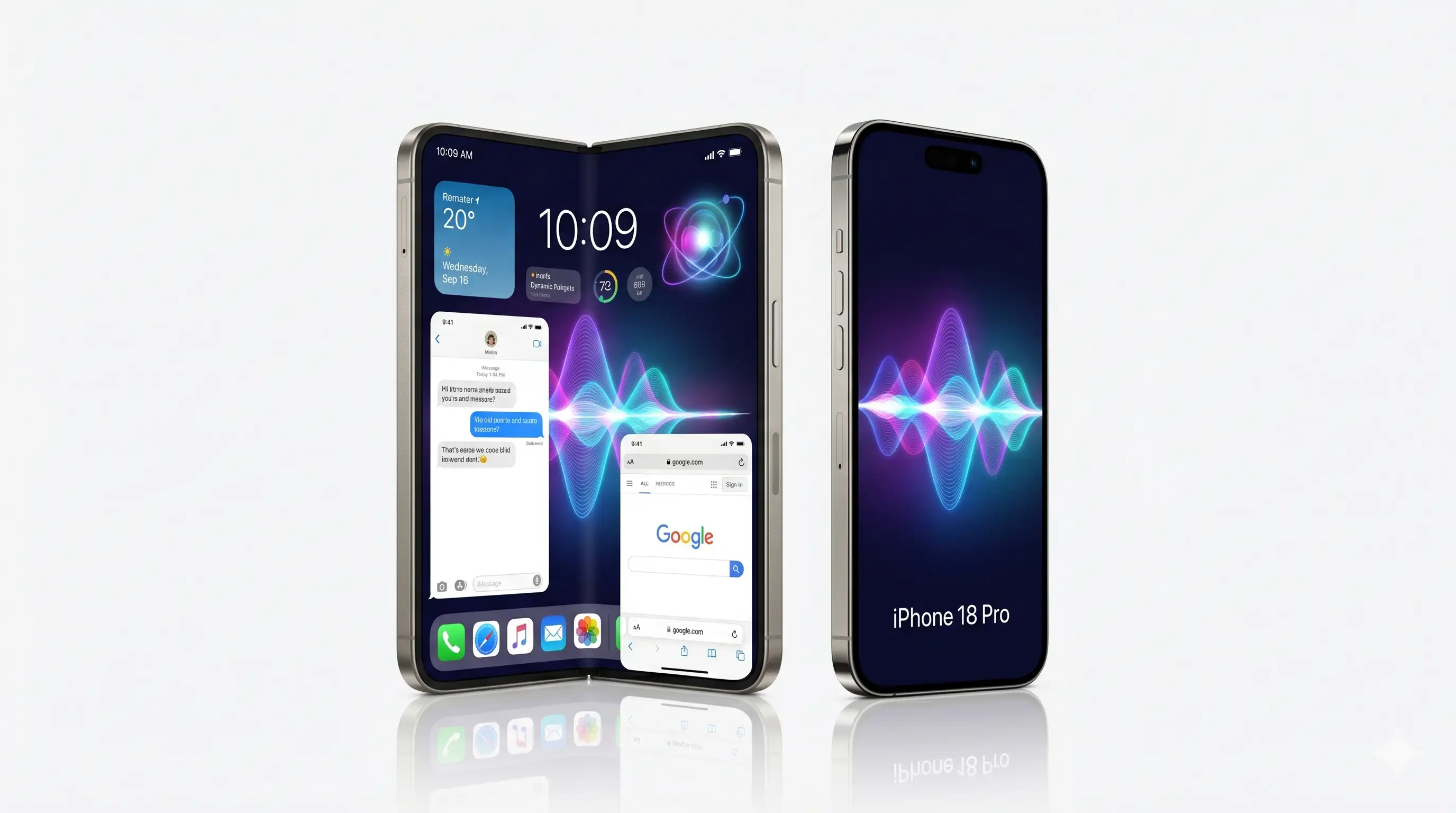
In September 2026, Apple will announce the iPhone 18 Pro, the iPhone 18 Pro Max, and the iPhone Fold. The standard iPhone 18 and iPhone 18e, the models most people actually buy, will not come until spring 2027, likely March. Apple is essentially clearing the stage for its most premium products and its historic new foldable and letting the standard lineup wait.
The iPhone 18 Pro and Pro Max are expected to bring under-display Face ID (finally hiding the notch entirely), the A20 Pro chip, 12GB of RAM for improved on-device AI performance, and Apple's own C2 modem. New colors rumored from leaks include cherry red and sky blue, a return to the vibrant palette Apple brought back with the iPhone 17 Pro series.
The standard iPhone 18 and 18e, coming in 2027, will likely carry the same chip generation but with fewer camera upgrades and no under-display Face ID. The 18e is expected to replace the iPhone 16e at a competitive price point.
Section 4: MacBook and the M6 Chip
On the Mac side, 2026 is a year of transition rather than a dramatic launch, but the direction is clear.
Apple's M6 chip is in accelerated development, built on TSMC's 2nm process, the same generation as the A20 Pro. It will power the next MacBook Pro and Mac Studio refresh expected in late 2026 or early 2027.
The bigger hardware story for Mac is the rumored OLED touchscreen MacBook Pro or MacBook Ultra. Apple has reportedly been developing a completely new MacBook form factor with an OLED display, touch input on the screen, and a built-in 5G modem, meaning you could use a SIM card directly in your Mac, the way you use one in your iPhone, without needing a hotspot. That would be a first for Apple's laptop lineup and a genuine quality-of-life improvement for people who work on the go.
On the software side, macOS 17 is the last version to support Apple Silicon only, which means Intel Mac users need to start planning their next machine. If you are running a Mac from 2019 or earlier, macOS 26 is where your updates end. Security patches may continue for a while, but feature development is over for your platform.
Section 5: Apple's Security Crisis in 2026: What You Need to Know
This section matters more than most tech coverage gives it credit for. 2026 saw one of the most serious iPhone security events in recent memory, and a lot of users still do not know they were at risk.
5.1 DarkSword: The Malware That Targeted 270 Million iPhones
DarkSword is a full-chain iOS exploit kit. It strings together six vulnerabilities in WebKit, Safari, the dynamic loader, and the iOS kernel to achieve complete device compromise from a single website visit. No click required. No app download. Just visiting a malicious or compromised page while on a vulnerable iOS version was enough.
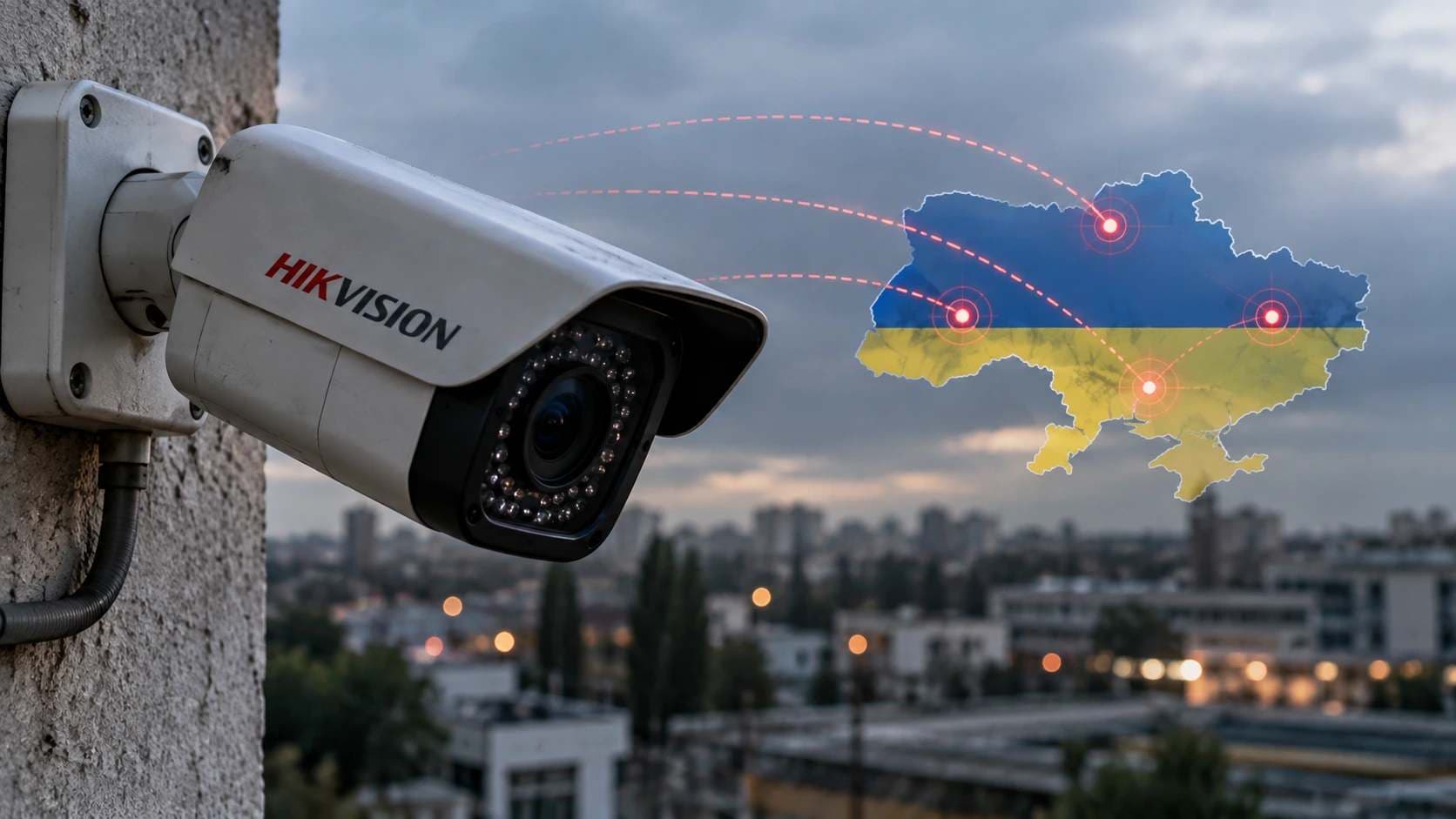
Around 270 million iPhones running iOS 18.4 to 18.7 were exposed. DarkSword had already been used in targeted campaigns against users in Ukraine, Saudi Arabia, Turkey, and Malaysia before researchers published their findings. It has since been linked to commercial surveillance firms and state-sponsored actors. The code was also posted to GitHub, which means it became accessible to a much wider set of bad actors almost immediately.
This is not theoretical. This is the kind of threat that warrants serious mobile security and threat defense attention, and it is a reminder that personal devices are increasingly in scope for sophisticated attacks that were once reserved for enterprise targets.
Apple's response was actually notable. Typically, Apple stops pushing major-version updates once a new iOS ships; the expectation is that you upgrade. For DarkSword, Apple made an exception: it pushed iOS 18.7.7 as an emergency patch to iPhones that were capable of running iOS 26 but had chosen not to update, breaking its own standard practice. The company also enabled automatic delivery for devices with "Background Security Improvements" turned on.
For users at higher risk, such as journalists, activists, and executives, Apple strongly recommends enabling Lockdown Mode. Apple told TechCrunch it is not aware of any successful government spyware attack against an iPhone running Lockdown Mode.
The DarkSword situation is a clear example of why endpoint security cannot be treated as a set-and-forget concern, even on consumer devices. Phones are endpoints. They carry credentials, banking apps, sensitive messages, and access to corporate systems. Treating mobile security as optional is no longer reasonable. Tools like extended detection and response (XDR) and continuous online threat exposure monitoring are increasingly relevant for organizations whose employees use personal iPhones for work.
-20260614160621.webp)
5.2 CVE-2026-20700: The dyld Zero-Day
Earlier in 2026, Apple patched a critical zero-day vulnerability in "dyld," the dynamic linker, a core system component responsible for loading apps. A flaw here is serious because it sits deep in the operating system before most security checks run. Apple fixed it through a software update. The episode reinforced why keeping iOS current is not optional from a security standpoint.
For organizations managing fleets of Apple devices, events like this are a core reason to invest in vulnerability management programs and cyber threat intelligence feeds that flag Apple CVEs as soon as they are published.
5.3 What You Should Do Right Now
Here is a plain-English checklist. These steps apply whether you are an individual iPhone user or an IT administrator managing devices in a company.
First, update your iPhone immediately. Go to Settings, then General, then Software Update. If you see any update available, install it. If you are on iOS 18 and have been avoiding iOS 26 because of the Liquid Glass interface, your security is at risk. The DarkSword patch is in iOS 26.x and in the emergency iOS 18.7.7 update. Both protect you. Neither will patch you if you do not install them.
Second, turn on automatic updates. Settings, then General, then Software Update, then toggle on both "Download iOS Updates" and "Install iOS Updates." Enable "Background Security Improvements" while you are there.
Third, if you are a high-risk individual, a journalist, an activist, an executive, or a government employee, turn on Lockdown Mode. Settings, then Privacy and Security, then Lockdown Mode. It limits some functionality but provides a meaningful additional layer of protection against sophisticated attacks.
Fourth, enable RCS messaging if you text Android users regularly. With iOS 26.5, those conversations are now end-to-end encrypted by default. But only if both sides have updated their software.
If you are a business owner worried about your organization's broader exposure, not just your own phone, a cyber resilience assessment or a gap assessment can help you understand where the weak points are before something like DarkSword finds them for you.
Section 6: Tim Cook's Last WWDC and Apple's Next Chapter
The tech world spent so much time dissecting Apple's product announcements at WWDC 2026 that many outlets almost buried the human story underneath it: this was Tim Cook's final keynote as CEO.
Cook has led Apple since Steve Jobs stepped down in 2011. Under his watch, Apple became the first company to hit $3 trillion in market capitalization. He oversaw the iPhone's rise to becoming Apple's most important product and the launch of the Apple Watch, AirPods, Apple Silicon, and the Vision Pro. He also navigated some of the most complex supply chain and geopolitical challenges any tech company has faced.
On September 1, 2026, John Ternus takes over as CEO. Ternus has been Apple's SVP of Hardware Engineering, overseeing the transition to Apple Silicon and the development of the chip architecture that now powers every Mac, iPhone, and iPad. His background is deeply technical, and Apple insiders describe him as someone who understands both product design and engineering at a level few executives do.
What does this mean for Apple's direction? Ternus is inheriting a company that is betting heavily on AI, foldable hardware, and in-house silicon. The strategic bets are already placed. His job is to execute and to build the next chapter of Apple's identity, which will likely look different from the Cook era in ways we cannot fully predict yet.
Section 7: What Bangladesh iPhone Users Should Know in 2026
If you are reading this from Bangladesh, the global Apple news has local implications that are worth spelling out.
On security: the DarkSword malware targeted users in Malaysia and other Asian markets. Bangladesh is not specifically named in attack records, but the exploit kit has been published publicly, which means anyone running a vulnerable iOS version anywhere is potentially at risk. Update your iPhone now. This is not optional.
On the iPhone Fold: Bangladesh is unlikely to see official Apple retail availability for the iPhone Fold in 2026. Apple's first-wave launch markets are the US, UK, Europe, Japan, and Australia. Grey market availability through importers typically follows within four to eight weeks, but prices carry a significant premium. Realistically, an iPhone Fold will cost somewhere in the BDT 250,000 to 350,000 range through unofficial channels in Bangladesh, possibly more if supply is tight globally.
On the iPhone 18 Pro: this will be more accessible than the Fold, though it is still premium. Grey market prices for iPhone Pro models in Bangladesh have historically settled around 20 to 30 percent above US retail. Expect similar patterns in late 2026 and early 2027.
On iOS 27: this will support iPhone XS and newer. If you are running an older iPhone, check Apple's official compatibility list before expecting any of the new features.
One broader point for businesses in Bangladesh that use iPhones for work: the DarkSword crisis is a reminder that mobile security is not just a consumer concern. If employees access company email, files, or systems from their personal iPhones, those devices are part of your security perimeter. A conversation with a qualified security partner about mobile security and threat defense or even a virtual CISO engagement is worth having before a real incident forces the issue.
Frequently Asked Questions About iPhone 2026
When will the iPhone Fold launch?
Bloomberg's Mark Gurman has confirmed a September 2026 announcement alongside the iPhone 18 Pro. Mass production at Foxconn is expected to begin in August. Some analysts project consumer availability may slip to December 2026. Apple has not made an official announcement yet.
Which iPhones will support iOS 27?
iOS 27 is expected to support the iPhone XS and newer. If you are on an older device, iOS 26 may be the last major version you receive. Apple typically publishes the official compatibility list when it releases the first developer beta, which happened at WWDC in June 2026.
Is Siri now as good as ChatGPT?
The gap has closed significantly. The rebuilt Siri in iOS 27, powered by Google Gemini, is a conversational AI assistant that can handle multi-step requests and take actions across your apps. Whether it is "as good as ChatGPT" depends on the task. For in-device integrations, calendar, messages, contacts, and third-party apps, Siri has a structural advantage. For open-ended research or creative writing, dedicated AI apps still have an edge for many users.
Will the iPhone 18 be released in 2026?
Yes and no. The iPhone 18 Pro and iPhone 18 Pro Max are expected in September 2026. The standard iPhone 18 and the iPhone 18e have been delayed and are expected in spring 2027, likely March. This is a deliberate strategy to give the iPhone Fold more attention at the fall event.
Who is Apple's new CEO?
John Ternus, Apple's former SVP of Hardware Engineering, becomes Apple's CEO on September 1, 2026. Tim Cook steps down after 15 years leading the company.
What is DarkSword, and am I at risk?
DarkSword is a full-chain iOS exploit kit that can compromise an iPhone just by the user visiting a malicious website, no tap or download required. It affected iPhones running iOS 18.4 to 18.7 and has been used in real attacks in Malaysia, Ukraine, Saudi Arabia, and Turkey. If you are on any version of iOS 18 that you have not updated recently, install iOS 18.7.7 or upgrade to iOS 26 immediately. Devices already on iOS 26.3 or later are protected.
Is my iPhone safe if I do not update to iOS 26?
Apple released iOS 18.7.7 specifically to protect iOS 18 users who have not upgraded to iOS 26. If you have automatic updates enabled, you may already have received it. Go to Settings, then General, then About to check your current version. If you are below 18.7.7, update now. Apple still recommends upgrading to iOS 26 for the most comprehensive security protections.
Conclusion: iPhone 2026 is Not a Normal Year
When you stack it all up the foldable phone, the rebuilt AI assistant, the end of Intel Mac support, the most serious iOS security crisis in years, and the CEO transition 2026 is genuinely unlike any year Apple has had in a long time. The company is betting on multiple fronts simultaneously, and the outcomes will define the next decade of its products.
For everyday users, the immediate priority is security. Update your iPhone. Enable automatic updates. If you use your phone for work in any meaningful way, take mobile security seriously because the people trying to get into your device certainly are. Tools and thinking around endpoint security, dark web monitoring, and incident response planning are no longer just for enterprise IT teams. They matter for individuals and small businesses too.
For those watching Apple's hardware, the next few months will be decisive. The iPhone Fold either arrives in September and reshapes how we think about phones, or it slips and the story becomes about execution challenges. Either way, it will be worth watching.
And for those of us who have watched Tim Cook run Apple for 15 years, there is something worth pausing on. He inherited an impossible legacy and built something arguably bigger. What John Ternus does next with AI, with silicon, and with the foldable platform is the question that will define the next decade of Apple.
Official References and Sources
MacRumors: Apple Issues Rare iOS 18 Security Update to Protect Against DarkSword Exploit
Macworld: Apple iPhone Ultra: Foldable iPhone Release Date, Design, Specs, and Rumors
The Hacker News: Apple Expands iOS 18.7.7 Update to More Devices to Block DarkSword Exploit
Lushbinary: WWDC 2026: iOS 27, New Siri, and Developer Guide
Macworld: Upcoming Apple Products 2026: Every New iPhone, Mac, iPad, and Watch Coming
Tech Insider: Apple iPhone Fold: $1,999 Price, Specs, September 2026 Launch


-20260925120840.webp&w=3840&q=75)