Cybersecurity threats are changing faster than ever, and this week's batch of incidents shows how easily our digital lives can be broken. It is clear that sitting back and hoping for the best is no longer an option. Android malware can get into phones, and there are serious problems with systems that keep businesses running. If you want to keep your own accounts safe or are in charge of an entire organization, knowing about these risks is the only thing that will keep you from getting into a real mess.
Weekly Cybersecurity Update: What's Really Going On
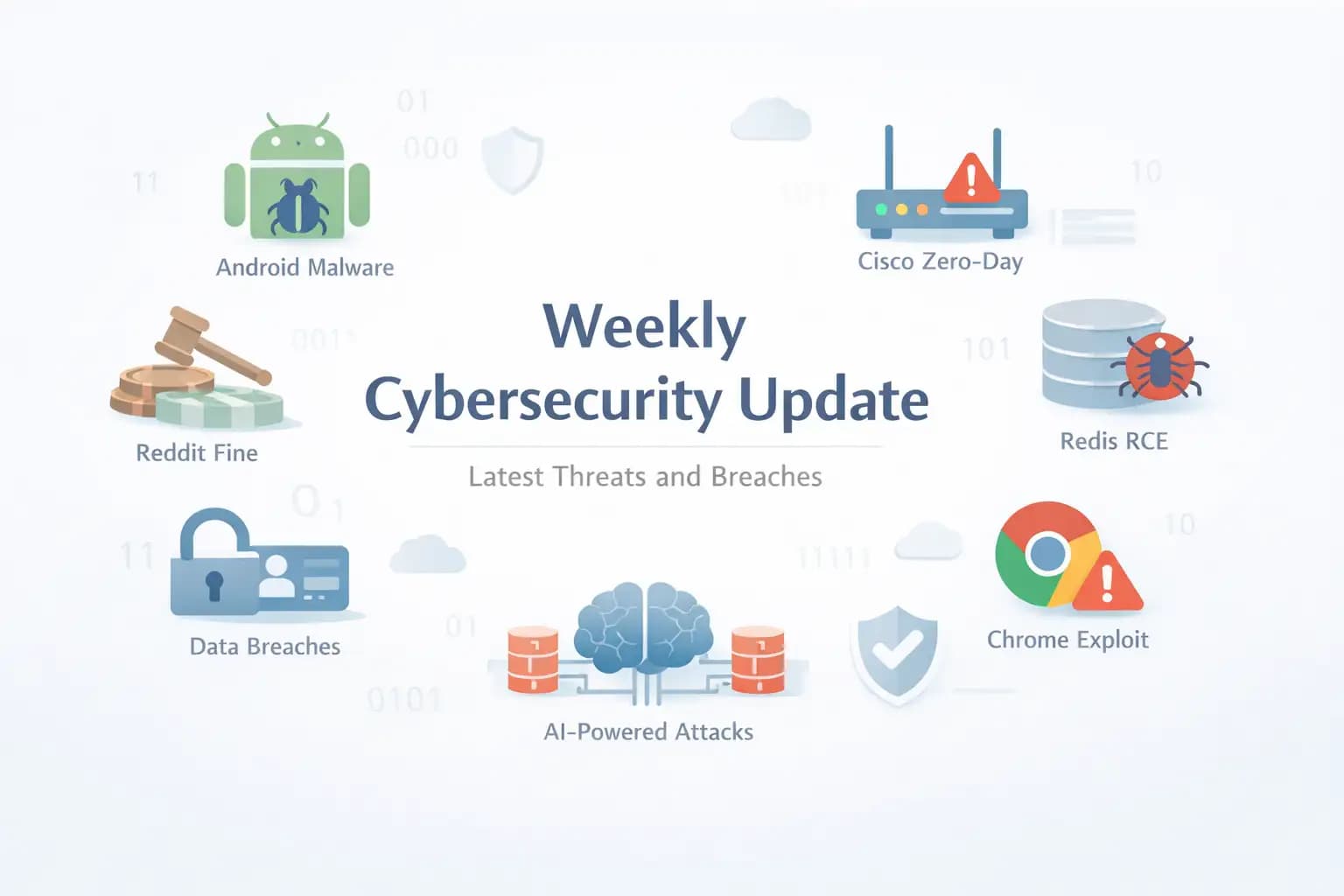
This week was not quiet for security, as you may have noticed. There were a lot of problems at once: new Android malware, critical zero-day flaws in networking gear, big data breaches at banks and telecoms, and high-severity bugs in everyday tools like Chrome and the Play Store. Here's a quick summary of the news and why it matters to you.
Key incidents at a glance
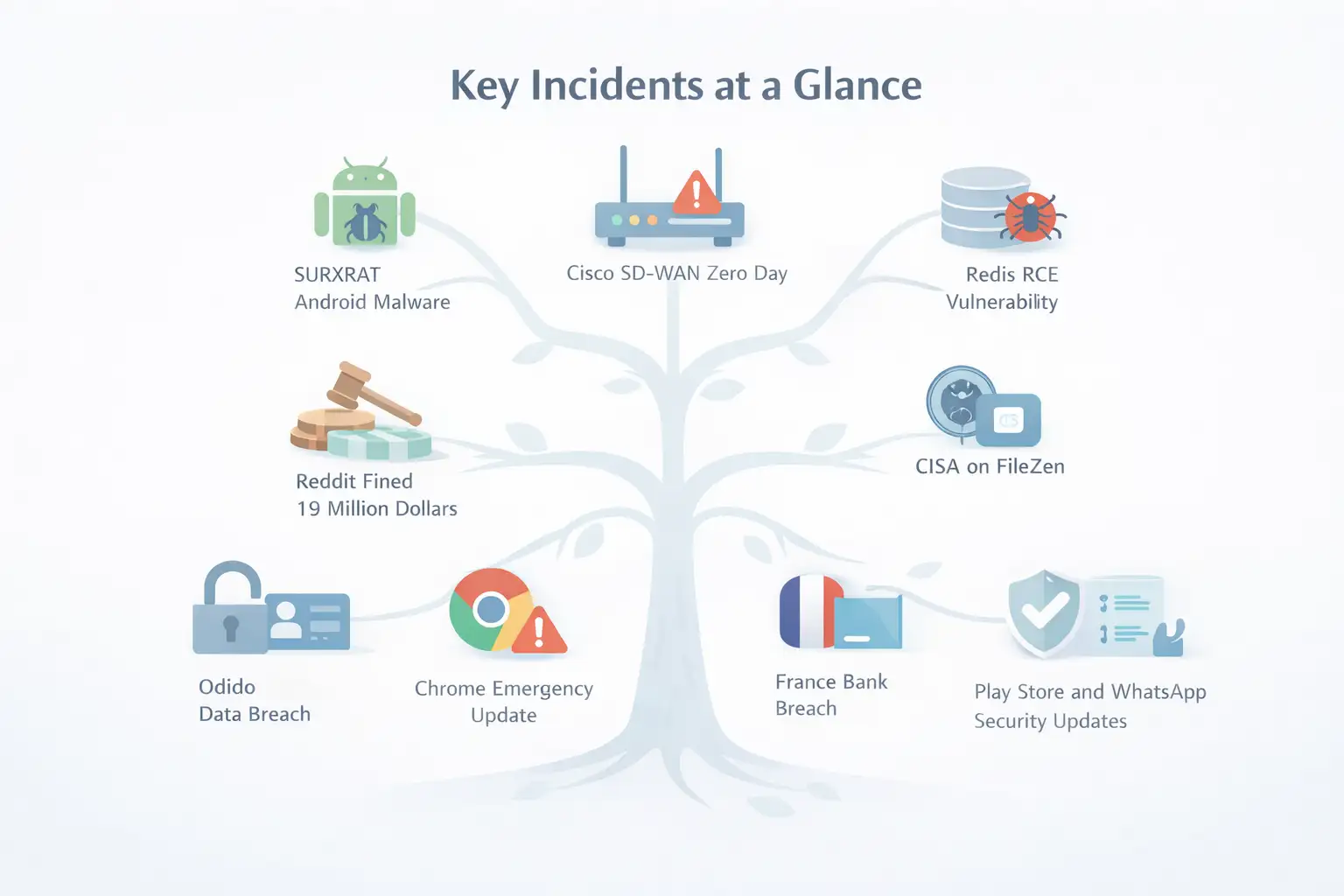
SURXRAT Android Malware: This is a new Remote Access Trojan for Android that can spy on your phone, steal your data, and use your device like it's its own.
Cisco SD-WAN Zero Day (CVE 2026 20127) is a serious security hole in Cisco's SD-WAN platform that has been used by hackers since 2023 to gain root-level access.
Reddit Fined 19 Million Dollars: The UK government fined Reddit a lot of money for mishandling children's data, showing how serious the data protection game has become.
CISA on FileZen: The US government's cybersecurity agency warned organizations to double-check the configuration of a file management tool called FileZen right away.
Redis RCE Vulnerability: A bug in Redis that lets attackers run any command on a server from a distance. You have to patch this.
WhatsApp Beta Alphanumeric Password: You can now set an alphanumeric password for your WhatsApp account in beta. This is a small but important step toward making your account more secure.
Google Chrome Emergency Update: Chrome released an emergency patch for a number of serious bugs that could allow hackers to run harmful code inside the browser. It's time to update.
Play Store Security Update: Google fixed a number of problems in the Play Store that could have let bad apps get onto phones or taken over user accounts.
Odido Data Breach: A Dutch telecom company said that 6.2 million customers' sensitive personal and financial information was exposed in a breach.
AI-Assisted Fortigate Attack: An AI-driven attack took down about 600 Fortigate firewall devices, showing how attackers can automate the search for weaknesses.
France Bank Breach: A breach at a French bank put 1.2 million customer accounts at risk, putting their personal and financial information at risk.
Claude Code Security Scan: Anthropic's AI assistant Claude now has a feature that checks code for security holes, which helps developers find bugs before they can be used to attack.
SURXRAT: A New Android Threat That "Watches" You
SURXRAT is not just another annoying app-level problem; it is a well-written piece of Android Remote Access Trojan (RAT) code that can sit quietly on a phone and act like a surveillance device.
It is based on older ArSinkRAT code, but it has new features, like the ability to pull down large language model modules from Hugging Face. This suggests that it could be used for more advanced automation or data processing on the device.
That means that for you, simple things like installing apps from untrustworthy sources, clicking on links that look suspicious, or ignoring permission requests can give SURXRAT the access it needs. The more permissions it has, the more it can read your messages, take pictures, record your screen, or even turn on the microphone. It's not just stealing data; it's letting people see your private life in real time.
Cisco SD-WAN Zero Day: When Your Network Equipment Is the Weakest Link
Companies use Cisco's SD-WAN platform to control big, spread-out networks. The CVE 2026 20127 flaw is so bad that hackers have been using it since 2023 to get full access to devices.
In other words, anyone who hits it can change settings, control core routing and security functions, and even send traffic to a different place. This flaw has been hidden for years, which is a good reason to fix network infrastructure quickly and not assume that things that are out of sight are out of mind.
If you use Cisco SD-WAN, your top priority should be to install the latest security update and then keep an eye on your logs for any strange activity. If not, an attacker could stay inside your network for months without you knowing.
Reddit Fined 19 Million Dollars: What Happens When You Don't Handle Child Data Correctly
The UK's regulatory body fined Reddit about $19 million for not protecting children's data. This is a clear sign that regulators are no longer treating data breaches as "oops" moments.
When a platform collects or uses user data, especially from minors, it should follow strict rules about consent and protection. Reddit made a mistake that put kids' private information at risk of being seen by others.
This should remind businesses that not taking care of data properly is not just a technical problem. It is against the law. Strong access controls, regular audits, and clear data retention policies are important not only to keep users safe but also to avoid fines and damage to the company's reputation.
CISA's FileZen Warning: How a File Management Tool Became Dangerous
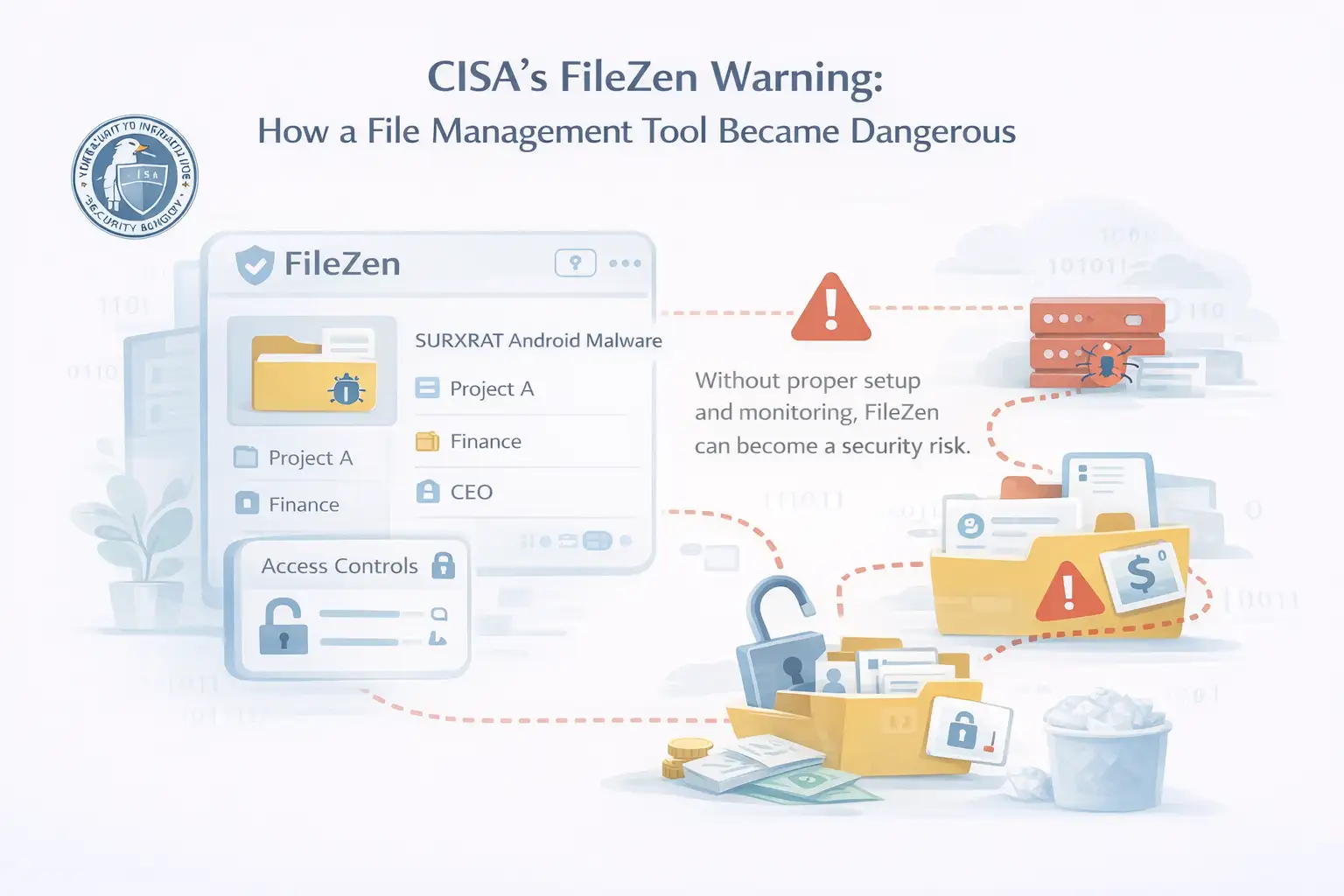
The warning from CISA about FileZen shows that a file management tool that seems safe can become a security risk if it is not set up or watched over correctly. The warning is mostly about the risk of data breaches and unauthorized access when the tool is left open or set up wrong.
Attackers can get to private files, financial records, or internal communications if they can move sideways through FileZen. Companies that use FileZen should see this as a normal check. Check who has access to it, what they can do with it, and how it connects to other systems. You should treat it like a shared drive that has the CEO's money on it. It's not something you can just leave unlocked.
Redis RCE: When a bug in a database lets hackers take over
Redis is a popular in-memory data store that is often used as a session or cache store behind web apps. It has a Remote Code Execution (RCE) flaw, which means that an attacker who can get to the Redis instance could run any commands they want on the server.
In real life, that could mean stealing data, putting in backdoors, or even taking over the whole host. The security team at Redis has released patches, and the message is clear. If you use Redis, you should install the most recent patch right away and make sure it isn't directly accessible to the public internet. You should treat it like a database server. Put firewalls and access controls around it.
WhatsApp Beta: Alphanumeric Passwords for Better Account Security
The beta test of an alphanumeric account password for WhatsApp is a small but important improvement. Users can now make a stronger, more complex password that they have to enter when they restore or reactivate their account.
This is better than just using SMS or SMS Plus app codes. This makes it harder for someone who steals your phone number to just reset it and get your chats. Of course, this works best when you use your head. Don't use the same password on other sites, and if you can, turn on two-factor authentication. It's not a magic bullet, but it does make it harder for attackers to get in.
Why browser bugs are important: Google Chrome emergency update
Google released an emergency update for Chrome that fixed a number of serious security holes. Some of these bugs could let hackers run bad code in the browser, which is bad because browsers can often see your passwords, cookies, and even company resources.
If you don't patch, just going to a hacked or malicious site can get you in trouble. That means home users need to either turn on automatic updates or check for updates themselves. For IT teams, this means making sure that all company devices get the updates quickly. Keeping Chrome up to date is a must in a world where so much happens in the browser.
Play Store Security Update: Making Android Apps Safer
The Play Store update fixed a number of security holes in the app store platform that could be used to spread harmful apps or get into user accounts without permission. When an app store is hacked, it breaks the basic trust model. It should be safe if it's in the official store.
That's why Google needs to keep an eye on this kind of thing. There are two main points for everyday users. You should still be careful with apps that have low ratings or strange permissions, even if you keep your Play Store up to date. No system is perfect, but you can lower your risk by making smart choices and keeping your platform up to date.
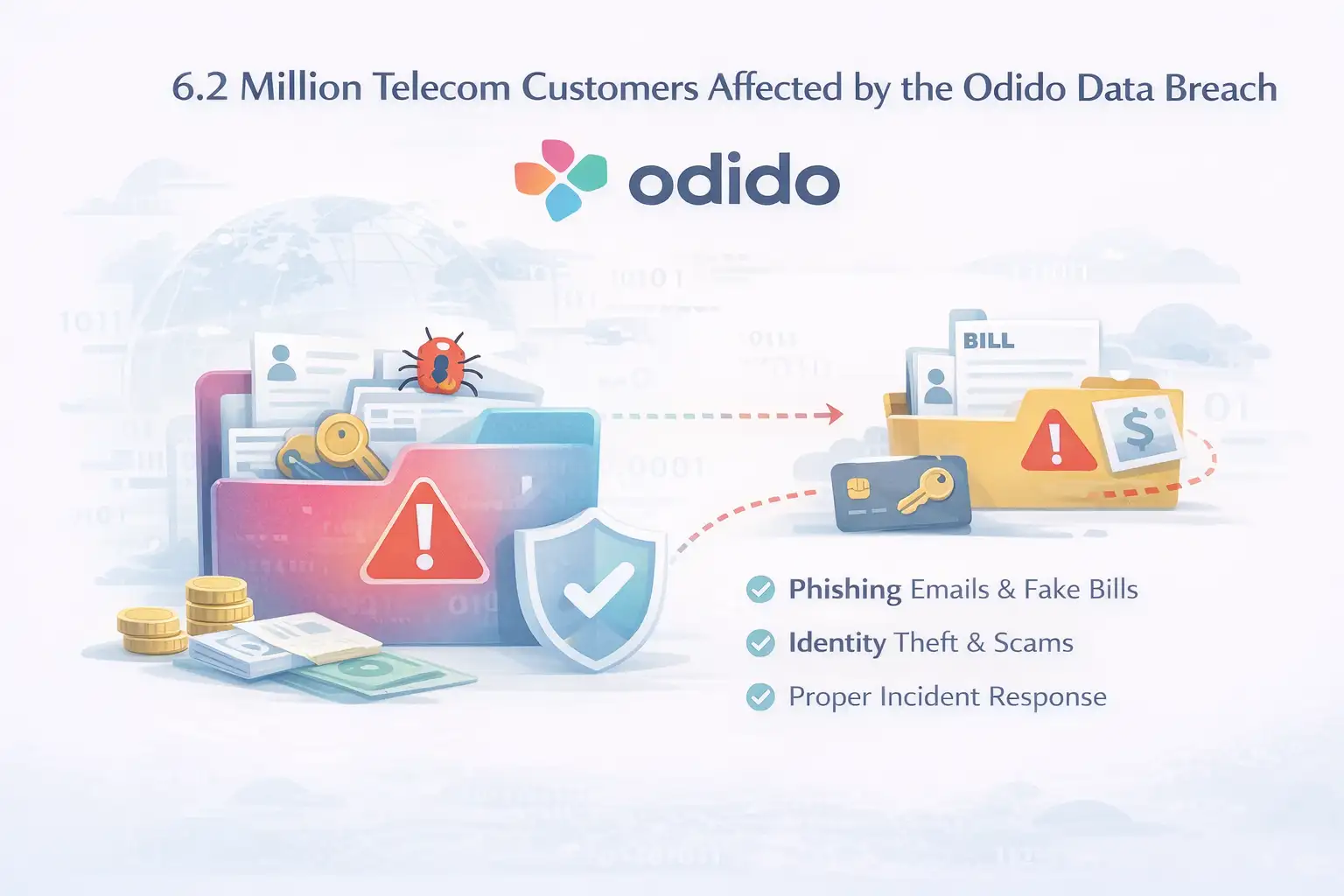
6.2 Million Telecom Customers Affected by the Odido Data Breach
Odido, a Dutch telecom company, said that a data breach affected about 6.2 million customers. The breach exposed private information, such as financial data and personal details.
This means that people who are affected are more likely to get phishing emails, fake bills, or even scams that target their identity. It's not just that the breach happened that matters; it's also how the company handled it.
Odido told customers who were affected and began putting in place extra protections. This is exactly how a good incident response plan should work. This is a good example of how to do it right if you are in charge of these kinds of plans.
AI-Assisted Fortigate Attack: How 600 Devices Were Taken Over
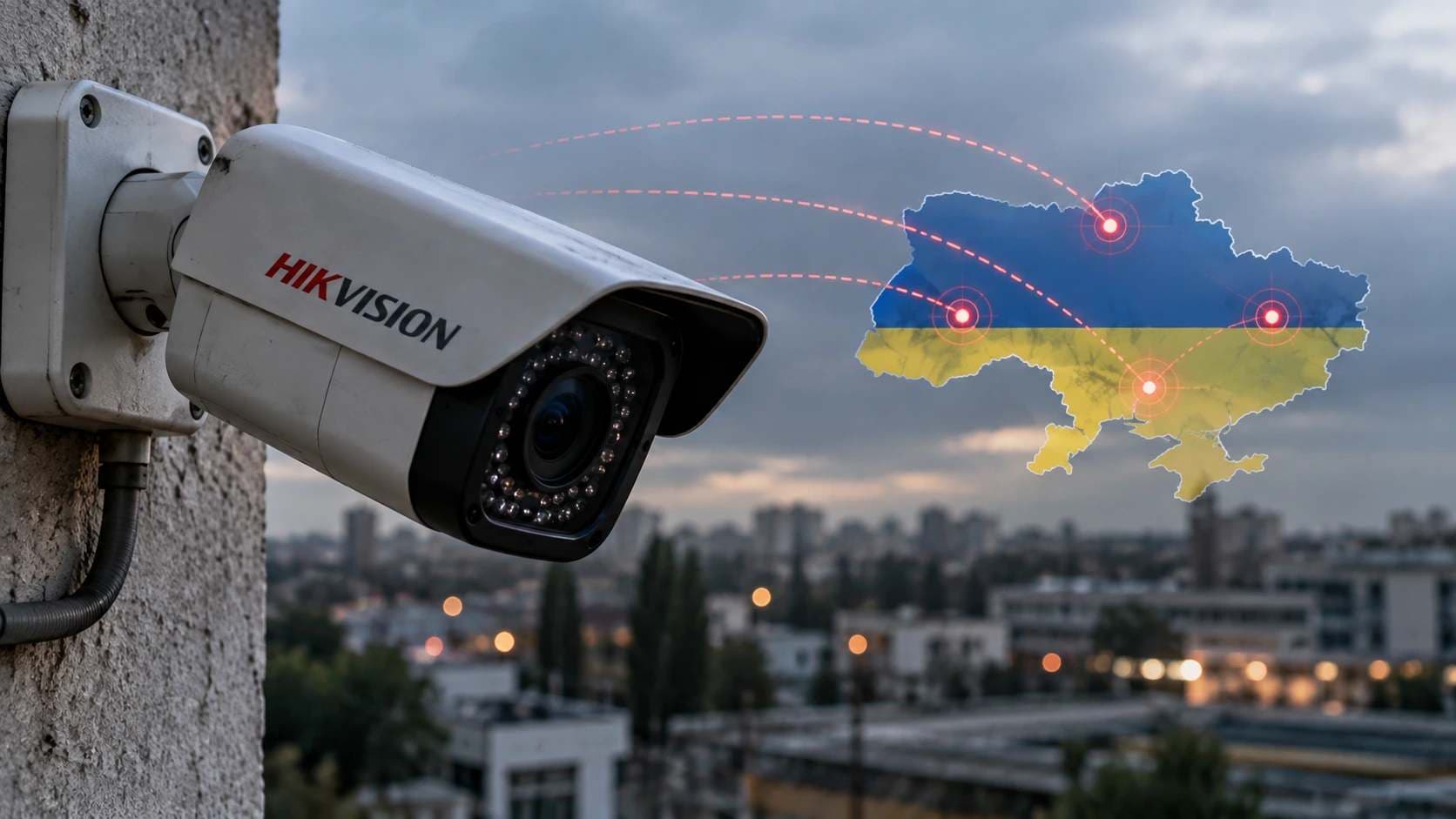
About 600 Fortigate firewall devices were hit by an AI-assisted attack that used automation to find and take advantage of known or poorly patched security holes. Fortigate firewalls are often the first line of defense, so if they are broken into, attackers can get deep into a network.
This attack shows that AI is no longer just a way to protect yourself. It is now something the attacker can use. Companies that use Fortigate devices should take this as a reminder to keep their firmware up to date, make remote access rules stricter, and check their configurations on a regular basis. If you are skipping patches because nothing is broken, this incident is a warning that that is not a good strategy.
1.2 Million Accounts at Risk After France Bank Breach
A breach at a French bank put about 1.2 million accounts at risk by leaking personal and financial information. The customers feel anxious right away. Is someone trying to get in? Is someone using my card? The bank's consequences are not only technical but also financial and reputational.
This kind of thing shows why it's so important to keep an eye on logs and look for strange activity. An alert that catches a breach early can protect millions of customers from identity theft and fraud. If you run a platform for managing customer or financial data, think of this as a real-life example of what can go wrong if you don't keep an eye on things and act quickly.
Claude Code Security: Using AI to Find Bugs Before They Can Be Used
Anthropic's Claude now has a feature that checks code for security holes. This is a helpful change from finding bugs after deployment to finding them before they go live. This can help developers find problems like SQL injection, insecure API calls, or wrong permissions that might not show up in testing.
But scanning with AI isn't a magic fix. It still needs to be looked over by a person and put in context. It's like a very smart assistant that tells you when code looks suspicious, but you still decide what to fix and how. If you use it correctly, it can make secure development go faster without putting safety at risk.
How to Keep Yourself and Your Business Safe Right Now
With all of this in mind, here's what you should do right now, even if you don't have the perfect plan.
Update all software that can be updated, including the operating system, browsers, firmware, and third-party tools. Don't think of any security patch as optional; treat it like it's urgent.
Use passwords that are hard to guess and different for each account, and turn on two-factor authentication if you can. This is still the best way to stop a lot of people from taking over your account.
Check and tighten access controls, especially for tools like FileZen, Redis, or any admin panel that is connected to the internet.
Monitor logs and behavior - Look for unusual login attempts, strange traffic patterns, or unexpected configuration changes.
Get professional help if you need it. Security teams can help you figure out what to do first, fix things, and respond if something really does break.
Cyber threats are loud and fast, but you don't have to fix everything right away. You can greatly lower your risk by taking things one step at a time, one patch at a time, and one decision at a time. It's not the goal to be 100% safe. That isn't real. The goal is to be a lot harder to hit than the next target.
For more latest updates like this, visit our homepage.
-20260925120840.webp&w=3840&q=75)